We Are Still More Equal Than The Rest Of You

German lawmakers are like lawmakers everywhere else on the planet. At least when it comes to giving themselves raises, they are. They give themselves modest raises, of course, albeit at very regular intervals, and as quietly as humanly possible.

This time they’re giving themselves a ridiculously measly 500 euro a month raise, bringing the grand total up to a less than measly 10,700 euros per month.

Now that may seem like a lot to you, but it really isn’t. Ask any SPD man and he’ll tell you why: “Representatives cannot be compared to those in lower income brackets.”

Well there we have it. They have to be on equal footing with others out there with, uh, I dunno,  lots of money? Otherwise they might be susceptible to corruption or something. And we (I mean you) don’t want that because in Germany, as you may know, there is no corruption. So shut up and pay up.

“Abgeordnete kann ich nicht vergleichen mit unteren Einkommensgruppen.”

The Three Percent Solution?

Three percent. That’s how much solar energy contributes to Germany’s overall energy mix (now don’t go be a jerk and break it to the Germans that the sun doesn’t shine very much here).

But that doesn’t really matter because, jeepers, that measly three percent only costs consumers half of the total 17 billion euros they have to shell out for renewable energy here.

It’s the principle of the matter, you see. If the Germans left this solar energy stuff up to the free market (that means no subsidies), then solar power’s contribution would be even lower than three percent – at none of the cost – and just think about how ridiculous they would look then.

And (even) the Spiegel says: Solar Subsidy Sinkhole

Sinking Ships Can’t Stop Them

Ethiopian gunmen can’t stop them.

Germans just can’t stop going on vacation. It’s what they do.

And that’s why they win the Reiseweltmeisterpreis (World Champion Travellers Award) every year. It’s not a real award, of course, but Germans are always talking about it as if it were (and only a German would be interested in winning an award like that in the first place, come to think of it).

And in 2011, the German nation spent 60 billion euros (that’s billion with a b) on travel.

“Tourists don’t know where they’ve been, travelers don’t know where they’re going.”

Die Deutschen bleiben Reiseweltmeister. Über 60 Milliarden Euro gaben sie laut einer Studie 2011 für Reisen ins Ausland aus.

Our Autobahns Don’t Stink

Remember how the Greens in Berlin shot themselves in the foot after elections last fall by sticking ever so stickily to sticky green principles by just saying no to a two-mile stretch of Berlin autobahn that everybody in town wanted but them?

It was a stellar performance in reality check checking and how not to form a coalition government with the SPD even though everyone seemed convinced up until then that the Greens were either going to take over the Berlin city goverment completely or at least play a major role as junior partner (neither happened).

Well surprise, surprise. Green shirt ideologues what’s upstairs have now just okayed a working paper calling for a more offensive and quite massive expansion of the German autobahn system in West Germany. This is not a sell-out of green principles, however, not that you were even thinking that.

Green autobahns, as you may know, are made of biodegradable concrete and recycled plastic ALDI shopping bags, constructed using environmentally friendly green technology (wind-, I mean hot air-powered) and progressive landscaping techniques which allow for low carbon tire prints, renewable eco-outhouse rest stop stops and an overal eco-friendly and very green if not rather high global environmental greenhouse impact.

Alles im grünen Bereich, wie immer. 

This Ain’t Iraq

So we can’t pull out completely yet.

But it is time to remove another couple of brigades of American troops from German soil again.

It has long been clear that the US military was going to minimize its presence in Europe. On Thursday, new details emerged, with Washington planning to withdraw two brigades. At least one of those units will be pulled out of Germany.

Europe’s strategic importance for the US military looks to be dwindling.

PS: Speaking of violence… The military is violent, right? And the American military is the most violent of all , right? And we live in the most violent of times, right? Forget it. Everything you know is wrong. Violence is a myth.

Ich wulffe, du wulffst, er/sie/es wulfft…

Not that anybody out there knows who the German President is or could really care less if they did, but a new German verb has just entered the language (in his honor?) referring to, well, referring to what, anyway?

The new German verb refers to the manner in which scandal-plagued President Christian Wulff has sought to manage revelations that he accepted a favourable home loan from a businessman, holidayed at the villas of the wealthy and left a threatening message for the editor of Bild newspaper.

It’s called wulffen and actually has two meanings (at least two), according to the director of the German Language Association in Dortmund. The first is to talk on and on unprompted. The second means to be evasive about a particular issue without actually telling a lie.

Damn. I really had no idea that politicians the world over have actually been wulffen with me the whole time.

“It means something in-between.”

Europeans Hurting Republican Feelings Again

The title reads: Greeks and Italians Work Harder Than Americans.

One common reaction to the European debt crisis has been to blame the victim: If only those Greeks/Italians would work harder, like us Americans/Germans, then they wouldn’t be in this pickle, the thinking goes.

Except it’s not, how do you say, true: Greeks and Italians actually work more than Americans and Germans.

As The Energy Turnaround Turns

Now that the German Energiewende (energy turnaround) is here, tens of thousands of new green jobs have been created. Well, not quite yet actually. But it won’t be long now.


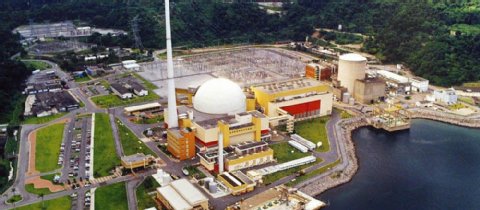
After all, once Berlin decided to permanently switch off the country’s eight oldest nuclear reactors and close the remaining ones still online by 2022, everyone here was absolutely ecstatic (at least those who didn’t work in the energy sector were). Sometimes you just have to give the people what they want, you know? And now they’ve got it. What they wanted, I mean

The same day the Energiewende was announced saw the first case in Germany of a solar panel manufacturer (Solon) announcing it was going into liquidation, threatening the loss of some 500 jobs. Then you had EON, Germany’s biggest power supplier, deciding to cut up to 11,000 jobs worldwide while its rival RWE shed 8,000. Then you had Solar Millennium. Then you had, oh I forget which one (there have been so many recently), solar something or something.

Hey, what’s a little job loss when it comes to the common green good (rhymes with Robin Hood)? These jobs are coming, people, sooner or later or maybe not even at all because, well, not even green jobs grow on trees.

Optimistic predictions that Germany’s decision to turn its back on nuclear energy will lead to the creation of hundreds of thousands of jobs in the renewable energy sector have met with scepticism.

We’ll Import Power From Anywhere

Even from Austria, if need be. And need there be.

“Missing power lines” are the cause behind the missing energy being missed in Southern Germany these days, we are told. That’s why Austria is being asked to help big buddy Germany out with a little “emergency energy,” pretty please.

But Austrians do this gladly, I think, because they know that if those missing German power lines weren’t missing than those missing power lines would be transporting tons of wonderful wind energy from the high German north to those energy-hungry factories in the south (and beyond to Austria?) where it’s missing at the moment, the energy. Like I said. Or so the theory.

The missing German nuclear power plants that were shut off after Fukushima (that’s in Japan) aren’t being missed by anybody here, though. Forget about them. It’s not the missing German nuclear power plants. It’s the missing power lines that are missing, I mean messing everything up around here.

Die Bundesnetzagentur hatte vor langfristigen Engpässen bei der Stromversorgung gewarnt. Die Versorgungssicherheit bleibe durch den Atomausstieg für eine Reihe von Jahren angespannt.

A Fistful Of Euros…

Won’t buy you what it used to.

Remember when the (place your favorite currency here) used to be worth something? I guess it’s the euro’s turn now. Hey, what goes up must come down, right? There must be something going on in the euro zone these days or something.

Die Gemeinschaftswährung sank am Mittwoch erstmals sei Mitte Januar unter die Marke von 1,30 Dollar. Am späten Nachmittag wurde der Euro  bei 1,2988 Dollar gehandelt.