German ISIS Defectors Explain How Terrorist Lifestyle Was Actually Somewhat Disappointing

Clearly not the sharpest knives in the drawer, two Germans who fought for ISIS in Syria are standing trial back home and are now prepared to give “deep insights” into the life of foreign fighters in Islamic State.

ISIS

One of the very first deep insights appears to be that life as an ISIS terrorist really, really, really sucks. Who would have thought that?

Although facing a potential jail term of 10 to 20 years, the IS defector called Ebrahim B. claimed to have gone through such horrible atrocities during three months in the Islamic State that “for him jail in Germany is preferable to freedom in Syria.”

“Journalism Isn’t Treason”

That’s very true. But that’s not the issue here. Go ask folks like Edward Snowden or Julian Assange and they’ll tell you. We now live in an age where treason isn’t treason, either.

Treason

The case centres on the Netzpolitik.org (Net politics) blog, which earlier this year published documents on plans by Germany’s domestic security agency to expand its Internet surveillance.

“The freedom of the press and of expression is a valuable asset. But this freedom, including on the Internet, is not limitless. It does not absolve journalists of the duty to comply with the law.”

English Of The Day: Fancy

Flula: “I tried to eat items. You know, food? And I was in a restaurant to eat some food. But the salad that I did like it was having like a weird thing. Some strange cheeses…”

“Get away from my fancy. It’s my fancy.”

Or check out the “he is from, where are you from?” pseudo-dirndl-gal who’s way too excited about learning how to be German. In Los Angeles.

German Of The Day: RIAS

That stands for Rundfunk im amerikanischen Sektor and means radio (or broadcasting) in the American Sector – of a place they used to call “West Berlin.”

Now Father Time has managed to take care of something that the East German jamming stations were never able to do back then in the good old bad old days: Shut this broadcasting tower down. With explosives, in this case.

Von Britz aus ging 1946 der Rundfunk im Amerikanischen Sektor (Rias) auf Sendung. Später entstand dort Europas damals leistungsstärkster Mittelwellensender, mit dem jahrelang auch die Störsender aus Ost-Berlin überwunden werden mussten. Heute gilt die Übertragung per Mittelwelle als veraltet.

The Guy YOU Love To Hate

I pour moi think he’s the greatest. Weiter so (keep it up), Wolfgang!

Schäuble

Despite bitter opposition in many quarters to the austerity-first policies Germany has imposed on Europe’s poorer nations, Chancellor Angela Merkel’s government has hung on to its role as champion of integration on the Continent through deft use of diplomacy and the country’s economic clout.

But in negotiating a new deal this week to bail out Greece, Germany displayed what many Europeans saw as a harder, more selfish edge, demanding painful measures from Athens and resisting any firm commitment to granting Greece relief from its crippling debt. And that perception was fueled on Thursday when the German finance minister, Wolfgang Schäuble, suggested that Greece would get its best shot at a substantial cut in its debt only if it was willing to give up membership in the European common currency (they mean Grexit here, of course, they just don’t like to use the word).

“Ich werbe nur dafür, dass Sie heute nicht meinen – jetzt ist das Thema erledigt, jetzt haben wir noch mal einen da zum Bösewicht erklärt. Ich bin so abgehärtet in einem langen politischen Leben, dass mich das nicht aus der Bahn wirft.”

More German “Universalization,” Please

German policy-makers genuinely believe the harsh medicine for Greece and others is the right thing to do, he added. In some ways, Germany is “trying to universalize its own history,” Mr. Kundnani noted. That history includes an extreme leeriness of inflation and debt, plus more recent experience about a decade ago with a series of successful economic reforms, including an overhaul of its labour market.

Germany

“I don’t see Germany as being an outlier. I see it rather as someone who is in the middle ground and seeking a balance. Germany is taking a lead by managing the debate.”

2 Intellectual 4 Me

Nope, this latest Spiegel cover is not what I would call “defamatory or racist.” It’s just particularly stupid. But everybody seems to be having hurt feelings about it and calling each other names because of it and stuff like that, which always warms my heart. So keep running with it, folks.

Spiegel

“Our Greeks – Taking a closer look at a strange people.” Takes one to know one, I guess.

And always remember: “Spiegel readers know more” (one of the magazine’s more popular slogans). And they also love to look down their noses at people who read the Bildzeitung, for instance. There is a big difference, you see? Me, neither.

SPIEGEL-Leser wissen mehr!

Grexit: Bad Attitude In A Can

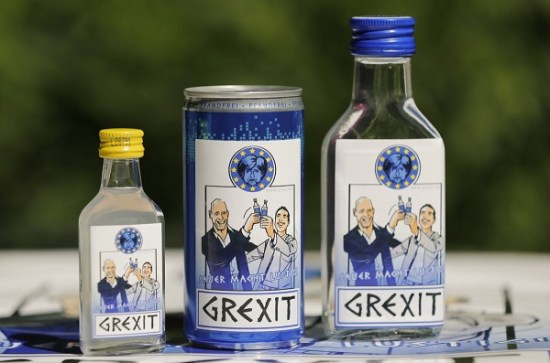
German entrepreneur Uwe Dahlhoff has trademarked the term “Grexit” — used to refer to the possible Greek exit from the eurozone — and plans to use it to market a new vodka drink.

Grexit

The drink itself is sour — vodka mixed with lemons.

“When life gives you lemons, make lemonade.”

“The problem with socialism…”

is that you eventually run out of other people’s money.”

Socialism

Already on Saturday pictures of anxious savers queuing outside banks to withdraw money were circulating. A slow-motion bank run that had already drained €35 billion ($39 billion) of household and corporate deposits out of the Greek banking system between November 2014 and May 2015 threatens to get out of control. Greek banks have been able to cope with the haemorrhage of deposits only thanks to massive borrowing from the Bank of Greece, permitted by the European Central Bank (ECB) in Frankfurt. The ECB is now likely to call time on this and to prevent further increases in this “emergency liquidity assistance” (ELA). That will in turn force limits on cash withdrawals along with capital controls to prevent money leaving the country… Even if the ECB stays its hand this weekend, it will be forced to act early next week. Without a deal this weekend, the cash-strapped Greek government will be unable to repay the IMF €1.5 billion that is due at the end of this month.

The climax to 10 days of fraught bargaining in Brussels and Luxembourg was the decision by Alexis Tsipras, the Greek prime minister, to call a plebiscite on the terms of Greece’s bailout, stunning the other eurozone governments. “I am very negatively surprised,” said Jeroen Dijsselbloem, the Dutch chair of the committee of eurozone finance ministers. “The situation [in Greece] will deteriorate very rapidly … How the Greek government will survive, I do not know.”

It’s Not Easy Being Optimist-In-Chief

When it comes to dealing with Europe, I mean. Optimism is suspekt (makes suspicious) here. There is always an angle to everything, you see.
Larry Page

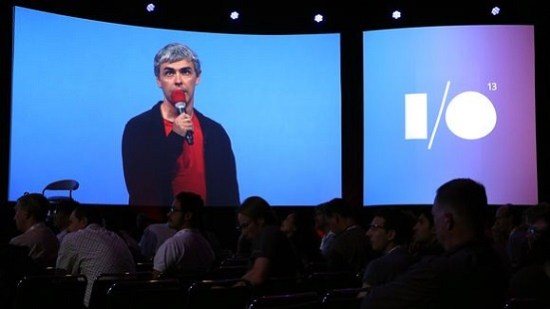
For him (Larry Page), the real danger is opposing technological progress and greater efficiency. Such dangers lurk particularly in the Old World: “Especially in Europe, it appears easy to ignore the fundamental physics of a question in order to claim everything is just fine when things here cost twice as much as elsewhere. This attitude worries me greatly, because it hinders the work of entrepreneurs.”

But should not a society also have the right to say “No” to a superior technology? Certainly, agrees Mr. Page. But that’s not particularly clever. “If you make everything twice as expensive, you reduce people’s quality of life.” And do you really want to keep local entrepreneurs from making their contribution to the global economy? Naturally it’s great when citizens have the feeling they can decide. “I’m merely saying that when they make decisions contrary to a global system of capital, then they have to do that consciously and seriously. And I don’t believe anyone is doing that.”

“If I were a young entrepreneur today and I had the choice of starting my Internet firm in Germany or Silicon Valley, it wouldn’t be a hard choice. And regulation will only get worse in Europe. It will be very hard to build a company of global import there.”

Gerade die Europäer neigen in den Augen von Larry Page offenbar zu falscher Nostalgie. “In Europa scheint es leicht, die grundlegende Physik einer Frage zu ignorieren und zu behaupten, es ist schon in Ordnung, wenn Dinge hier doppelt so viel kosten wie anderswo”.