China bumps Germany off the top 10 list of most innovative nations – China moved into the top 10 of the United Nations’ annual ranking of most innovative countries for the first time Tuesday, replacing Europe’s largest economy, Germany, as firms in Beijing invest heavily in research and development.
Germany is as safe as it can be (all things considered). So move along! Nothing to see here!
Crime statistics: How safe is life in Germany?
Cases of drug trafficking, knife crime and violence on the streets are frequently reported in the German media. But is crime on the rise? And how does Germany compare internationally?
“The new Germany” is “a shame, a travesty,” says Kurt Caz.
In a video, the South African-German travel blogger presents Frankfurt’s notorious Bahnhofsviertel neighborhood near the city’s main train station as the new normal, which has been “completely taken over by crime, illegal migrants and drugs.”
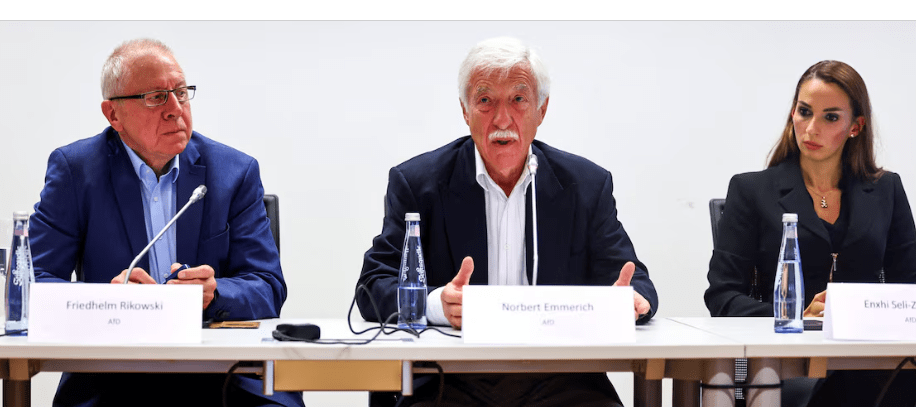
Top AfD politician makes surprise visit to White House – Vice President JD Vance has spoken out against the far-right AfD’s political exclusion in Germany…
A White House official confirmed the meeting and said that representatives of the national security council, the vice president’s office and the State Department attended.
The talks focused on democratic participation and election procedures in Germany, according to the AfD and White House officials. AfD politician Joachim Paul, whose candidacy was disqualified by a German court earlier this year, was presented as a case study in what the AfD describes as the narrowing of political freedoms in Germany.
At the Munich Security Conference in February, Vance raised eyebrows by questioning Germany’s political “firewall” against the AfD, a political agreement by other forces not to include the far-right party in governance. Mainstream parties say the policy is intended to avoid a repeat of country’s Nazi era.
Support for far-right triples in western German vote, early forecasts show – Support for Germany’s far right surged in local elections in the country’s most populous state on Sunday, sending a warning to conservative Chancellor Friedrich Merz’s four-month-old national coalition with the Social Democrats, early projections showed.
Initial forecasts from pollster infratest dimap for broadcaster ARD after voting ended for councils, districts and mayors in the western state of North Rhine-Westphalia showed support for the Alternative for Germany (AfD) party had more than tripled to 16.5% from 2020.
That means disturbing. Or in this case, beyond disturbing.
Germany’s reaction to Charlie Kirk’s killing was beyond disturbing – The country’s arrogant and blinkered media elite do not understand what democracy is.
The cold-blooded killing of campaigner Charlie Kirk on a university campus in Utah should have been a moment of shared grief for everyone. A young father who believed in and lived by a code of free speech and debate was gunned down in front of horrified students.
As we know, the reaction of certain sections of the Left in Britain and America was appalling. If they offered sympathy it was heavily caveated and, by applying labels like “far-Right”, they appeared to suggest he had brought it on himself.
Yet here in Germany, the response of the media class was even more disturbing. They seemed to revel in it.
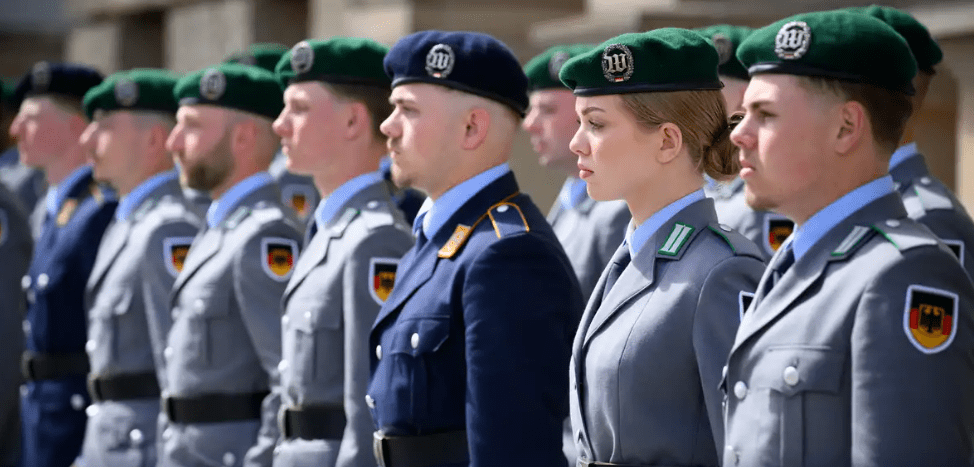
Germany debates return to compulsory military service – As Germany adapts to a volatile geopolitical landscape, attention has turned to filling the ranks of its armed forces. Among Germany’s youth, attitudes towards the Bundeswehr have been shifting…
A new draft law aims to boost Bundeswehr troop numbers by surveying 18-year-olds — mandatory for men, voluntary for women.
It’s better to let sleeping pilots lie. I mean fly.
Almost all German pilots admit to napping during flights in union survey – Pilots’ union says the issue has become a ‘worrying reality’ as a result of staff shortages and operation pressure.
Survey: 63% of Germans support European sanctions on Israel – According to Deutsche Welle (DW), citing the research group Verein, the survey published by Der Spiegel Online found that 63 per cent of German voters back proposals from the European Commission to impose sanctions on Israel. Others expressed reservations or opposition.
The poll comes at a time of rising tensions in European–Israeli relations, against the backdrop of the Gaza war, which has caused widespread destruction and hunger, alongside international calls for a ceasefire and the delivery of humanitarian aid.
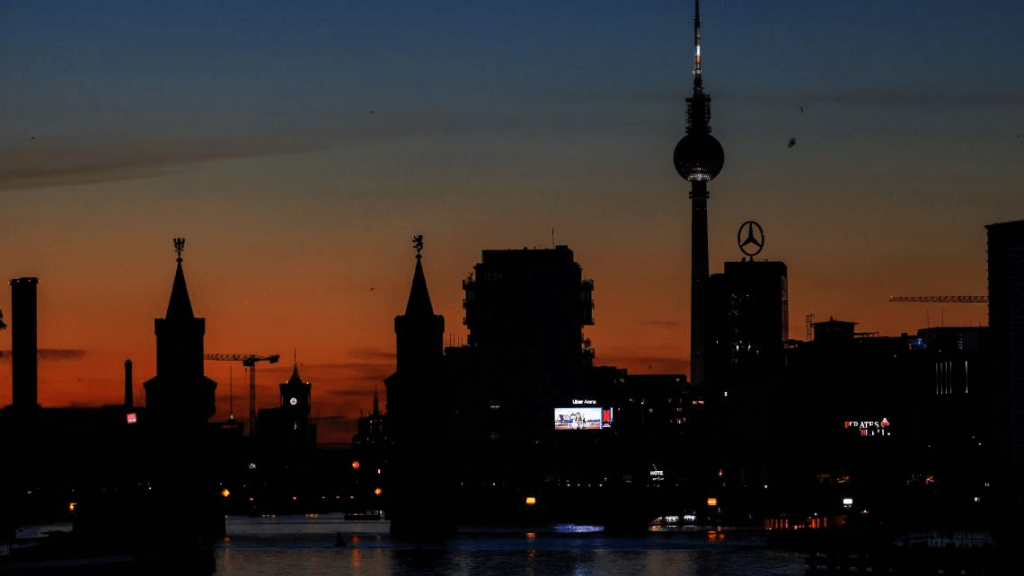
Suspected arson triggers Berlin blackout, 40,000 homes and businesses without electricity – A fire on two high-voltage pylons in southeastern Berlin triggered a major power outage Tuesday morning, leaving more than 40,000 households without electricity in what authorities suspect was an arson attack.
The suspected arson recalls previous attacks linked to the left-wing extremist group “Vulkangruppe,” which has claimed responsibility for targeting infrastructure in Berlin since 2011.
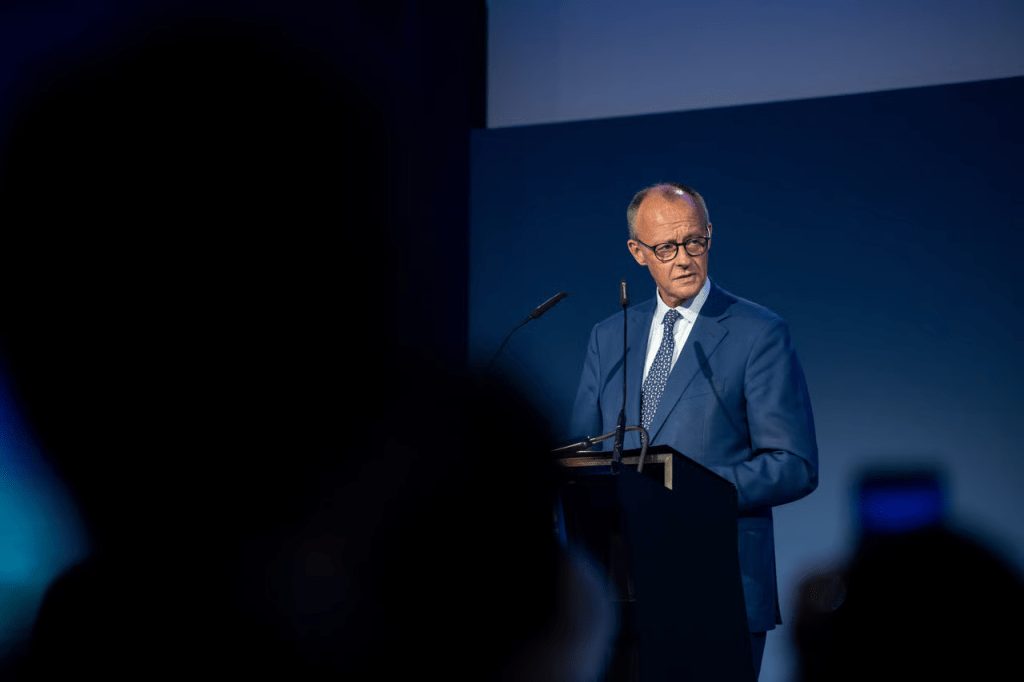
Germany’s Merz warns against ‘false nostalgia’ over US alliance – The chancellor’s comments show European leaders are girding for a future in which the transatlantic alliance is no longer the bedrock on which the continent’s defense and economy stand.
“We must face the fact that our relationship with the U.S. is changing, The U.S. is reassessing its interests — and not just since yesterday. And so we in Europe must also adjust our interests, without false nostalgia.”




 Observing Hermann