Deportation German Style

When Germans say deportation they mean deportation. It’s just that deportation clearly means something else in German than it does in English. Even though it means deportation, I mean. And here I thought I spoke the language. Sheesh.

Deportation

Germany: Thousands of migrants return after deportation, report says – Thousands of asylum-seekers in Germany have returned multiple times after deportation, according to a report in German media. Those with entry bans often serve a few months in jail or are not arrested at all…

There are nearly 5,000 asylum-seekers who have reapplied for asylum after being deported from Germany since 2012, according to the report, which cites official government figures. Some of the asylum-seekers willingly left Germany, knowing deportation was imminent. The then returned to German to make another application for asylum, according to the report.

German oddity 234: Germany is a country that now places the ugly security controls, bollards and heavily armed police it used to have on its national borders at Christmas markets and Volksfeste around the country instead.

Doctors, Lawyers, Engineers…

And organized crime professionals.

Mobsters

Germans were told time and time again starting back in 2015 that a significant number of the Syrian refugees illegally entering the country at that time were of the highest professional standing and would soon be a great enrichment for the country. I will not say that this did not happen but they could have at least mentioned the professional mobster folks too.

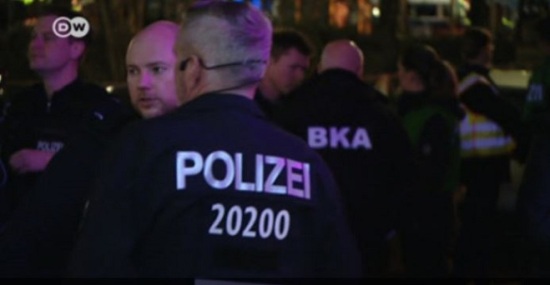
Newcomers from Syria, Iraq and other countries are changing the structure of organized crime in Germany, federal police representatives told the public broadcaster ARD in a new documentary set to be aired on Monday evening.

While investigating Arab-linked crime families, Germany’s BKA (Federal Criminal Police Agency) noted a rising number of suspects with foreign passports.

“In about one third of proceedings, suspects also included immigrants — and that means that we need to keep a very close eye on this phenomenon,” BKA leader Holger Münch said.

“The rule of law is under pressure.”

German Of The Day: Schleierfahndung

That means targeted or dragnet searches.

You know. Like the kind you do on your nation’s borders that aren’t actually borders anymore because you belong to something called Europe now (apparently you didn’t belong to Europe in the past) and doing so would send an “anti-European signal” so you don’t really want to but you’re going to anyway? Yeah, those kind.

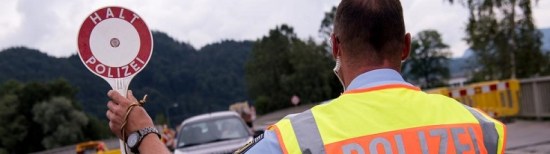
Germany is to carry out more random border checks to discourage migrants from moving illegally around the European Union (EU).

The move will see more police officers sent to border zones in an attempt to crack down on “secondary migration” — the illegal movement of non-EU migrants between EU member states — according to a Sunday tweet from the Interior Ministry.

“Anti-europäisches Signal.”

German Of The Day: Migrationshintergrund

That means migrant or immigration background.

Migrationshintergrund

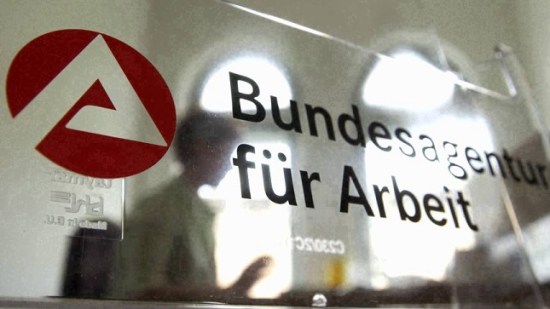
You know, like almost half of the unemployed in Germany have Migrationshintergrund? 46 percent, to be exact, sort of (answering this question at the employment office is not mandatory so the number will actually be higher). Back in 2013 it was 36 percent. Kind of a high percentage, don’t you think? But the talking heads in government and media don’t worry about something like this turning into a larger problem than it already is because they have been told, officially like, that “they can do it.”

Die entsprechende Quote liegt demnach bei 46 Prozent. Ende 2013, vor Beginn der verstärkten Migration nach Deutschland, hatte der Wert noch bei 36 Prozent gelegen.

A Large City Every Year

The head of Germany’s Federal Office for Migration and Refugees, Hans-Eckhard Sommer, is in hot water now.

City

He claims that the amount of asylum seekers still being allowed to enter Germany is “too high” (162,000 last year) and compares this to “a large city coming to us every year.”

Worse still, he makes the ridiculous allegation that “the state can only handle so much” and then has the cheek to critisize the fact that over half of those seeking asylum (54 percent) still don’t have the decency to carry any identification papers with them.

What a monster or something. He should be relieved of his job immediately.

„EINE GROSSSTADT, DIE JÄHRLICH ZU UNS KOMMT”

German Of The Day: Grenzschließung

That means border closure.

Borders

Damn. Maybe Mini-MErkel isn’t so Mini-MErkel after all.

Much like the SPD desperately trying to get back the people who used to vote for them with yesterday’s Hartz IV shenanigans, Germany’s CDU 2.0 (can we call it post-Merkel yet?) is fighting to get back the voters who abandoned them in droves after Angela Merkel’s bat shit crazy migrant fiasco of 2015. Boss lady Annegret Kramp-Karrenbauer has made it clear that this can and will never happen again – without pointing fingers or naming any names, of course – and has even said that her party would be prepared shut down German borders (no, really, they have borders, too) should it ever be necessary.

Odd. These are stands that the pure evil of evilness AfD has been taking from the start (that’s were the CDU voters ran off to). Now the CDU is acting as though they just figured this out all by themselves. Better late than never, I guess.

„Wir haben gesagt, als Ultima Ratio wäre das durchaus auch denkbar.”

Don’t They Know That Walls Don’t Work?

Denmark’s agriculture ministry Monday announced that the government has started to construct a fence along the border with Germany to keep wild boar from entering the country.

Boars

Once completed — which should be done by the fall of this year — the Danish fence could stretch for nearly 70 kilometers.

Germany, more advanced in matters like this, would never dream of putting up a wall on it’s border.

“We have 11 billion good reasons to do everything we can to prevent African swine fever reaching Denmark.”

They Still Don’t Feel Anything

They’re still numb. And if they’re honest, they’ll admit it. Germany’s Willkommenskultur has always been a myth.
Feel

We asked Germans what they really felt after Angela Merkel opened the borders to refugees in 2015.

German chancellor Angela Merkel’s decision in 2015 to keep her country’s borders open and give shelter to hundreds of thousands of refugees was praised by commentators and leaders around the world. Her decision was also approved of by thousands of German citizens who welcomed refugees and provided clothes, food, and other support.

The term welcome culture, or Willkommenskultur, was frequently used in political debates and the media to describe the events of autumn 2015.

But a year later, the picture had changed dramatically. By the end of 2016, the public debate had shifted to focus on the so-called refugee crisis, or Flüchtlingskrise, alongside the religion of refugees and migrants, and limits to Germany’s capacity to integrate them. The change of perspective was reflected in discussions about upper limits – Obergrenzen — of the numbers of refugees that should be allowed to enter the country.

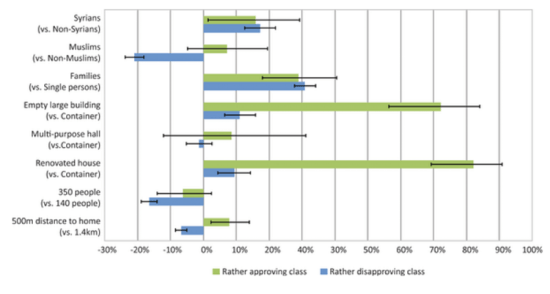
Our recently published research suggests that welcome culture has never been as widely embedded in German society as public debates in 2015 would make us believe.

Extension Extended

And it will extend on and on into the future indefinitely. These checks at the Austrian border are reality checks, you see.

Extend

Germany will extend temporary controls at its border with Austria for six months due to concerns the EU’s external frontiers are not sufficiently protected, the interior ministry said on Friday.

Germany coordinated the decision with Austria, Denmark, Sweden and Norway, a ministry spokeswoman said. The Danish government made a similar announcement on Friday, citing the threat of terrorism.

Germany and other countries in Europe’s normally controls-free Schengen zone introduced emergency border controls in 2015 after more than 1 million refugees and migrants entered Europe.

Left Now Right?

No, let’s call it Right Goes Left. How about Left Right Left?

Wagenknecht

This perennial leftist Frontfrau (lead singer) has just thrown up her hands in desperation about what to call her new collective (collectivist?) lefty movement of malcontents (there’s a big demand for movements like that these days) and finally settled for #aufstehen (stand up, rise up).

Leftwing politicians are singing the praises of border control while rightwingers call for expanding the welfare state. Old political certainties could be turned upside down in Germany this summer as the far ends of the country’s political spectrum both moot a “national social” turn.

A new leftwing movement soft-launching in Germany in August aims to part ways with what one of its founders calls the “moralising” tendency of the left, in an attempt to win back working-class voters from the far-right Alternative für Deutschland (AfD).

SPD-Vize Stegner kritisiert das Projekt als “Egotrip notorischer Separatisten.”