Climate Crisis Fun Facts!

Take a deep breath. It’s time for Climate Crisis Fun Fact Number One: There is no Climate Crisis.
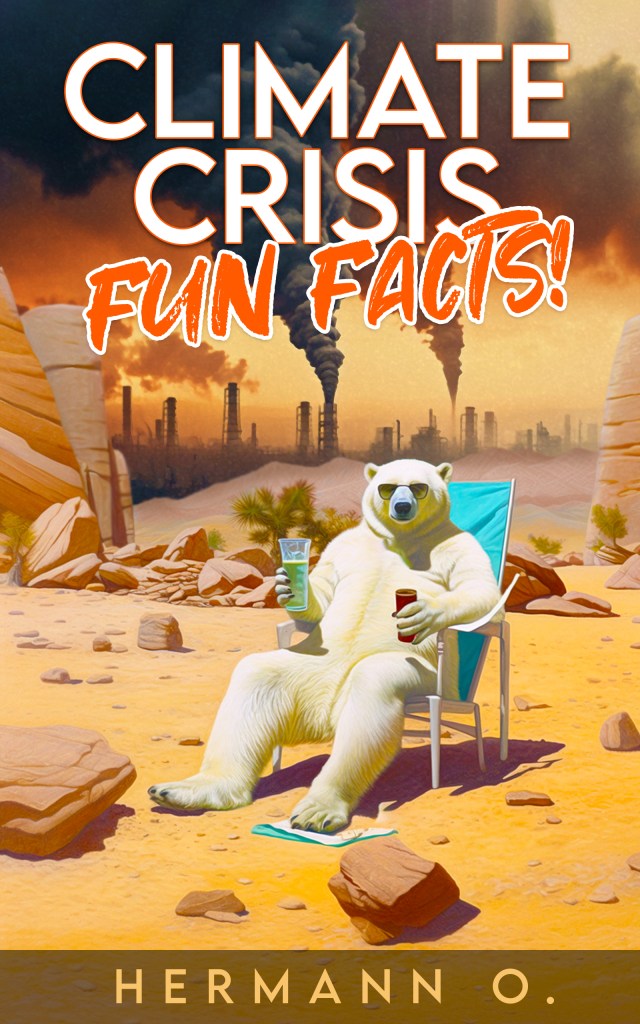
The weather is not your fault. The climate (weather over time) is not your fault either. Yes, the climate is changing. It is changing because it has never not changed. But no, the “pollutant” CO2, anthropogenic or otherwise, is not driving this change. It is driving plant growth. The narrative you are being led to believe is false. The causes for climate change are all natural. Natural, although not yet fully understood.

How do we know this? We know this because of the historical records our ancestors have left behind and the physical evidence Nature gives us from the vast, pre-industrial past. What we are experiencing has all happened before, only usually much worse. This is why we don’t need to worry about slowing down or stopping the changes we have been conditioned to fret about. These changes can’t be stopped and we can’t “save the planet” because it doesn’t need to be saved. We only need to worry about how we can best adapt to these changes, something humankind has been doing for countless millennia already.

But, huh? How could the rest of the world have reached a different consensus if CO2 isn’t a threat? Because consensus is a political, not a scientific term and those who profit from it also control public opinion. “They” are the aggregate of the professions, groups, institutions and industries that profits financially or in any other way from the CO2 narrative. And they manipulate the public very effectively by exploiting at least three well-known human weaknesses. The first is fear. Fear is easily planted and maintained in the minds of the dis-, mis- and uninformed. Those who plant it know that short of any real and present danger, we humans will find something to worry about ourselves. We look for things to fear, in other words, and our false narrative beneficiaries are here to help us find them. The second is our need to conform. Being firmly rooted in social hierarchies and strongly influenced by group dynamics, we have a primal need to belong. This need is so great that we are willing to deny our own reason to avoid the ban of social outcast. The third weakness is our anthropocentrism. We innately feel that human beings are the center of the universe and are somehow in control of Nature. We are neither, of course, and this leads to hubris, narcissism, ruinous decision-making and ultimate failure. We lack humility, in other words.

Humility is a good thing, however. And this book is an exercise in humility. It aims to offer those who feel uncomfortable with the arrogant CO2 Climate Crisis consensus of our age a chance to step back and doubt. It is a modest collection of well-documented facts and logical observations (most taken from the books listed in the bibliography) that will hopefully help you choose to refuse. Choose to refuse the bias and the hard sell. Refuse the fear mongering. Refuse the indoctrination and the religious fervor.

Remember that only the individual thinks. Only the individual reasons. You don’t have to take part in this mob psychology – or mass delusion, mass hysteria, mass psychogenic illness, mass formation psychosis, etc., if you prefer calling it that. This is what is currently plaguing our planet, not CO2. Just say no and step away. To choose isn’t hard to do. So, without much ado, may the skepticism be with you.

A Pattern Is Clearly Emerging

After years, if not centuries of intense observation, German climate scientists have now come to the shocking conclusion that it can get really hot here in the summer.

Summer

“As opposed to the winter  months,” one scientific interviewed said, “where we have observed a significant and prolonged drop in temperatures during the same period we took these measurements, it often happens that some summer days in Germany can get like, you know, hot as hell.” “Yeah,” another scientist colleague added, “and we now believe that this is most likely to take place during the month of July, for some odd reason.”

Germany swelters in record-breaking Europe heat wave – A record high temperature in Germany is forecast to stand for only a day as Europe’s second summer heat wave bites. Ships have been stranded, rail travelers urged to delay trips and tigers fed chicken ice blocks.

German Of The Day: Schneechaos

That means snow chaos. And that’s what Bavaria and Austria are experiencing these days. Right in the middle of winter, of all seasons.

Schneechaos

Lots of snow used to be lots of snow but today we prefer to call it “an extreme weather phenomenon.” And that’s what makes things so chaotic, I guess. And it all has to do with global warming, I’m told. And this is caused by humans. As the globe warms, you see, it produces more snow in the winter, or something like that. Counter-intuitive, granted, but I’m no global warming scientist – not like my bus driver and everybody else out there on the street these days. I’m going to read up on it one of these days, though. I promise. Maybe in the Spring once everything has thawed out again.

Das seit Tagen andauernde Schneechaos in den bayerischen Alpen ist noch lange nicht vorbei.

Germany Leaps Forward Again

In the saving the world game, I mean.

Unsinn

And here you thought the Germans shutting down their nuclear power plants after an accident in Japan was hardcore enough (and it was). Now they’re going to outlaw internal combustion engines (albeit not until the year 2030).

Amazing Scheiße, I find. It does make me wonder what they’re going to be outlawing next, however. I would have bet on the wheel but it’ll be pretty much taken care of as soon as the internal combustion engines go so I’m now going to put my money on fire itself. Do you have any idea how much CO2 cooking your food releases into the atmosphere? Me neither, but you can be sure that it’s way too much. At least in Germany.

Being a subscriber to Mad Magazine, when I first saw the title of this article at Gizmodo recently, I assumed I’d mixed up my bookmarks and gone to the wrong site. “German Lawmakers Vote to Ban the Internal Combustion Engine.” Oh, come on, man. That can’t be right, can it? The home of some of the higher performance engines in the history of fine cars can’t seriously be talking about this, can they? Well color me embarrassed because, with a few caveats, it turned out to be true.

Amateur Climate Scientist Puzzled How Earth’s CO2 Got To Mars

That’s right. I’m going to do a little amateur science today for once already if you don’t mind thank you.

Mars

I mean, I’m puzzled or something. If human CO2 emissions are the cause of climate change here on Planet Earth today (this is at least what folks here in Germany tell me every freakin’ day) and a similar type of climate change took place long ago on Mars as well (there used to be a lot more ice there a few hundred thousand years ago, you see) then how on Earth did we on Earth manage to transport our human CO2 emissions back through time and space to Mars to cause that Martian climate change in the first place and like not even be aware that we were were doing it or even how we were doing it and still aren’t for that matter? I’m just asking.

Is that creepy or eerie or what? Otherworldly, how insidious and tricky these human CO2 emissions can be these days.

Klimawandel gibt es auch auf unserem Nachbarplaneten Mars.

Arctic Sea Ice Spiral Of Death?

Wat dann nun (well which one is it then)? Satellite images show that “the Arctic ice crust is melting faster than expected“or

Polar Bear

stunning satellite images show summer ice cap is thicker and covers 1.7 million square kilometres more than 2 years ago.”

I know. It must be both.

The speech by former US Vice-President Al Gore was apocalyptic. ‘The North Polar ice cap is falling off a cliff,’ he said. ‘It could be completely gone in summer in as little as seven years. Seven years from now.’ Those comments came in 2007 as Mr Gore accepted the Nobel Peace Prize for his campaigning on climate change.

PS: The Ozone Hole is also doing really poorly these days and will soon disappear completely. Ozone scientists are therefore justifiably worried about what to worry about next.

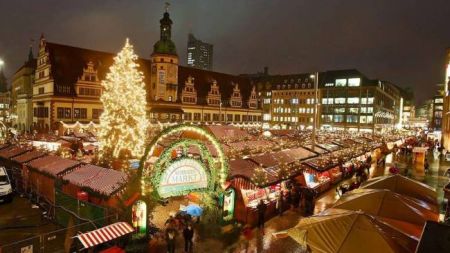
Storm Xaver So Horrific That The First Christmas Markets Are Actually Being Closed!

Supersturm! Angst everywhere! People are running for shelter wherever you look. Berlin has been closed for business. Germany is shuddering with fear. And all of this due to global warming. Or something.

Sturm

If we must die now, let us do so in an orderly manner and close the Christmas markets first. Then we can head home and die there in dignity. Where it’s safer. After the Tagesschau.

LEIPZIG SCHLIESST WEGEN „XAVER“ JETZT SOGAR DEN WEIHNACHTSMARKT!

CO2 Is Bad, Right?

Germany has produced 2 percent more CO2 than it did the previous year, 20 million tons more. Oh yeah, and there had been an increase in CO2 production the year before that, too.

CO2

Uh, I thought that this Energiewende (energy turnaround) thing was supposed to reduce these emissions. I mean, after turning off all of the German nuclear power plants and all, CO2 emissions just had to have dropped, right? I was never very good at science, though, much less at rocket science. This Scheiße is clearly way too complicated for me.

“Nach ersten überschlägigen Schätzungen dürften sich die energiebedingten CO2-Emissionen in Deutschland um etwa 20 Millionen Tonnen oder um reichlich zwei Prozent erhöhen.”

PS: Speaking of Scheiße, it turns out, to my amazement, that there actually are Germans who don’t like dogs. There seems to be a new anti-dog movement in the making that is being spearheaded by a magazine called Kot und Köter (Crap and Muts). I guess this had to happen sooner or later. And Kot causes CO2 emissions too, right?

Kot

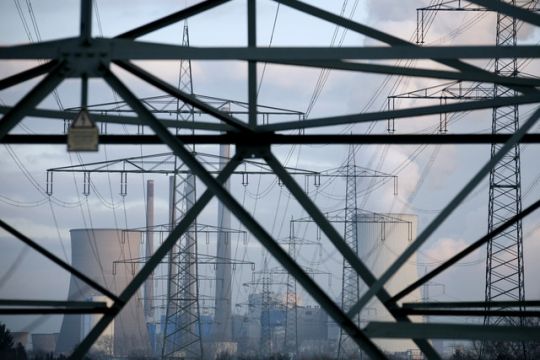
Germany’s Eight Unplugged CO2-Free Atomic Reactors Have Increased Air Pollution For A Second Year In A Row

No, wait. It’s the German coal-fired power revival doing that.

Green

Green shift? Sounds more like a green shaft to me.

Coal is the most polluting fossil fuel and is blamed by scientists for contributing to global warming. Merkel opted to shut nuclear power plants after an earthquake in Japan two years ago resulted in meltdowns at reactors owned by Tokyo Electric Power Co.

“Climate protection is a key target of the government and greenhouse gases should fall, not climb.”

Germans Concerned Global Warming Stagnation Stagnating Too Fast

SPIEGEL: Mr. Storch, Germany has recently seen major flooding. Is global warming the culprit?

Storch: I’m not aware of any studies showing that floods happen more often today than in the past. I also just attended a hydrologists’ conference in Koblenz, and none of the scientists there described such a finding.

Stagnation

SPIEGEL: Would you say that people no longer reflexively attribute every severe weather event to global warming as much as they once did?

Storch: Yes, my impression is that there is less hysteria over the climate. There are certainly still people who almost ritualistically cry, “Stop thief! Climate change is at fault!” over any natural disaster. But people are now talking much more about the likely causes of flooding, such as land being paved over or the disappearance of natural flood zones — and that’s a good thing.

SPIEGEL: Will the greenhouse effect be an issue in the upcoming German parliamentary elections? Singer Marius Müller-Westernhagen is leading a celebrity initiative calling for the addition of climate protection as a national policy objective in the German constitution.

Storch: It’s a strange idea. What state of the Earth’s atmosphere do we want to protect, and in what way? And what might happen as a result? Are we going to declare war on China if the country emits too much CO2 into the air and thereby violates our constitution?

SPIEGEL: What could be wrong with the models?

Storch: There are two conceivable explanations — and neither is very pleasant for us. The first possibility is that less global warming is occurring than expected because greenhouse gases, especially CO2, have less of an effect than we have assumed. This wouldn’t mean that there is no man-made greenhouse effect, but simply that our effect on climate events is not as great as we have believed. The other possibility is that, in our simulations, we have underestimated how much the climate fluctuates owing to natural causes.