No Taxation Without Decent Stations!

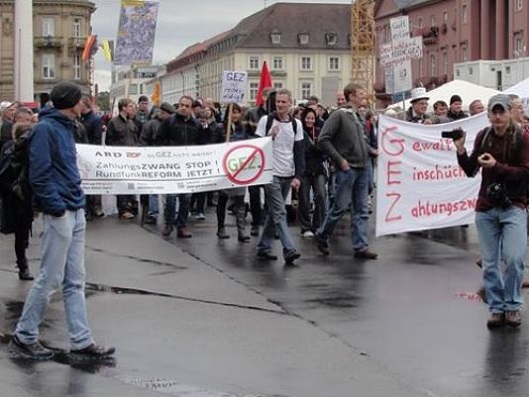
You say you want a revolution? Then GEZ out on the street and do something about it, people. “Public” TV? Sure. As long as the public has a choice about being forced to finance it or not.

GEZ

Since the 1970s, every German household with a television or radio has paid a monthly fee, called the GEZ, to finance public TV and Deutschlandradio, the national public radio network.

But in 2013, the government began to require every household and business to pay the approximately $20 monthly fee even if they don’t own a TV or radio…

In a sign of growing resistance, Beitragsservice issued more than 25 million warnings to households last year for not paying the fee, a 20% increase over 2014, according to its latest figures.

480 Millionen Euro nur fürs Personal: Das plant das ZDF mit Ihren GEZ-Gebühren.

Redistribution Is Da Solution (Again)

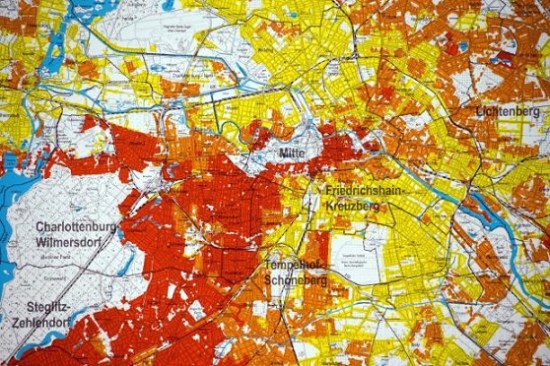
The next step backwards: Berlin has a new law prohibiting landlords from demanding rents that are more than 10 percent higher than the area average, in an attempt to keep housing affordable in a city that’s attracting 50,000 new residents a year. The rule relies on a disputed index — known as the Mietspiegel — that critics say is a statistical crapshoot.

Rents

“The rent brake is essentially a transfer of wealth from landlords to tenants. Berlin will become less of a destination for international investors because capital doesn’t like to be constrained.”

German Of The Day: Zwangsbeitrag

That means “compulsory contribution” and refers here to the TV fees every German household has to pay for Öffentlich-Rechtliche or public-sector (or state) TV. You have to pay this here, you see, whether you watch these channels or not. You have to pay this here whether you even own a TV or not. Germany has the most expensive public-sector TV channels in the world, by the way.

ARD

Sounds reasonable, right? Hardy, har har. Well, now German “scientists” have suddenly figured out that Germany no longer needs these expensive public-sector channels and that they can be, pardon my French, “privatized.” German scientists are notoriously thorough, you know, and that’s why it takes them a little longer than other folks to figure this kind of stuff out.

Other Germans will not want to hear this, however. This is because, well… It’s hard to say why this is. It would mean getting rid of Tatort, for one thing. This would be earth-shattering or something. And in the end, Germans also want to have an official opinion maker, I suppose, someone they can always go to when they need an official opinion of their own, so-to-speak – and Der Spiegel isn’t handy at that moment.

The more things change the more they stay the same. So don’t even THINK about changing channels. “That’s right, folks. Don’t touch that dial!

Wissenschaftler stellen bei der Betrachtung von ARD und ZDF fest: Deutschland braucht nicht länger den teuersten öffentlich-rechtlichen Rundfunk der Welt.

German Of The Day: Zweckentfremdungsverbot

Now that’s a German word for you. And no, not just because it has Verbot on the end of it, although that certainly helps.

SPD

Zweckentfremdung means misappropriation, and in this case the Verbot has to do with using apartments for something they were not meant to be used for; for renting. Well, actually, this particular misappropriation Verbot means renting them at a high rate to those awful and dreadful tourists who come to Berlin for a limited time instead of renting them out for much, much less to people who will be paying that much, much less for a much, much longer time. Which is, uh, better.

You guessed it, we’re back here in Berlin again and trying to rent your property for the most the free market will give you is an absolute sin in these parts and must be stopped immediately. And that’s what the Berlin SPD is now trying to do with this here new-fangled, old school Socialist-type Zweckentfremdungsverbot. And you and I both know that it will be yet another roaring success. Until it backfires and gets quietly repealed a few years down the road again, that is.

Experten setzen große Hoffnungen auf das Verbot. Denn dann sind Vermietungen an Touristen und Firmen künftig nicht mehr möglich.

PS: That picture up there kills me, too. Being willing to pay 500 euros (roughly $675) to someone who finds an apartment for you is considered a complete Skandal here so that’s why “the state” needs to jump in and take those 500 euros from somebody else to pay, so-to-speak, only it will be more like 5000 euros then, which is then OK.

State Subsidies In Action

This would be funny if wasn’t so funny. Where do we want to go broke today? Q-Cells is now the fourth major bankruptcy in the German solar industry sector of late and although they are sure to have made a lot of dumb mistakes themselves, they certainly couldn’t have gone bankrupt “this well” without the German government’s relentless and merciless help.
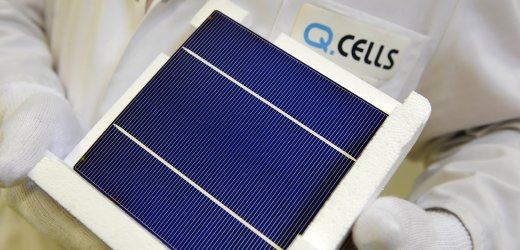
It’s all about drugs, subsidy drugs. And once these subsidy drugs had been administered – in this case promoting wonderful and environmentally friendly solar technology for the good of all German-kind (in a country where sunshine is still a news item) – most of these companies failed to wean themselves from their reliance upon them and made some bad business decisions as a result (decisions they wouldn’t have made if they had been clean).

In the meantime, Asian competitors in the real world learned to produce the solar technology cheaper (as usual) and, just to add a little insult to injury here, it turns out that the German government helped the Chinese solar industry with financial aid , too. Only they did this better than they did in Germany.

Then Berlin finally got tired of shelling out all this money back home and started reducing the dosage faster than the addicts could adapt to and, well,  the rest is history, or Geschichte, if you prefer.

So what’s the moral of the story? Remember those nine most terrifying words in the English language: “We’re from the government and we’re here to help.”

Somehow the German government must have lost sight of the fact that its policy in fact encourages the demise of Germany’s own solar industry. The development bank of the government-owned KfW group of banks supports China’s green industry with low-interest loans. Ironically, the German Investment and Development Company (DEG), also a subsidiary of KfW, is one of the financial backers of Chinese industry giant Yingli Solar.