German Of The Day: Bremser

That means brakeman or somebody who drags his feet and won’t get with the plan.

Germany, a world-class Bremser, has now dropped its opposition to an EU ban on Russian oil because, well, 1) they want to improve their image of being a Bremser and 2) they know that this ban won’t happen anyway because Hungary and Slovakia, being even more dependent upon Russian oil than Germany is (which is saying a lot), are being even bigger Bremser than the German Bremser is and for the ban to take place, all 27 EU countries must agree to it.

Two senior ministers in Chancellor Olaf Scholz’s government on Monday said Germany would be ready to back an immediate European Union ban on Russian oil imports, and that Europe’s biggest economy could weather shortages and price hikes.

German Of The Day: Knast

That means prison.

The imprisonment in London of the tennis legend Boris Becker for bankruptcy offences has triggered an outpouring of shock and disappointment in his native Germany, where he was once hailed as a national hero.

One former fan spoke for many when he said: “He made mistakes for which he’s rightly being punished. But maybe he’ll get up again one day, just like Becker, the tennis player, so often did.”

German Of The Day: Hörig

That means to be obedient, servile, to be in bondage or a slave, etc.

You know, as in “Germany is in bondage to Putin?”

For weeks, Olaf Scholz (63, SPD) has been hesitant to supply Ukraine with heavy weapons. In an interview on Friday, he spoke about his reasons: Concern about World War III and a nuclear conflict.

This has met with sharp criticism not only in Germany, but also in Europe. And in the U.S., too, people are reacting with displeasure to the chancellor’s lurching course. “What must happen for Germany to finally stand up to Russia?” the Los Angeles Times now asks in a commentary.

German Of The Day: Unverbesserlich

That means incorrigible, unreformable, incurable, dyed-in-the-wool.

Take Gazprom Gerd, for instance. Please. The Germans have pretended to be upset by his post-chancellorship antics but have secretely admired him all along, handling him with kid gloves (anyone who stands up to evil US-Amerika is a hero here). Now, with this little Ukraine thing going on, the bill finally has to be paid and everyone’s upset and wondering how they got here. Will there be consequeces for him? Of course not. Gazprom Gerd is Gazprom Gerd, after all.

The former chancellor who became Putin’s man in Germany – On the evening of Dec. 9, 2005, 17 days after Gerhard Schröder left office as chancellor of Germany, he got a call on his cellphone. It was his friend President Vladimir Putin of Russia.

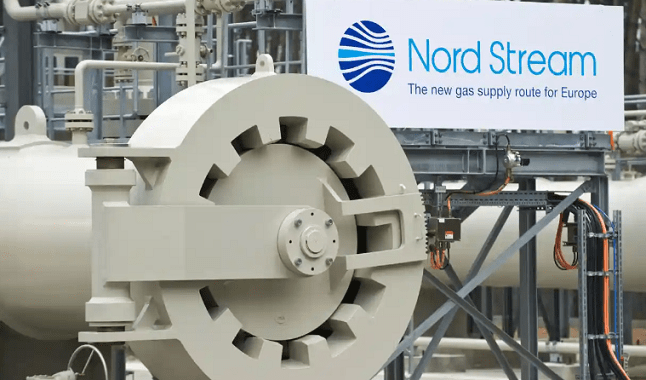
Putin was pressing Schröder to accept an offer to lead the shareholder committee of Nord Stream, a Russian-controlled company in charge of building the first undersea gas pipeline directly connecting Russia and Germany.

“Are you afraid to work for us?” Putin had joked. Schröder might well have been, given the appearance of possible impropriety; the pipeline he was now being asked to head had been agreed to in the final weeks of his chancellorship, with his strong support.

He took the job anyway.

Seventeen years later, the former chancellor, who recounted the events himself in a pair of rare interviews, remains as defiant as ever.

German Of The Day: Umweltschädlich

That means environmentally harmful.

And Green Germans, of all Green people everywhere, are now allowing gas drilling to proceed in one of Germany’s most controversial territories. This is odd. Even rätselhaft (puzzling), as Green Germans normally preach to the rest of the world how humanity should follow their example as they bravely march down the renewable road to the coming Green utopian future.

Something serious most have happened. Something very serious must have brought about this change of Green heart. Something real-world-like. I bet you dollars to solar panels it was something real-world-like. The real world always raises its ugly little head eventually. Reality just ain’t fair, in other words. Much less Green.

Germany To Drill For Gas In North Sea To Reduce Reliance On Russia – In a concerted move to move away from its heavy reliance on Russia amid the Ukraine crisis, Germany authorities have finally given in and allowed gas drilling to proceed in one of its most controversial territories.

On Wednesday, a German regional authority responsible for the Wadden Sea Islands gave the green light to a Dutch company to drill for gas in the North Sea above the Wadden Islands.

German Of The Day: Ziel

That means goal.

Like Tesla’s goal of producing 1,000 Model Ys per week at its brand new German Gigafactory near Berlin.

Production is currently at around 350 Model Ys per week. By the end of the month, it is to be increased to 1,000 per week. For the whole of 2022, a total of around 30,000 Model Ys are planned. Real volume production will not take place there until 2023.

How Germany Pays For Refugees?

It’s something they call “Steuerzahler” here.

That means taxpayer.

It’s a crazy new German concept the rest of the world ought to look into, I guess: The ever-expanding state taking on ever-expanding functions it finances by extorting a population ever-willing to pay up.

Ukraine war: How Germany pays for refugees – German leaders recently agreed on a €2 billion package helping states accommodate and integrate Ukrainian refugees fleeing Russia’s war. But money is not the only problem.

“Overall, we have found an acceptable compromise on the distribution of financial responsibility.”

German Of The Day: Zwickmühle

To be in the Zwickmuhle is to be in a predicament, to be on the horns of a dilemma.

As in Germany’s neighbors (see Ukraine and Poland) despising the pro-Russian policy it has been following forever, bypassing and ignoring them in the process. The punch line: Now the Germans are surprised, even offended that everyone is so upset about it. But it’s not much of a “dilemma,” if you ask me. It’s quite straightforward, really: The Germans went it alone, yet again, placed all their money on Putin & Co., and lost.

The reason for the rejection (for German President Steinmeier being unwelcome in Ukraine) is clearly Steinmeier’s course in recent years, which Kiev considers too Russia-friendly. As foreign minister, he had, among other things, always pushed for the construction of the Nord Stream 2 pipeline. “The warnings, it’s true, from our Eastern European partners we should have taken more seriously. Especially as far as the period after 2014 was concerned and the expansion of the Nord Stream 2 pipeline. And that’s why holding on was certainly a mistake,” Steinmeier had admitted last week. But despite the admission of mistakes and errors: The extent to which Germany’s Russia policy in recent years has caused disquiet and upset in Kiev is only now becoming really clear.

German Of The Day: Gescheitert

That means failed.

As in “The German parliament just failed in its attempt to push for mandatory COVID-19 vaccinations.” This is getting scary, people. Imagine. This means that non-vaccinated German citizens will be able to decide for themselves whether they will be vaccinated or not. The horror or something.

Germany’s Scholz says he will not make second push for vaccine mandate – German Chancellor Olaf Scholz said he was disappointed the lower house of parliament on Thursday voted against a COVID-19 vaccine mandate for people over 60, but would not launch a second attempt to push for a mandate.

Germany’s vaccination campaign is faltering, with around 76.6% of Germany’s population having received at least one dose – less than the more than 80% in other western European countries such as France, Italy and Spain.

A cross-party proposal had envisaged a bill requiring citizens aged 60 and over to be vaccinated against COVID-19 from Oct. 15, in an attempt to avoid another wave of the virus in the autumn.

German Of The Day: Ärmer

That means poorer.

As in “we will become poorer as a result.”

Germany “will be poorer” because of Russia’s assault on Ukraine, the government’s economy minister has warned, as soaring energy prices fuel record inflation and threaten to tip Europe’s biggest economy into a recession.

“It is not possible that this ends without costs for German society, it is unthinkable,” Robert Habeck told public broadcaster ZDF on Wednesday. “I believe that we are ready to pay this price which is small enough compared to the sufferings in Ukraine.”