Refugees had to endure freezing temperatures, scaling barbed-wire fences and hiding from soldiers on patrol. Getting caught meant a one-way ticket to one of East Germany’s special prisons — if you were not shot…
How Germany’s “death Strip” Became A Sustainable Lifeline.
Where the birds chirp, the bees buzz, the flowers bloom and the wolves rip your sheep apart.
You know. Natural stuff like that? Ah, nature is so Green (and sometimes red). And Germany is so Green it hurts.
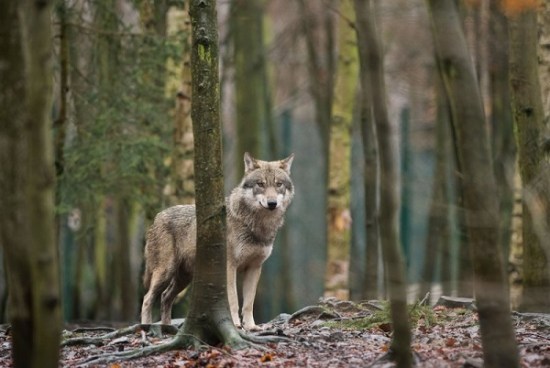
Wolves, once confined to fairy tales, are back in Germany, stirring debate – “It took me a moment to realize what was coming out of the forest,” said the 37-year shepherdess, recounting one eventful day last summer in northwest Germany.
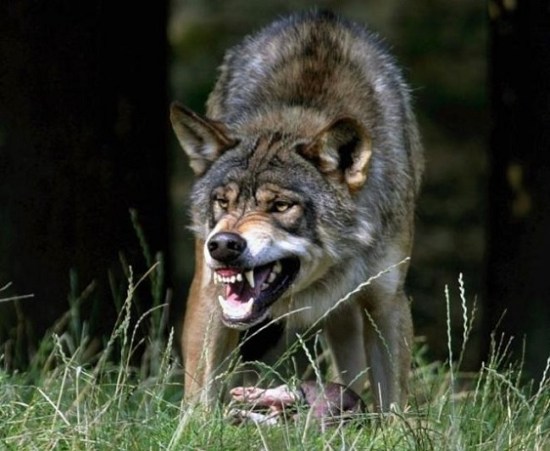
She was grazing her herd in a tree-lined field when she saw the wolf pounce.
“Aiiieee,” she screamed, recording with her phone as she launched herself toward the shaggy, slinking figure that had locked on to one of her ewes.
Turtles from America are spreading – North American freshwater turtles have arrived in Europe with the pet trade. Three species are now native to Baden-Württemberg. For local turtles, the immigrants could become a danger.
And these weren’t the first animal imperialists either. The next thing you know they’ll move up to house pet level and American German Shepards will start taking over.
Please don’t let Green Germans in on this climate crisis fun fact. It would only hurt their feelings.
Green utopians bravely ignore two fundamental problems with renewables: They are unreliable, thus requiring 100% backup, and energy-dilute, not energy-dense (like nuclear power), requiring huge tracts of land, transmission lines, mining, etc. (Apocalypse Never, Michael Shellenberger).
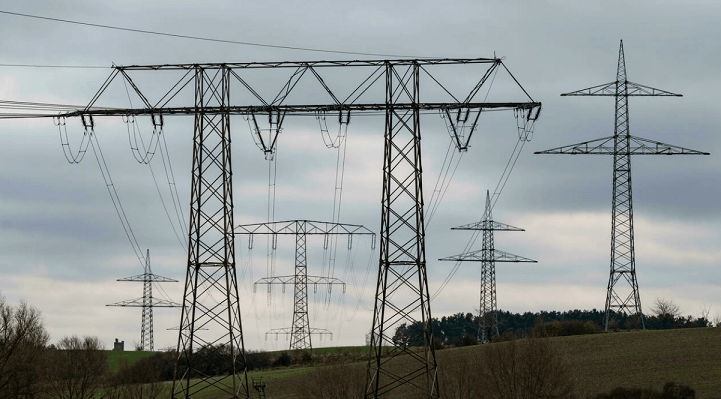
Wildlife concerns blunt Germany’s green power efforts – Germany is expanding its power grid to aid the transition to renewable energies, but local residents in some areas are holding up the process over concerns about wildlife.
“The problem is that wind energy is produced largely in the north, while many needs, especially industrial ones, are in the south. This electricity must therefore be transported using new networks,” Dierk Bauknecht, an expert at the Oeko-Institut research centre, told AFP.
To meet these needs, the German government has launched more than one hundred new power line projects over the past few years spanning 12,000 kilometres, according to official figures from the economy ministry.
This story bears a resemblance to the wolf pack incidents.
Bear in mind, Germans have this need to get back to nature. But one guy had to bear the brunt of this romantic nonsense while his girlfriend was forced to bear witness.
A German PhD student was mauled and bitten by a female bear while hiking in the Romanian mountains. He managed to drive the animal away after his girlfriend told him to “punch it in the eye.”
A PhD student, huh? So this guy was smarter than the average bear, was he? Hope the bear doesn’t bear a grudge. That would be noble savage of both of them.
“Then I remembered that you’re supposed to punch a bear in the eye, so I yelled that and the bear turned around and left him. Andi’s so lucky to be alive.”
Ah, the wolf. What a romantic, wonderful, mythical creature. Until recently, that is, when things started getting real again. Wasn’t nature supposed to be warm and cuddly and friendly and nice? These new wolves are turning out to be real pricks, however. They must have been ruined through their contact with human civilization.
Wolves are making a big comeback in Germany, which is making some Germans uneasy.
Farmers and hunters drove the species out of the country over 150 years ago, but conditions for wolves became more welcoming in 1990, after Germany’s reunification extended European endangered species protections to the eastern part of the country.
… He says government officials are insensitive to the worries of people living in the countryside. He thinks urban Germans have come to romanticize the returning wolves. “They think, ‘Aww, it’s a nice wolf, and he needs to be in nature and be free.’ But people raised in the countryside, they don’t need the wolf anymore.”
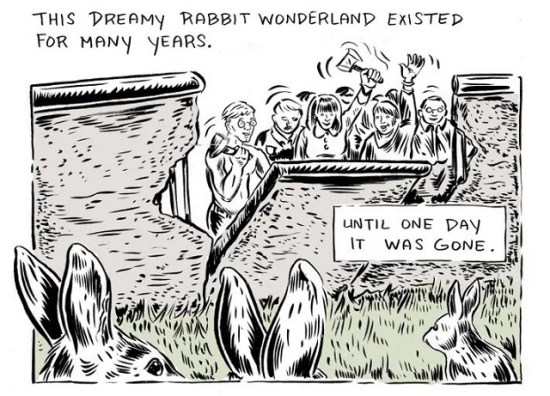
Put back up the Berlin Wall again already. For nature’s sake.
Bombweed. Yum! Wild Thyme, Burdock and Evening Primrose shimmy through concrete and broken stone…
As part of our new series The Illustrated City, Ali Fitzgerald reveals Berlin’s hidden spaces, where the flora and fauna are wild – if you know where to look.
Save the wolves? So they can attack us at… cemeteries?
These romantic visions of nature everybody fosters these days are all fine and good, I guess, but sometimes they can get a little creepy.
The German news agency dpa reported Wednesday that a 55-year-old man was working on the cemetery in the village of Steinfeld in Lower Saxony on Monday when he felt something biting his hand from behind. When he turned around, he saw a wolf attacking him and three other wolves watching from a distance. He managed to free himself from the wolf’s bite and shooed all the animals away. Then he went to see a doctor, who bandaged his injured hand.
Man oh man. This time there will definitely be consequences.
Auf einem Friedhof in Niedersachsen hat offenbar ein Wolf am Dienstag einen Menschen angegriffen. Nach Polizeiangaben soll das Tier den 55-jährigen Gemeindemitarbeiter in den linken Unterarm gebissen haben.
Or is it to the wolves? Or to the foxes maybe? Sheesh. Nature at its finest again.
When wolves aren’t killing deer down in the Bavarian outback these days, foxes are breaking into the Frankfurter Zoo at night and biting the heads off of flamingos. Bad animals! Bad!
Die am Wochenende im Frankfurter Zoo getöteten Flamingos sind keinem Tierquäler zum Opfer gefallen – sondern einem oder mehreren Füchsen.
PS: But now let’s move on to some more like totally unrelated unnatural type stuff. No Nukes, No Russian Gas, No Solar, No Fracking: How Exactly Does Germany Plan to Keep the Lights On?
Who’s in charge of this flood, anyway? Many wet Germans have begun asking themselves and others this question as the worst flooding the country has seen in over a decade moves northward through the country but not nearly fast enough if you ask them.
Normally in rapture with everything and anything that has to do with nature and the natural environment, this flood is the second Jahrhundertflut (flood of the century) within the past 12 years and patience for this excessive outpouring of nature’s splendor is rapidly wearing thin.
Germans simply cannot stand things that are not planned well, you see, and this cataclysmic inundation was clearly an organizational nightmare right from the start. The flood waters refused to stay in designated tributaries and caused chaos and hurt feelings pretty much right from day one as the rainfall that caused the flooding came all at once. Causing the flooding. Like I said.
The responsible party for this natural catastrophe has yet to be located (except for the usual suspect global warming, yawn, but that doesn’t really count because global warming is responsible for everything), but when he or she is, there’s going to be hell to pay.





 Observing Hermann