The lower house of Germany’s Parliament voted to legalize the recreational use of cannabis last week. It was a timely move. Germany’s leadership class is going to need all the mellow it can find in a world that isn’t going Germany’s way.
Maybe destroying all low-Earth orbit satellite communication forever might be a good thing.
Just saying. It would give us the opportunity to get back to the basics again. Back to the roots. And the nuts and the berries.
RUSSIA’S SPACE NUKE COULD DESTROY ORBIT FOR WHOLE PLANET, GERMANS WARN – “NOBODY WOULD SURVIVE AN ACTION LIKE THAT — NO SATELLITE, EITHER CHINESE OR RUSSIAN AND AMERICAN OR EUROPEAN.”
The anti-satellite space weapon Russia is said to be developing could potentially destroy low-Earth orbit for everyone.
“If somebody dares to explode a nuclear weapon in high atmosphere or even space, this would be more or less the end of the usability of that global commons,”
That means, more or less: “Well, what do you know? It’s possible after all.”
Germany hits 2% NATO spending target for first time since end of Cold War – Germany has met a NATO alliance target to spend 2% of its gross domestic product on defence for the first time since the early 1990s, a defence ministry spokesperson said on Wednesday, as spending ramped up after Russia’s invasion of Ukraine in 2022.
The German government is allocating the equivalent of 71.8 billion euros ($76.8 billion) for defence spending in the current year through regular and special budget outlays. However, the sum of its total defence spending is classified.
News this is not but it’s amusing to see the media pretend it is.
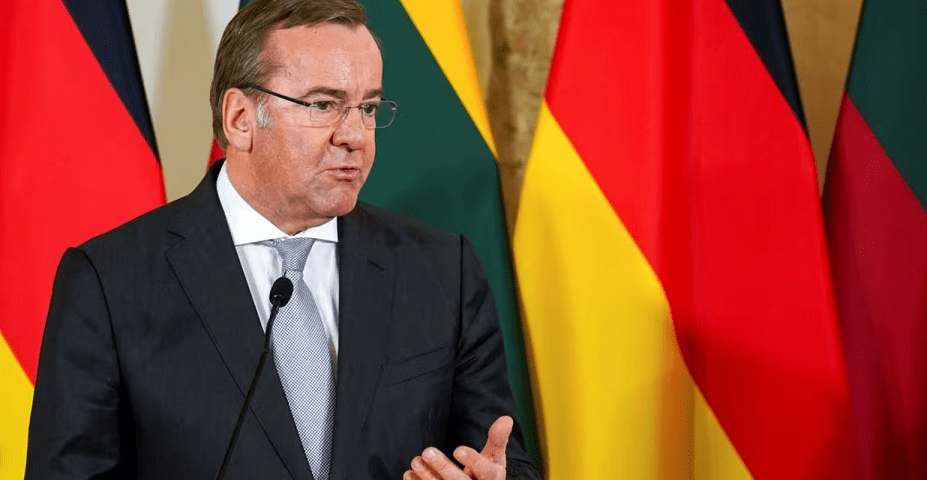
German defence minister says military is unfit for problems Europe faces – Boris Pistorius says Germany must be ready to confront Putin as he considers allowing non-nationals to join armed forces.
Yawn. Another “secret report” has been “discovered” somewhere. I hate public secret reports.
Especially when public secret reports like these are nothing other than plans. Normal military plans. Armies plan for everything, that’s what they’re supposed to do. Even when they aren’t real armies, like the Bundeswehr.
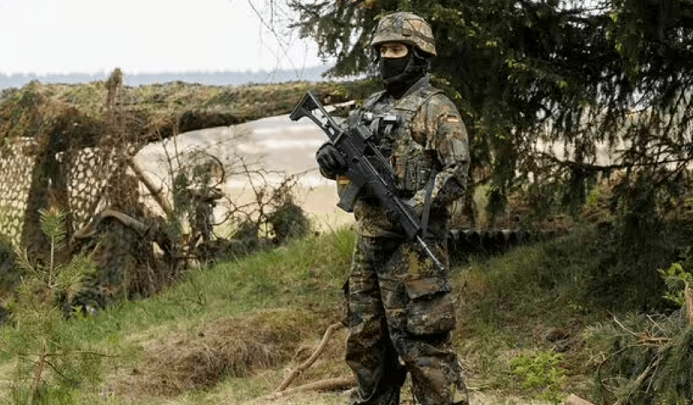
Germany ‘preparing for war’ as conflict between NATO and Russia ‘imminent’ – One of the founding principles of NATO is collective defence, which sees all members leaping to the defence of another country part of the alliance if it invokes Article 5.
Referring to a secret Bundeswehr document, a source told German daily Bild that an escalation between Moscow and the Western alliance could start as early as next month.
The confidential document details how the war may erupt, with events and incidents happening month after month.
Germany mulls reintroduction of compulsory military service – The Bundeswehr is facing a dramatic shortage in personnel. Now Defense Minister Boris Pistorius has rekindled the debate over reintroducing conscription.
At the end of October, the Bundeswehr said it counted 181,383 soldiers in its ranks — that’s still some distance from the target of 203,000 that the German military hopes to reach by 2025. This has given rise to concern in times of Russia’s war against Ukraine, which has once again reminded Germans how quickly conflicts can erupt in Europe.
Since taking office at the beginning of 2023, Defense Minister Boris Pistorius has been thinking about ways to make the Bundeswehr more attractive as a career. He said he has received 65 concrete proposals from his ministry on recruitment and reforming training methods.
Even conscription, something Germany ended in 2011, is also up for debate. “There were reasons at the time to suspend compulsory military service. In retrospect, however, it was a mistake,” Pistorius told newspaper Die Welt earlier in December.
German brigade to be combat ready in Lithuania, on Russian border, in 2027.
A permanent German brigade of about 4,800 soldiers in Lithuania, on the Russian border, will be combat-ready in 2027, defence ministers of both NATO members said on Monday after signing an agreement on German troops’ first permanent foreign deployment since World War Two.
While outwardly expressing full support for Ukraine, behind closed doors in Berlin and Washington plans are being hatched to force Ukraine into talks with Russia to freeze the war on its current front lines, German newspaper BILD said in a report published on Nov. 24.
That means loser. It also means losers (in plural).
US and Germany risk owning Ukraine’s stalling war effort – The onus is on European allies to step up support and chart a path for Kyiv towards Nato and EU membership.
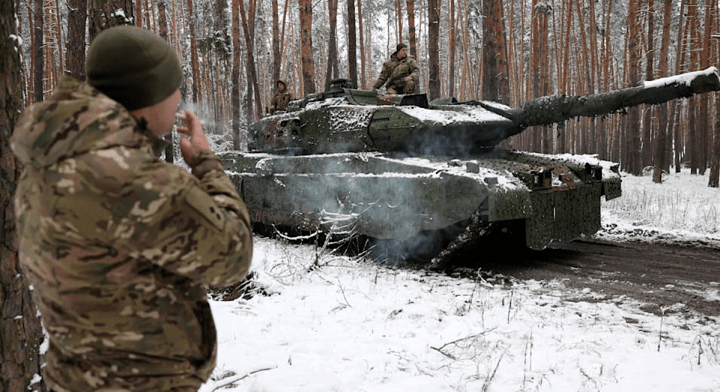
More than 50 countries are supporting Ukraine in its defence against Russia’s full-scale invasion. Yet Ukraine’s existential struggle in Europe’s largest war since 1945 currently hinges mainly on two countries. US leadership, as well as financial and material support for Kyiv, have been essential to Ukraine’s survival. Germany is its second largest supplier of weapons and money, far ahead of the rest of the field.
It was your willing dependency on it. And your systematic shutdown of reliable energy sources at home.
Green ideology got you here. Now sit back and enjoy it. And remember: You’re setting an example for the rest of the world.
Energy fears spur German industrials to seek investments abroad – Annual business survey finds concern over country’s future without Russian gas.
Nearly a third of German industrial companies are planning to boost production abroad rather than at home amid increasing concern over the country’s future without Russian gas, according to a closely watched annual survey.
The annual “Energy Transition Barometer” by the German Chamber of Commerce and Industry (DIHK) found that 32 per cent of companies surveyed favoured investment abroad over domestic expansion. The figure was double the 16 per cent in last year’s survey.