But then it’s right back to the regular 24/7 unplanned chaos.
So chill already.
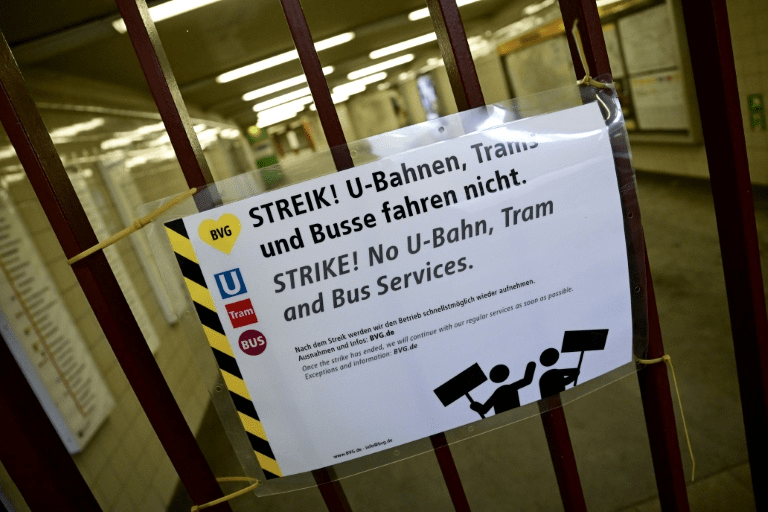
Germans Face Travel Chaos As Transport Workers To Strike – Public transport workers across Germany will stage a 48-hour strike from Friday as talks over pay and conditions stall, a union said, potentially sparking travel chaos for millions.
The Verdi union, negotiating on behalf of about 100,000 workers, said Tuesday it had decided to ramp up pressure on local authorities after making little progress in annual negotiations.
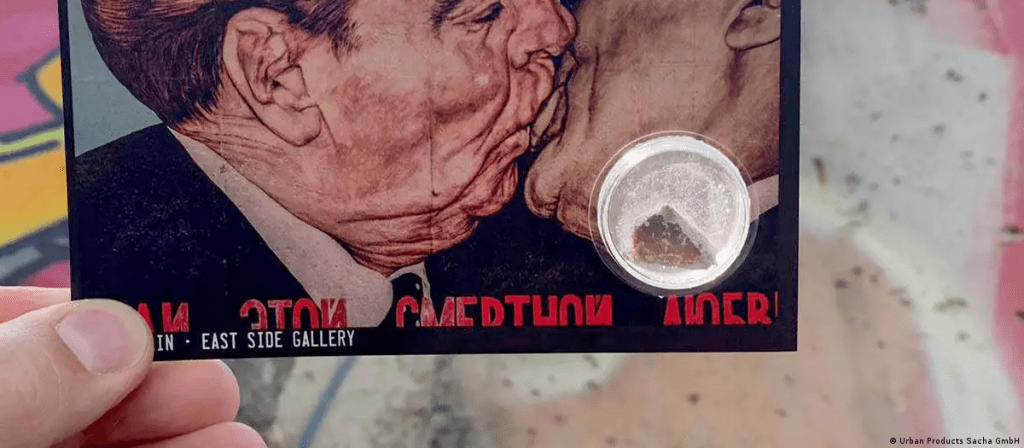
It’s been nearly 40 years since the fall of the Berlin Wall but you can still buy pieces of it in the German capital as souvenirs. Are they the real deal?
When the Berlin Wall fell in 1989, it sealed the fate of East Germany. People wasted no time and started hacking away at the monstrosity with hammers and chisels. Those people chipping away at the former border barricade were known as “Mauerspechte,” or wall woodpeckers. By June 1990, most of the Berlin Wall had been taken care of by bulldozers. Only a few sections of it have survived to this day; at the official Berlin Wall Memorial or the East Side Gallery, for example.
Still, fragments of the Wall keep turning up in large amounts all over the city. The Checkpoint Charlie Museum, souvenir stores and even hotels have thousands of pieces for sale. Almost 40 years since the fall of the wall, supply of the concrete chunks — brightly painted, made into fridge magnets or stuck onto postcards — shows no signs of slowing down. But, how can that be? Could these pieces of rubble perhaps come from much less significant and historical origins?
They all run out of other people’s money eventually.
German welfare state ‘can no longer be financed’ — Merz. The German chancellor has called for a welfare reform, putting him on course for a possible clash with the SPD.
“The welfare state that we have today can no longer be financed with what we produce in the economy,” Merz said in the town of Osnabrück.
The coalition partners had already agreed to reforming the social insurance system, which covers health insurance, pensions and unemployment benefits, due to rising costs and gaps in the federal budget.
The chancellor acknowledged that making cuts to social welfare would not be easy for the center-left SPD, but called for the two parties to work together.
Refugees had to endure freezing temperatures, scaling barbed-wire fences and hiding from soldiers on patrol. Getting caught meant a one-way ticket to one of East Germany’s special prisons — if you were not shot…
How Germany’s “death Strip” Became A Sustainable Lifeline.
Stasi: How the GDR kept its citizens under surveillance – Do all intelligence agents live like James Bond? Not those who worked for East Germany’s Ministry for State Security (Stasi). A new book reveals the mundane lives of the agents.
Free money for all: Germany’s basic income experiment – One of the world’s most extensive studies on unconditional basic income was held in Germany. What does the experiment reveal?
… It is seen as a redistribution of wealth through taxes. In the activists’ calculation, Germany’s top earners — 10% of the population — would end up contributing a part of their income to everyone else. They estimate that 83% of the population would thereby have access to more money. The remaining 7% mid-earners would be unaffected by the redistribution scheme.
In times of rising populism, the basic income activists believe that this is a way to combat the population’s dissatisfaction due to wealth inequality.
“European leadership?” There is no such thing. It’s just that now and then little reminders like this pop up in the news. Europe doesn’t lead. Europe doesn’t produce. It redistributes. It redistributes until there is nothing less to distribute.
First France, Now Germany: What Is Going On in Europe?
Germany’s government collapse and imminent snap elections mark the latest crisis amid an ‘uneven’ state of European leadership, an expert says.
IKEA’s motto: “Everything is possible if you think in opportunities.”
IKEA to compensate East German prisoners for forced labor – The German branch of IKEA has pledged millions to compensate victims of the former Communist East German regime, who were forced to make furniture components in the GDR.
The means Eric’s Lamp Shop (Eric Honecker’s Lamp Shop).
Das waren Zeiten. That means those were the days.
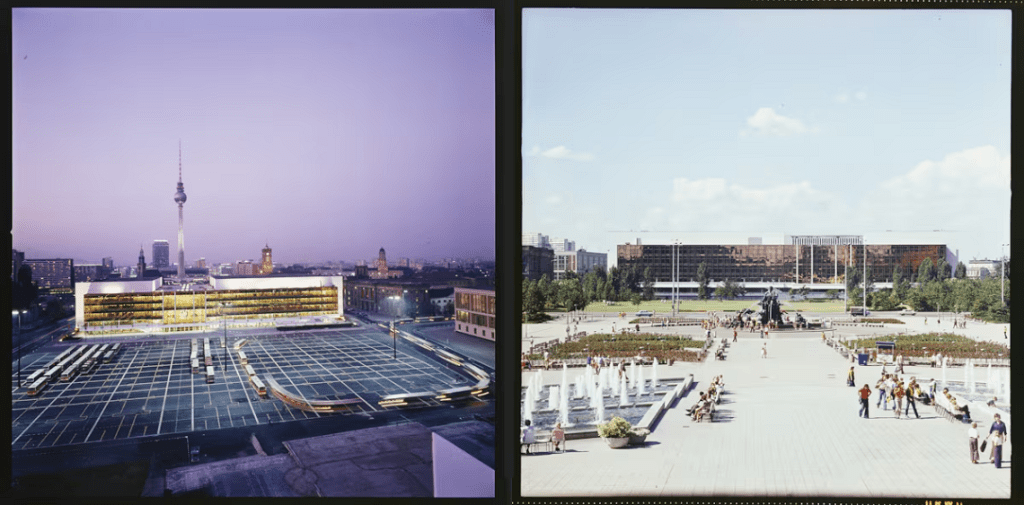
A demolished communist palace and other rubble: How Berlin is managing its GDR buildings and monuments – An exhibition commemorates the demolition of the former parliament building in the German capital in 2008, an example of the persistent erasure of traces of socialism in the city.
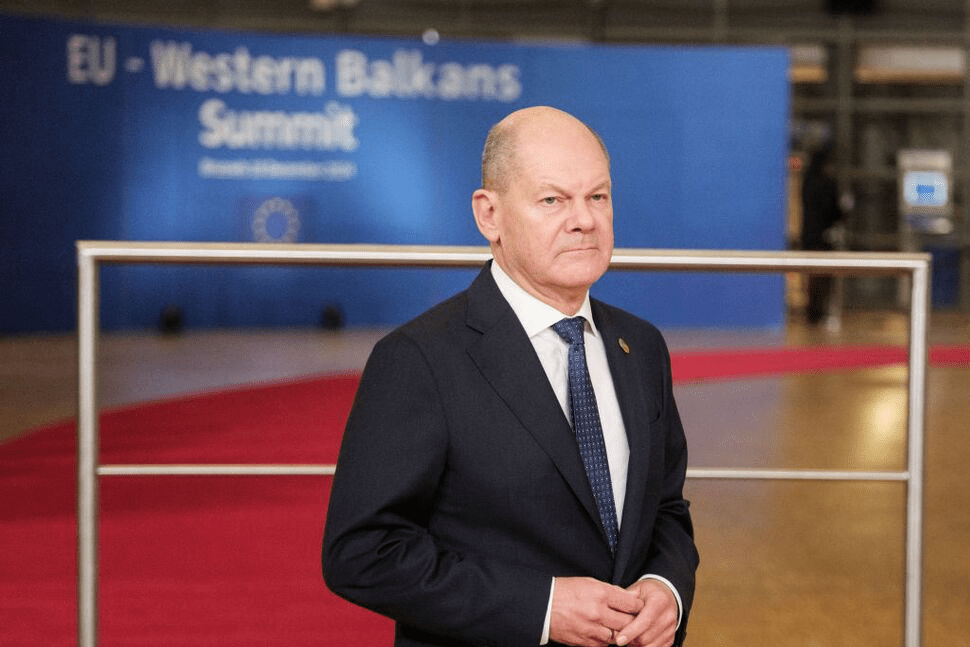
German Chancellor Olaf Scholz (SPD) said this months ago. He has always been ahead of his time, I guess.
That’s why the current fabricated frenzy about the AfD party allegedly planning the same thing doesn’t make much sense. But Scholz is a social democratic (socialist) goody-two-shoes kinda guy so the mass deportation he is demanding must be a nicer and more “social” kind. If he says “we have to deport people more often and faster,” nobody cares. That it’s all talk and no walk and none of these deportations will ever take place in Germany is another story altogether.
Funny what a few months and the continued success of of the AfD at the polls can make. But nothing has been orchestrated here, folks. Just move along please.




 Observing Hermann