Or maybe even Raubtierkapitalismus (predatory capitalism)! Or something else like that.
People really are confused these days, don’t you think? Not that they weren’t in the past. I just think they’re better at it now. Being confused.
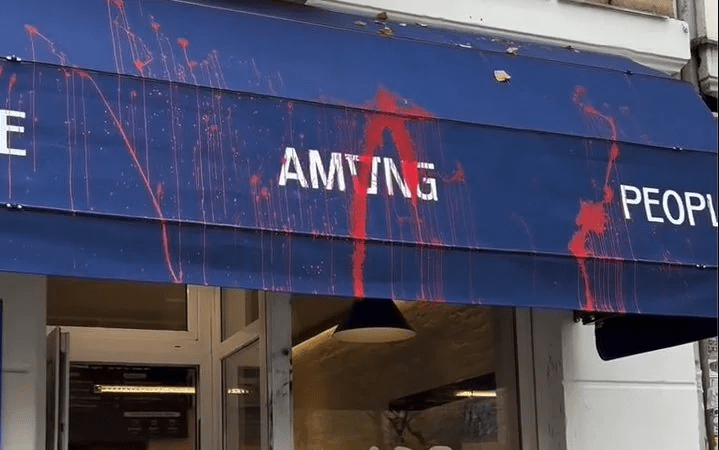
Berlin’s budget chain cafes attacked by mobs of hard-Left activists – Protesters in Berlin are hurling red paint at outlets for a new chain that offers drinks at nearly half the price of others.
It is at night that the group of angry Berliners hurl red paint at the coffee shop front, scrawling “Boycott LAP” on the walls.
Germany urges tough EU response if ‘fair deal’ cannot be reached on US tariffs – Europe’s biggest economy on Sunday urged a tough EU response if the bloc is unable to strike a “fair deal” with the United States over trade tariffs. On Saturday, US President Donald Trump threatened to slap the European Union with 30 percent tariffs. “We won’t accept just anything,” Lars Klingbeil, finance minister of Europe’s biggest economy, told the Sueddeutsche Zeitung newspaper.
The British news magazine “Economist”, which is read by decision-makers worldwide, sounds the alarm: in Germany, freedom of opinion is increasingly under threat – from laws, court judgments and a way of dealing with criticism that raises questions in a liberal democracy.
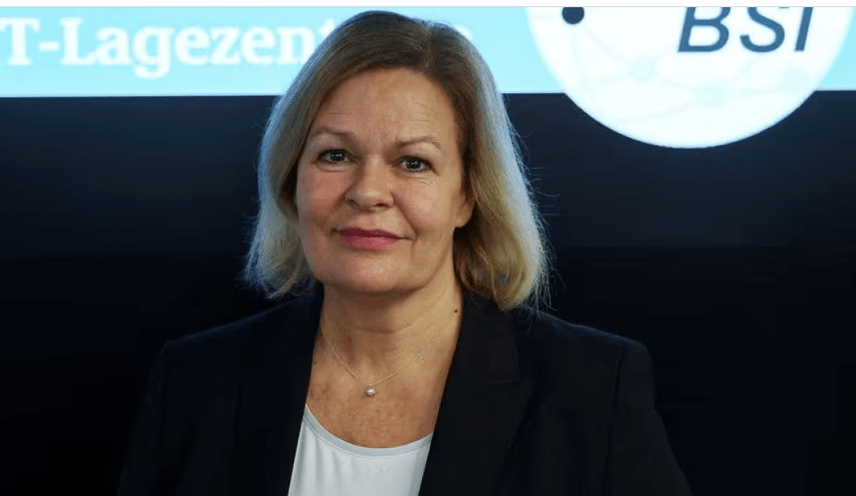
The report focuses on the case of journalist David Bendels. The editor-in-chief of the right-wing populist “Deutschland-Kurier” had published a manipulated photo of Federal Minister of the Interior Nancy Faeser holding a sign saying “I hate freedom of expression.” The Economist notes: “Such images are commonplace on social media.” However, Faeser filed a criminal complaint – and a court sentenced Bendels to a seven-month suspended sentence, a heavy fine and an apology.
Not about having out of control migration, the highest energy prices in the world, a stifling bureaucracy, no army, a crumbling infrastruture, a lack of skilled workers…
Slamming Trump is something we can all feel good about.
German Election Spotlight Turns to Trump – The American president’s foreign policy, and a divisive speech by his vice president, drew attention away from an attack by a refugee that some expected would fan political tensions over migration.
That means vote of confidence. Which of course means vote of lack of confidence in this case.
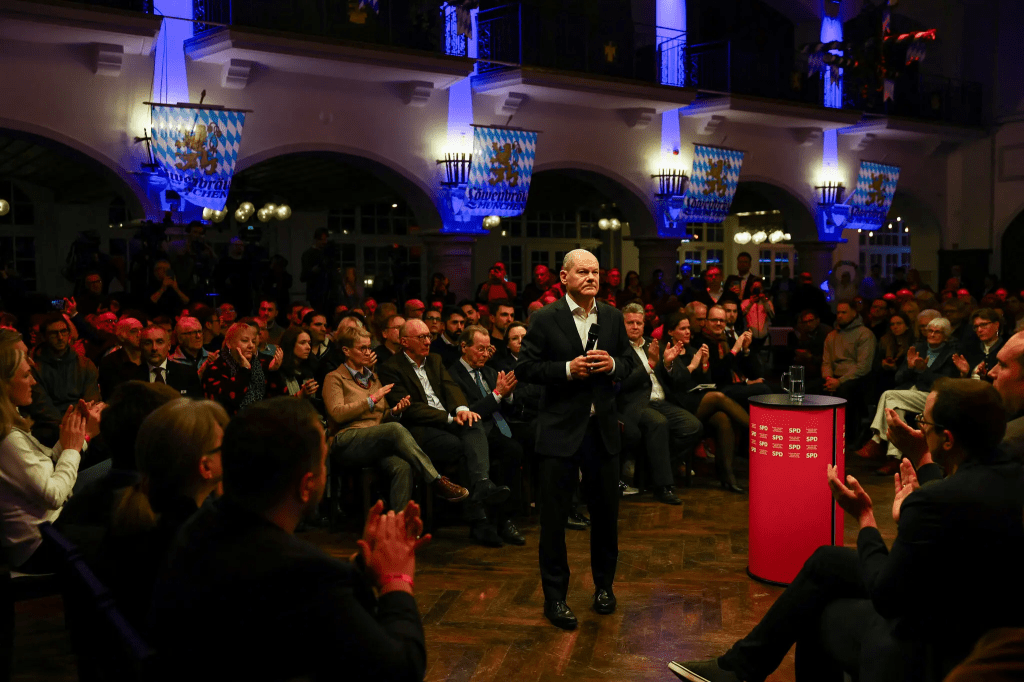
Who says Olaf and the SPD can’t bring in the votes?
Germany’s Scholz expected to lose confidence vote, triggering early election – Polls suggest that a February election would result in a rightward shift, at a moment when Europe’s largest economy is faltering.
Whereas with the 80-20 Rule (aka Pareto Principle) 80% of a company’s revenue is generated by 20% of its customers, when it comes to German elections, 80% of voters are very conservative regarding certain issues (“irregular” migration, for instance) but are ruled by 20% of those who aren’t.
German government reeling after state election defeats – The results of state elections in Saxony and Thuringia are disastrous for the parties that make up Germany’s coalition government. What will be the nationwide consequences from the regional votes?
They reflect the widespread nervousness caused by the somewhat older new measures created to increase this widespread nervousness, a widespread nervousness that was increased by other new measures before them that much, much older new measures created in the first place.
You know the routine. Ritual, actually. “Right-wing extremism” is on the rise in Germany. It’s always been on the rise, of course. It’s been on the rise for decades and decades yet it never seems to rise quite high enough to satisfy those worrying about its rising. These are, at the moment, those politicians in the established parties being threatened by the AfD, a party that actually claims to be interested in addressing the migrant madness German voters want them to address, something these established parties refuse to do. They’re plotting to ban the AfD, in other words, because they are incapable of addressing the problems the electorate wants them to address.
Germany bolsters gun curbs, financial policing to rein in far right – German Interior Minister Nancy Faeser on Tuesday unveiled measures ranging from stronger financial policing and earlier detection of so-called botnets to tightened firearms controls to tackle a far-right surge that has spooked the country.
The measures reflect widespread nervousness that the far-right Alternative for Germany party could end up the largest party in several state parliaments later this year, propelled by a gloomy economy and overburdened public services.
Leftist remarketing tricks still work (socialist BS is the gift that keeps on giving).
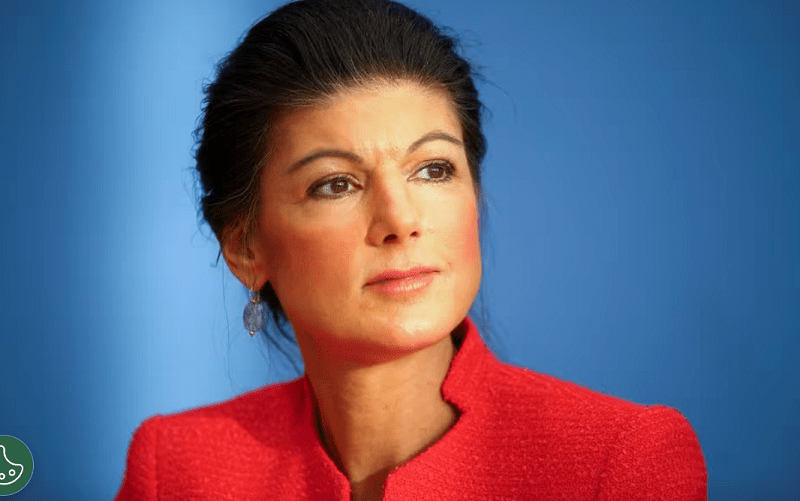
The new and improved “Sahra Wagenknecht Alliance – Reason and Justice” (BSW) party, here to “save democracy,” is polling at “up to” 14% of the vote in Germany. This means, of course, it might get 4% of the vote in an actual election, which isn’t enough to be elected, but still.
New German leftist party could take up to 14% of vote, poll shows – A leftist politician who quit Germany’s Left party and this week set up her own could win as much as 14% of the vote in national elections, dealing heavy blows to both conservatives and the far right, a new poll has found.
We… must… spend… more… money we don’t have! There just has to be a way around this debt brake!
Germany freezes spending as budget crisis deepens – As Germany’s financial woes grow more acute, there are growing calls to suspend the country’s damned debt brake.
Germany’s finance ministry has imposed a spending freeze on all federal ministries, deepening a budget crisis that has rocked the ruling coalition since a bombshell ruling by the country’s top court last week.
The finance ministry decision, which halts most new spending authorizations, followed a ruling by the constitutional court last week that blew a €60 billion hole in the government’s coffers.
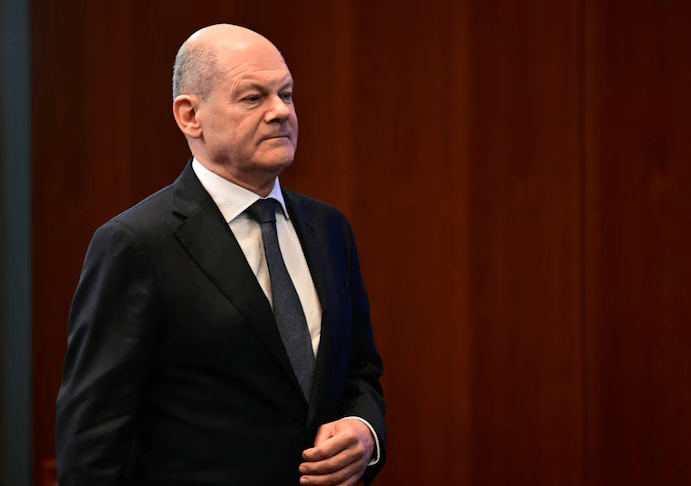
German chancellor Olaf Scholz agrees ‘historic’ stricter migration policy – Move comes hours after Italy unveils plan to build asylum reception centres in Albania for those arriving by sea.
Stricter measures to deal with a large number of migrants arriving in Germany have been agreed by the chancellor, Olaf Scholz, and state leaders, as NGOs criticised Italy’s plans to create centres in Albania to accommodate asylum seekers.
After a marathon session of talks in Berlin that continued into the early hours of Tuesday, Scholz said the measures would help speed up asylum procedures, restrict social benefits for migrants, and provide more federal funding for local communities.





 Observing Hermann