Germany to finally bow to the United States’ wishes

And become less dependent on the United States.

Germany’s Merz: Europe must become less dependent on United States – German Chancellor Friedrich Merz on Tuesday rejected a blistering attack on European democracies by the Trump administration, which issued a strategy paper last week declaring that the continent faced “civilizational erasure.”

The U.S. National Security Strategy, made public last week, caused shock across Europe, with a broadside that accused European governments of “subversion of democratic processes” and said U.S. policy should include “cultivating resistance” within the European Union.

“Reducing bureaucracy will be one of our top priorities!”

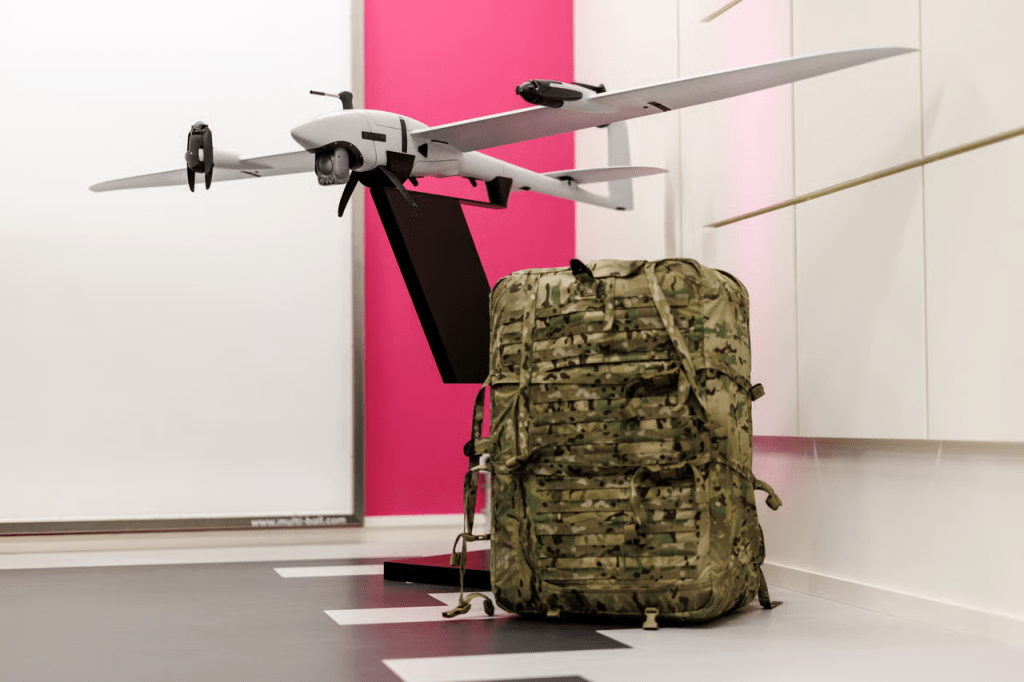
This is why we are going to create a new ‘super–high-tech ministry’ for research, technology, and aerospace.

Germany to create ‘super–high-tech ministry’ for research, technology, and aerospace – New governing coalition also plans to woo scientists from abroad and make it easier for universities to collaborate with the military on defense research.

The announcement is one of several nods to science in the 144-page agreement, unveiled on 9 April following weeks of negotiations between the center-right Christian Democrats (CDU) and its sister party, the Christian Social Union in Bavaria (CSU)—who together won the most seats in February’s federal elections—and the center-left Social Democrats. The agreement is expected to be formally approved by the three parties by early May, paving the way for CDU leader Friedrich Merz to be elected chancellor.

“Everything that could go wrong went wrong, or is going wrong”

Other than that though, alles ist in Ordnung (everything’s OK).

Germany’s lost decade: How the Fortune 500 Europe giant is flirting with long-term irrelevance – There is an elephant in the room of the 2024 edition of the Fortune 500 Europe. It’s not a crisis-riddled company or scandal-hit CEO. Rather, it’s the whole German economy.

For most of the 21st century, economists and neighboring countries have looked to Germany with admiration and envy as it managed to weather economic storms with relative ease, capitalizing on trade with growing economies and expanding the power of its industrial giants in the process.

However, a shifting world order has pulled the carpet out from underneath Germany. The industrial quirks that once helped it outgrow its European peers are fast becoming a burden, and crisis after crisis has exposed a lack of planning at the top of government.

Germany first to figure out what’s going on with Chinese 5G components

If you start counting at the end of the line.

Why Chinese technology set off alarm bells in Germany – Even as the German government moves to bar components made by China’s Huawei and ZTE from core parts of the country’s 5G networks, some German companies are looking to work with Chinese firms in other critical areas…

The ban comes as Chinese technology firms are increasingly viewed with suspicions for their allegedly too close ties to the government in Beijing. Especially Beijing’s drive to make companies like Huawei and ZTE world leaders in high-tech sectors makes Western governments wary of giving them too much influence on their national infrastructures.

Green German Hippy Chick Foreign Minister Finds The Real World Shocking

Even “more than shocking,” if such a thing is possible. Other than for her, I mean.

And somebody somewhere needs to do something about all this more than shocking stuff real pronto, I bet she’s thinking.

Germany’s foreign minister: Parts of China trip ‘more than shocking’ – German Foreign Minister Annalena Baerbock on Wednesday described parts of her recent trip to China as “more than shocking” and said Beijing was increasingly becoming a systemic rival more than a trade partner and competitor.

The blunt remarks followed Baerbock’s visit to Beijing last week where she warned that any attempt by China to control Taiwan would be unacceptable.

European Greens Against Huge Investments In Green Technologies

Because they’re not the right shade of Green. They’re not European Green, in other words.

They’re more of a Greenback shade of Green. And this makes them Green with envy. Or maybe it’s more like Green about the gills.

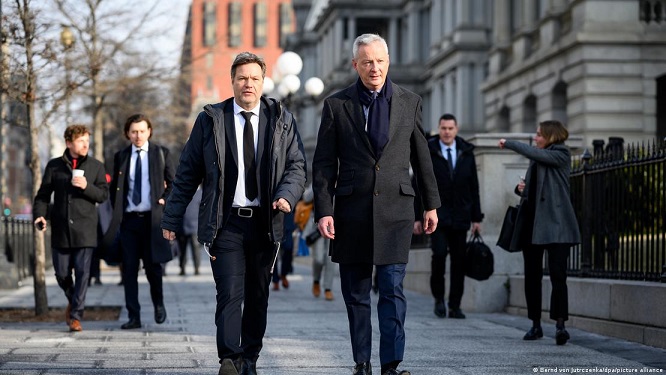
German Vice Chancellor and Economy Minister Robert Habeck was holding talks in Washington on Tuesday focused on the controversial US Inflation Reduction Act (IRA), which foresees huge investments in green technologies.

A large portion of the Inflation Reduction Act, somewhere in the region of $370 billion (roughly €350 billion at current exchange rates), is earmarked for spending and subsidies designed to support the green transition in the US.

For instance, it includes government incentives for consumers to buy electric vehicles, but only if the vehicles and batteries were produced either in the US or a country with a trade deal with the US.

Now Is Your Chance To Become An Über Driver

Über, get it? Hardy, har, har. That means over or above in German.

Über

German-made Flying Taxi Unveiled in Paris – A German tech company, along with French regional officials, have unveiled a prototype of a flying taxi that could begin demonstration flights in Paris as early as 2024.

At a news conference Wednesday at the Pontoise airport near Cergy, west of Paris, the Volocopter company presented the VoloCity air taxi, an electric vertical takeoff and landing vehicle, which the company will begin testing at the airport in June.

U-1021 2020

A German U-boat that sank off the British coast during World War II has been captured on camera in remarkable images.

Sub

The pictures were taken by diving contractor Dive Newquay, which took a group of divers to see the remains of U-1021, British news agency SWNS reports. The vessel lies 9 nautical miles off the coast of Cornwall.

“The U1021 lies about nine nautical miles from Newquay Harbour and sits in 55m [180 feet] of water,” a Dive Newquay spokesperson told the news outlet. “Dives of this depth are considered technical, which require special planning and different breathing gasses.”

The wreck is near two other U-boats that also sank during the war.

U-1021 served with 31st U-boat Flotilla before disappearing in March 1945.

The Spy Who Left Me

Buried in the woods somewhere in West Germany thirty years ago.

Spy

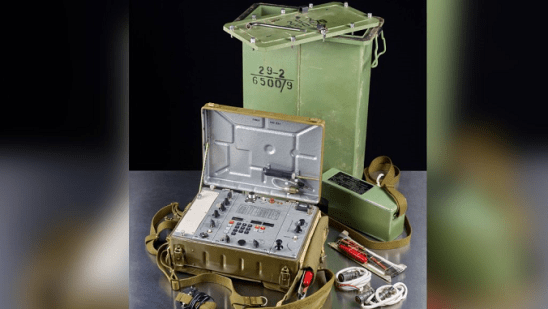
Sophisticated Soviet spy radio discovered buried in former forest in Germany – Archaeologists digging for the remains of a Roman villa near the German city of Cologne have found a sophisticated Soviet spy radio that was buried there shortly before the fall of the Iron Curtain.

The spy radio was buried inside a large metal box that was hermetically sealed with a rubber ring and metal screws. Although the radio’s batteries had run down after almost 30 years in the ground, the box hissed with inrushing air when it was opened…

The scientists suspect agents would have used the spy radio to send secret reports back to the Soviet Union about observation of the Jülich Nuclear Research Centre, about 6 miles (10 km) west of where it was found; or of the military air base at Nörvenich, about the same distance to the southeast, where U.S. Pershing nuclear missiles were based until 1995.

“Crotchety, Over-Critical Culture” Part II

As reported earlier, Germans themselves will be the first to admit that, when it comes to entrepreneurship, they have a “crotchety, over-critical culture, with its fear and condemnation of failure,” but it is what it is and they are what they are.

Cars

There’s even a saying/joke here that goes “anything in Germany that is not expressly permitted is forbidden.” Take electric cars, for example. Their production may not be expressly forbidden but the German automobile industry is doing its damnedest to pretend like they don’t exist. One could say this has more to do with “never touch a running system” (this industry still makes piles of money) but it really gets down to being crotchety again. They’re missing the boat and they know it.

Concern is rising in Europe’s automobile heartland about the economic impact of the industry’s move to electric vehicles from gasoline-powered cars.

Officials and executives in Germany fear the country’s big car companies and rich ecosystem of suppliers and service providers are insufficiently prepared for the transition, and that their leadership may not be assured in an electric-car world, threatening jobs, tax revenue and even growth.

Assembling electric cars isn’t as complex or labor intensive as making traditional vehicles and relies partly on imported technology. At the same time, China has made rapid forays in electrification and is shaping up as a potentially formidable competitor in the field.

The trepidation is particularly acute in the city of Stuttgart, hub to one of the country’s biggest automotive clusters at the heart of the nation’s dynamic south. It comes as Europe’s largest economy is showing signs of weakness amid a chill in global trade.

“The greatest catastrophe would be if the industry fell asleep at the wheel. It is crucial for jobs that companies like Daimler make a massive push into this technology and build locally.”