Author Archives: Hermann Observer
Kim

Drop In Number Of Refugees Due To Merkel’s Asylum Policy?
I think not. Try Austria’s asylum policy of enforcing real border controls.
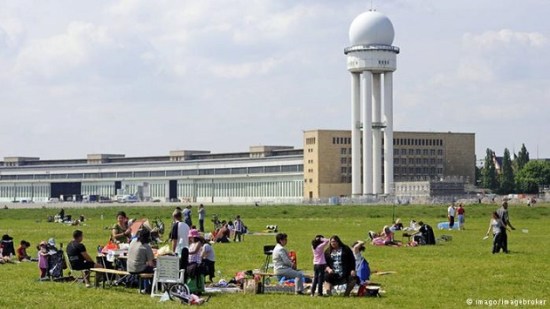
The Berlin government is going ahead with plans to expand the big refugee center at Tempelhof airport, even though its population has dropped. According to Berlin’s latest official figures, only around 50 refugees are arriving in Berlin every day – a long way below the 1,000 that sometimes arrived daily last fall…
While Merkel officially has stuck to her line, thereby isolating herself in Europe, Austria has made a drastic about-face within a matter of weeks. In September 2015, Faymann criticized Hungarian Prime Minister Victor Orban’s policy of deterrence, and now, Austria is following suit.
Austria has imposed a cap on the number refugees it will allow into the country and the authorities will now only accept 80 asylum applications per day. A four kilometer long fence has been erected near the town of Spielfeld at the Slovenian border. When Hungary built a fence along its border with Serbia in the autumn, Faymann fiercely attacked the activities. Now, even the armed forces are deployed at the Austrian border.
Data Protection, Data Protection, Data Protection…
This mantra is suddenly not quite as effective as it used to be in Germany.

“We have to expect a long period of terror. London, Madrid, Paris, now Brussels. Even German cities will not be spared in the long run. So far, we have been lucky”, stated Rainer Wendt, chief of the German Police Union at newspaper Passauer Neue Presse.
On this frame, German politicians ask for an increased exchange of information between European authorities, in a country that is really sensitive over privacy issues and has some of the strictest rules on privacy and data protection in the world, partly as a heritage from Germany’s surveillance history through the East German and Nazi dictatorships.
“The best remedy against such attacks is information exchange,” stressed Germany’s Interior Minister Thomas de Maizière.
And remember all the NSA, “friends don’t spy on friends” hysteria? U.S., Germany eye ways to deepen cyber collaboration
De Maizière will an die “Datentöpfe.” “Datenschutz ist schön, aber in Krisenzeiten hat Sicherheit Vorrang.”
Spontaneous German Response To Brussels Attacks Hits ISIS Terrorists Where It Hurts Them Most
In their hurts-to-laugh muscle or the so-called “intercostals” located right here, between the ribs, that’s where.

Pictures of smiling people raising a glass to the camera bloomed across social media in Germany on Tuesday, in a spontaneous response to the Brussels attacks…
The “here’s to love” hashtag was launched by a social media editor at Spiegel Online, who posted a picture of herself on Facebook holding a glass with the caption “Here’s to love, listening to one another, respecting oneself and others, being honest, shouting, screaming, talking about everything and drinking, to kissing and confetti, to life and freedom.”
Netz-Reaktionen auf Brüssel: „Gestern und heute wollte es #AufDieLiebe trinken.“
Don’t forget, jihadis: Because the rib cage contracts rapidly during laughing (as with coughing and sneezing), sharp pain can result if there are trigger points in your intercostals. Luckily, relieving these trigger points is often straight forward and fairly simple. Read here to find out more!
The Black Is Back

News Flash: Wealth Unevenly Distributed Here
Germans everywhere were shocked to discover today that the nation’s wealth has not been evenly, uniformly and fairly distributed as had previously been believed.
“Wah? Howya figure?” asked one dumbfounded German upon being informed by Spiegel-Online that the upper ten percent of his fellow countrymen possesses 60 percent of Germany’s wealth while the lower half only owns a lousy 2.5 percent of it (leaving lots of wealth left over somewhere else if I’ve done the math correctly, but still). “This sure is news to me. We Germans have all been raised in the confidence that we live in an ideal, egalitarian society in which things like income inequality are absolutely unthinkable and unheard of, much less possible. Why, these are amerikanische Verhältnisse or something! Why weren’t we informed of this earlier?”
Spiegel-Online apologized for this but then comforted their distraught readers by explaining that at least every German household enjoys having some 214,000 euros ($240,000) at its disposal – on average.
Jeder Haushalt besitzt 214.000 Euro – im Schnitt.
Secret Swagger Or Bausünde?
I know that beauty is in the eye of the beholder and all that but I think I’ll still go with Bausünde here.

Berlin’s post-war high rises were built with practicality, not beauty, in mind. The hulking buildings were designed to house as many families as possible, and though they were once desirable, today they aren’t generally considered great places to live. But photographer Malte Brandenburg casts them in a new light with his series Stacked…
The photographer started the project late last year, and shot over a dozen high rises throughout Berlin. He lives in Copenhagen and scouts locations whenever he visits Berlin, seeking out buildings set against an uncluttered skyline. Brandenburg shoots from nearby buildings, parking garages, and other elevated spots so he can capture the towers as directly as possible, using a telephoto lens to help correct the perspective. “I would ring the doorbells of the tower buildings across the street and ask the people to let me in so I could shoot from the stairways,” he says.
Franziska W.

German Spy Finally Going To Experience Something Exciting
It’s a little number they call “eight years of prison.”

According to German authorities, Reichel spied for both the CIA and the Russian secret service because he was bored, frustrated with his workplace environment and wanted to “experience something exciting.”
Just remember: “When you pay attention to boredom it gets unbelievably interesting.”
Der 32-Jährige begründete die Spionage zu Prozessbeginn mit Frust, Unzufriedenheit und Unterforderung an seinem Arbeitsplatz. “Im BND hatte ich den Eindruck: Da hat man mir nichts zugetraut”, sagte er. Bei der CIA wäre das anders gewesen. Dort hätte er sich beweisen können.
 Observing Hermann