New clown in town!

And she “will continue to play a prominent role on the world stage.”

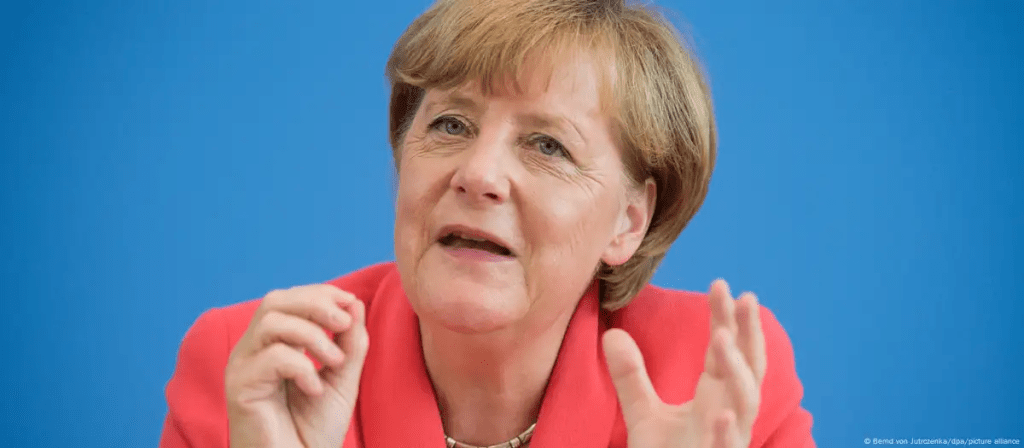
Former German Foreign Minister Baerbock starts UN job – Annalena Baerbock, former Green Party politician and foreign minister, has moved to New York to start her new job on September 9. Not everyone is happy that she will be presiding over the UN General Assembly…

Then, on June 2, she was elected as the new president of the United Nations (UN) General Assembly in New York. However, unlike her predecessors, Baerbock was not approved by the customary show of hands to signal unanimous approval, but through a secret ballot.

Work more than 34 hours a week?

Not with us!

Does Germany need to work harder? Its government seems to think so – The average workweek in Germany last year was about 34 hours, according to Eurostat data, less than France and Greece as well as the average across the European Union, which was 36 hours. In addition, German labor productivity per hour has also been essentially flat since 2009.

A study by the Organization for Economic Co-operation and Development reports that Germans work the least among its member countries, clocking in at 1,335 hours per person per year in 2023, compared to 1,496 hours in the U.K. and 1,805 hours in the U.S.

“Why the Bundeswehr cannot shoot them down?”

Duh. Because the Bundeswehr cannot shoot them down.

They don’t have the means.

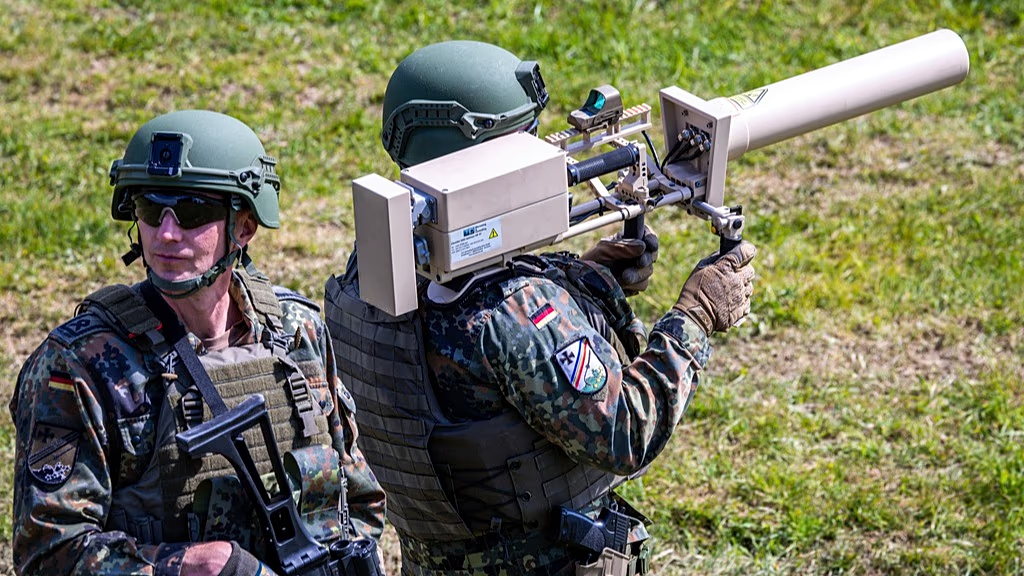
Russian spy drones over Germany: Why the Bundeswehr cannot shoot them down – Russia uses surveillance drones over eastern Germany to monitor Western arms deliveries to Ukraine. German authorities are struggling to counter these espionage activities.

Russian surveillance drones are conducting reconnaissance flights over eastern Germany to track arms shipments to Ukraine, with over 530 drone sightings recorded in the first three months of this year alone, according to Western intelligence services.

They track the ever-changing routes of European military transports to identify which weapons will soon reach Ukraine, where new war equipment will be delivered, and when new ammunition will arrive at the front.

The shocking thing is that…

It’s not really shocking anymore.

Germany suffer shock World Cup qualifying loss to Slovakia – Germany’s 2026 World Cup qualifying campaign got off to a disastrous start as they suffered a deserved 2-0 defeat to Slovakia. Furious head coach Julian Nagelsmann questioned his team’s mentality.

Germany’s journey to the 2026 World Cup in the USA, Mexico and Canada got off to the worst possible start as Julian Nagelsmann’s team suffered a deserved 2-0 defeat to Slovakia in Bratislava.

Nearly three months after the disappointment of the Nations League, Germany looked out of shape and sorts. They had never lost a World Cup qualifier away from home before tonight. History had been made, but not the kind that Nagelsmann wanted.

What’s a little power gap here and there…

As long as you can say you have the highest energy costs in Europe?

Or is it the highest energy costs in the world? I forget. Go, Greens!

Germany could see power supply gap in 2030, regulator says – Germany’s Federal Network Agency on Wednesday warned that rare electricity shortfalls could occur as early as 2030 if the country’s energy transition stalls, though supply is otherwise expected to remain secure through 2035.

The Security of Supply Report, approved by the federal cabinet on Wednesday, highlights the risks should renewable expansion slow, new gas-fired power plants fail to materialize, and electricity demand not become sufficiently flexible.

German of the day: AfD

That stands for Another found Dead.

Six candidates from Germany’s rightwing AfD party die 13 days apart in lead up to local elections: reports – Four candidates and two reserves from the right-wing AfD political party in Germany have dropped dead within 13 days of each other — just before elections, according to reports.

The Alternative for Deutschland candidates were set to appear on ballots in North Rhine-Westphalia on September 14.

Officials said no foul play is currently suspected in any of their deaths, the BBC reported.

German of the day: Herbst der Reformen

That means the autumn of reform.

It’s similar to the German spring, summer and winter of reform, only here nothing gets reformed in autumn.

Germany’s Merz faces trouble over ‘autumn of reform’ – Friedrich Merz has decided that the autumn must be the season for tackling Germany’s urgent domestic problems, but that means conflict with his center-left coalition partners.

Chancellor Friedrich Merz’s “autumn of reform” could turn into a season of coalition strife as he plows ahead with his ambitious plan to reform Germany’s welfare state, while bringing in tax reforms to boost the economy.

The challenges are significant: The German economy now faces a third year without GDP growth, the welfare state and pension system are failing to keep up with demographic challenges, and the federal budget has a hole of some €172 billion ($200 billion) for 2027 to 2029.

Still “managing it…”

Not.

The influx of migrants has been out of control for ten years now and there’s no end in sight.

Germany updates: Merkel’s ‘Wir schaffen das!’ 10 years on – Today marks 10 years since Chancellor Angela Merkel said “we’ll manage it” as Germany welcomed hundreds of thousands of displaced people.

Wir schaffen das” is now “wir sind geschafft.” We’re done. Exhausted.

If a dog bites a man, that’s nothing…

But if a Senegalese migrant bites an officer, that’s not anything either.

Senegalese Migrant Bites Municipal Officer in Berlin – A CDU politician witnessed a brutal attack in Berlin-Pankow when a 30-year-old Senegalese man assaulted two municipal officers, biting one in the cheek.

The incident began when the man was approached over a discarded cigarette. He refused to pay the €55 fine or show his ID card, instead he started insulting the inspectors and accused them of racism.

When the officers attempted to block his path, the man punched one in the face and then bit a hole in his cheek. The injured officer was hospitalized for inpatient care.

Opera posing as an opera…

tells a story of a German journalist posing as migrant who was posing as a worker for two years.

But it was only a pose.

Opera tells story of German journalist who posed as migrant worker for two years – Docu-opera explores encounters and ethics of Günter Wallraff’s undercover work in 1980s, which he now describes as an existential necessity.