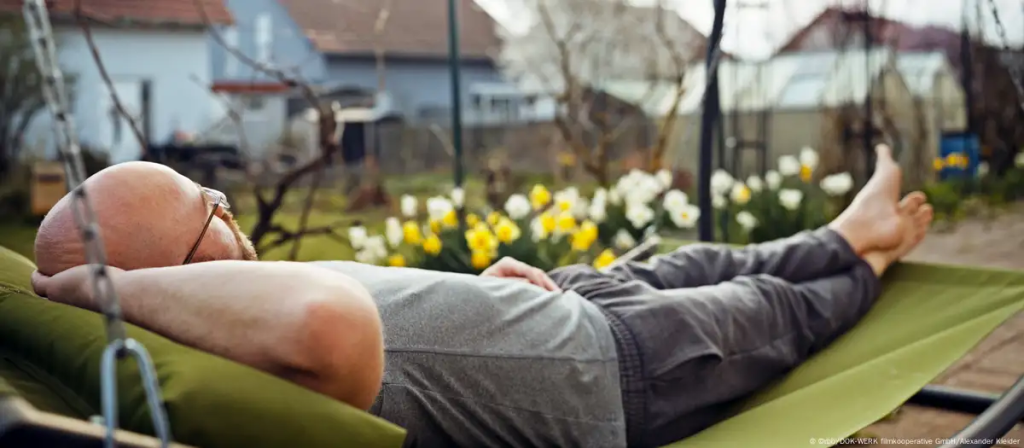
Germans were calling in sick long before Gen Z

It’s a Volkssport (popular national pastime) here. It’s just what Germans do.

People resent living in a political system that takes at least half of what you earn and they “pay it back” every opportunity they get. And twenty sick days a year is nothing. Berlin cops and firemen, for instance, are “sick” more than twice that amount every year.

German bosses are blaming the country’s economic woes on ‘work-shy’ Gen Z calling in sick nearly 20 times a year – Germany is in a structural crisis—with falling exports, soaring energy prices, and weakening competitiveness in its most important sectors. But according to the bosses of Germany’s biggest businesses, the real problem is its workers taking too much sick leave.

Several German employers have lamented a record-breaking year for absences linked to illness.

Car science isn’t rocket science, people

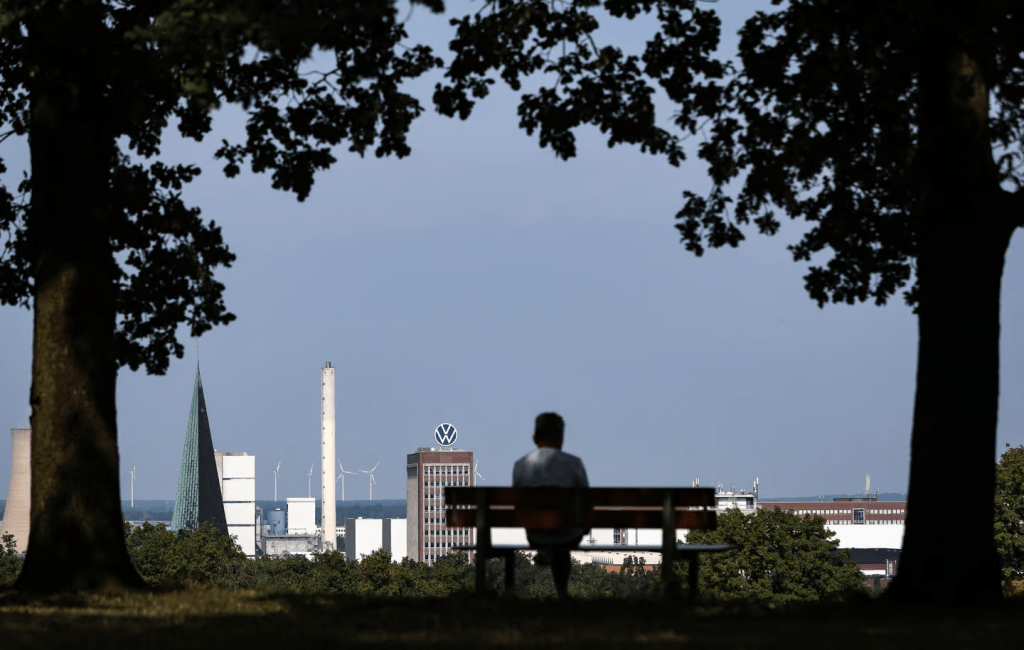
Nobody wants Volkswagen’s electric cars.

The fewest German drivers do, anyway.

Driving on empty: The German government has few options to help an ailing car industry – Economy Minister Robert Habeck will meet with carmakers — but he has few weapons to stave off a car industry crisis.

Threats of historic job cuts and plant closures at German car giant Volkswagen and plunging earnings elsewhere in the industry are prompting Federal Economy Minister Robert Habeck to hold crisis talks on Monday.

But strained federal finances, fights with China over car tariffs and looming EU environmental regulations leave Habeck with few tools to help an industry which is the country’s economic backbone.

Here’s your opportunity!

To find a job in a country that has…

some of the lowest salaries in Europe,
the highest taxes in Europe (if not in the world),
the highest social “contributions” (taxes) in Europe,
some of the lowest retirement pensions in Europe (unless you’re a civil servant),
the highest energy prices in Europe,
the highest water and sewage costs in Europe,
some of the highest real estate taxes and related bureaucratic costs in Europe,
some of the highest rents and real estate prices in Europe and
a catastrophic lack of available apartments.
I’ll stop there. For now.

So don’t miss out on this opportunity, millennials!

Desperate for millennial talent, Germany launches ‘Opportunity Card’ giving migrants a year to look for a job – Between an aging population and an economy in seemingly perennial stagnation, Germany faces some major challenges. Could a visa aimed at attracting more young, hungry workers be the answer?

Germany is set to launch an “Opportunity Card” just in time for the summer, aimed at young foreign workers hoping either to eventually secure a long-term job or simply work in the country for a while.

German of the day: Büroschlaf ist am gesündesten

That means sleeping in the office is the most healthy kind of sleep.

Have the Germans become lazy at work?

Germans have long been known for their diligence, sense of duty, reliability and productivity. Recent data suggests that Germans are working fewer hours. But that doesn’t tell the whole story.

A glance at current OECD labor figures can be startling. In 2022, the average American worked over 1,800 hours per year, while the average German worked only 1,340 hours. However, labor market researcher Enzo Weber from the Institute for Employment Research (IAB) in Nuremberg, Germany, dismisses suggestions of the once-industrious Germans now only wanting to enjoy their sweet lives.

“Germany has a very high female labor force participation rate compared to most other countries,” Weber told DW, noting that the main difference to other countries was that about every second woman works part-time, which mathematically lowers the average annual working hours.

I don’t think Indian students deserve this

They didn’t do anything wrong.

Why can’t we just learn to live in peace?

Germany targets Indian students to address labor shortages – Germany looks to tap into international student talent to keep its engineering and IT sectors afloat.

Germany is grappling with a critical labor shortage and aging population, with projections indicating a deficit of seven million skilled workers by 2035.

With some 700,000 vacancies currently unfilled, Germany’s economic growth potential has dropped to about 0.7% now from around 2% in the 1980s, and is set to fall further to 0.5% if the country fails to resolve this problem, German Economy Minister Robert Habeck has said, stressing the importance of migration in bridging this widening gap.

Engaging Germany’s Indian student population in the workforce may be part of the solution.

We Germans work the fewest hours

That’s why we desperately need a four-day work week.

To, uh, increase the hours worked each week? I don’t get it.

Germans work fewer hours over their lifetime than their European neighbours – In comparison to their European neighbours, people in Germany work fewer hours throughout their lifetime, a new study has revealed, but there is still a big appetite for a four-day week in the federal republic.

Germans work an average of 52.662 hours throughout their lives.

A new study from the Roman Herzog Institute has laid out the working habits of people in European countries. In comparison to their neighbours, Germans are on the clock for fewer hours throughout their lives, clocking in an estimated 52.662 hours of work, which means 39,3 years of their lives are solely occupied by work.

Human robots don’t cut it in Germany anymore

They’re just not as, well, robotic as their parents and grandparents used to be.

It’s time to replace them with the real thing.

As baby boomers retire, German businesses turn to robots – At machine parts producer S&D Blech, the head of the grinding unit is retiring. With Germany’s acute labour shortage leaving few candidates to take on the skilled but dirty and hazardous manual work, the company will replace him with a robot.

Other small and medium-sized companies are also turning to automation as the gradual exit from the workplace of Germany’s post-war “baby boom” generation tightens the labour squeeze.

What, me worry?

About work? I live in Germany.

I’ll just live off the state (i.e., taxpayers). Everybody’s doing it!

Germans question value of working after new welfare increases, survey shows – More than half of Germans believe work is not worthwhile after the government’s planned increase in welfare payments and child benefits, a survey showed on Tuesday.

The government said it was raising benefits, first introduced in 2005, to fight child poverty and help citizens cope with inflation, but added it did not want to deter people from work altogether.

Welfare payments, dubbed “citizens’ money”, for more than 5.5 million jobless in Germany will rise to 563 euros ($605.06)from 502 euros per month for single people from next year.

PS: What you may not be aware of is that those who receive welfare payments in Germany also get their rent, healthcare and other entitlements paid for in addition.

But everyone is underpaid in Germany

Why should refugees be treated any different?

And every German I’ve ever known is overqualified too. So, like, what’s the problem?

Refugees overqualified and underpaid in Germany – A new study has found that refugees in Germany have overall integrated well into the workforce. But many are overqualified for the jobs that they do.