This Was Not Planned So It Cannot Be Happening

Or will not be happening, I should say.

Fracking

As you know, Germany is green. And Germans are greener than green. Why, Germans are so green that Jamaicans want to roll them up and smoke them.

And Germans also like sticking to “the plan,” too (think Stalingrad). So they do not, I repeat do not appreciate it when, as in this case, their ambitious environmental plans get disturbed by unforseen technological developments that were not considered in the original plan and therefore start turning the whole Schlamassel (mess) into a really, really big and annoying, well, Schlamassel (think Stalingrad again).

It goes like this: “Ambitious environmental goals are far less meaningful if the economy withers in achieving them.” So when something really tempting comes along like shale gas drilling (hydraulic fracturing or “fracking”), a technology that could give Germany access to enough reserves to feed natural gas demand for 20 years, then that gets not-so-thoroughly-green people (yes, there still are a few specimens left) to thinking, plan or not.

So there we have it. And that’s the end of it (ask any German Green Shirt). Fracking can’t happen here. It is ideologically inadmissable. Fracking is something that those crazy Americans and their evil multi-national oil companies do, not us (multi-national oil companies are always American, by the way – don’t ask). Nope, fracking can never happen here. Never in a million years. Not this year anyway.

“We are sitting on Swiss cheese. The risks are just too high.”
Speaking Of Green Disasters…

“Germany’s Green Energy Disaster: A Cautionary Tale For World Leaders”

Green

“The costs of our energy reform and restructuring of energy provision could amount to around one trillion euros by the end of the 2030s.”

The Green Shirts vs. The Environment

Guess who’s going to win?

Green

One would assume that ecology and the Energiewende, Germany’s plans to phase out nuclear energy and increase its reliance on renewable sources, were natural allies. But in reality, the two goals have been coming into greater and greater conflict…

Since the party’s founding in 1980, it has championed a nuclear phaseout and fought for clean energy. But now that this phaseout is underway, the Greens are realizing a large part of their dream — the utopian idea of a society operating on “good” power — is vanishing into thin air. Green energy, they have found, comes at an enormous cost. And the environment will also pay a price if things keep going as they have been.

“We should overcome the temptation to sacrifice environmental protection for the sake of fighting climate change. Preserving a stable natural environment is just as important.”

Big Phasehout Payout On The Way

A three-month closure imposed by the government on RWE’s Biblis A and B reactors as an immediate response to the Fukushima accident was illegal, a German court has ruled.

Phaseout

The administrative court for the German state of Hesse has found the state ministry of the environment acted illegally on 18 March 2011 when it issued an order for the immediate closure of the Biblis units.

This decision, as well as a tax on nuclear fuel levied in anticipation of continued operation of nuclear plants before the phaseout decision, have cost German nuclear operators dear: RWE estimated that the phase-out cost the company over €1 billion ($1.3 billion) in 2011 alone.

Any claims for damages against the state of Hesse would be decided in subsequent civil court proceedings.

More Green Energy Jobs

More jobs lost to green energy, I mean.

Offshore

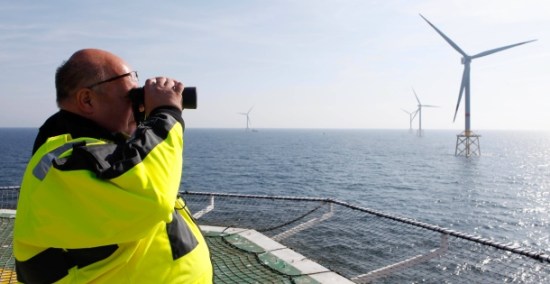
Worlee-Chemie GmbH, a family-owned company that has produced resins in the city of Hamburg for almost a century, is trying to escape the spiraling cost of Germany’s shift to renewable energy.

A 47 percent increase on Jan. 1 in the fees grid operators set to fund wind and solar investments is driving the maker of paint ingredients to Turkey, where next month it will start making a new type of hardening agent at a factory near Istanbul.

The levy will cost Worlee 465,000 euros ($620,000) this year, the equivalent of 10 full-time salaries, or one-third of the company’s tax bill. As German labor costs rise at the fastest pace in a decade, the price of weaning the country off nuclear energy by 2022 is crushing the so-called Mittelstand, the three million small and medium-sized businesses like Worlee that account for about half of gross domestic product.

Wow. Now that’s what I call government intervention in action. This German energy turnaround thing is working out practically as well as the European cap-and-trade system itself.

“It could be the proverbial straw that breaks the camel’s back. It comes on top of tax, general production costs, raw-material availability and bureaucracy, which have led to a deterioration of the investment climate in Germany.”

The N-Word

You know, it starts with an n and ends with an r*? Do not even think about using it over here in Germany these days, people. Not that you would even want to or anything, even if you could. I’m just sayin’.

Why is this the case? I’ll tell you why. Because everybody’s all touchy these days. German power grids are less stable than they ought to be and nobody wants to address the reason why that is. Folks have gotten all sensitive and defensive because, well, because of that “power networks more unstable since n-word drop-out” thing.  And no, I didn’t think up that subtitle. I’m just quoting it, sort of. Civilized folks don’t use the n-word. And I ain’t a-gonna use it either.

Kritisch werden könnte es nach Auffassung von Fachleuten generell vor allem in Süddeutschland, wo der Strom der abgeschalteten Atomkraftwerke fehlt.

* “Nuclear”

Electricity Prices Rising Dramatically For Some Reason

In a puzzling move that absolutely no one can explain, more than 200 German power suppliers have announced that they will be making big price hikes in the coming year. Consumers will then pay about 11 percent more on average.

Some experts speculate that the unexpected price increases could have to do with the costs associated with the increased efficiency and service currently being witnessed throughout the industry (see yesterday’s post). Others have surmised that these increased costs will be needed by the industry in the winter months to help fight global warming, or cooling in this case. Another group of experts believes that this dramatic move was prompted because Germans, already long used to paying some of the highest energy bills in Europe, just won’t notice and/or care.

Die Preissteigerungen begründen die Konzerne mit den gestiegenen Kosten für die erneuerbaren Energien.

These Blackouts Happened All The Time Before The Energy Turnaround Too

Didn’t they?

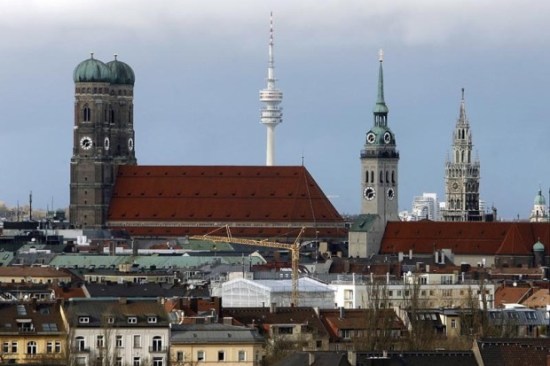
Munich was the next big German city that suddenly and inexplicably lost power in a big way. But there is absolutely nothing to worry about here, people, because/and I quote: “We do not know what caused the technical problem but it has nothing to do with the energy turnaround or all this talk about unstable power grids.”

Many Munich residents took to social networking site Twitter to voice fears that such power cuts could become more frequent as Germany implements a wide-ranging program to switch from fossil and nuclear fuels to renewable energy.

Stromversorgung in Deutschland laut Netzagentur trotzdem sehr zuverlässig.

Speaking Of Sinking Ships

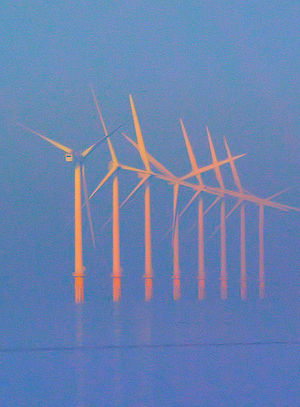
EnbW Energie Baden-Wuerttemberg AG (EBK), Germany’s third-largest power supplier, postponed a decision to invest more than 1.5 billion euros ($1.9 billion) in a wind farm in the North Sea.

“We need legislative clarity and reliable conditions before we make an investment decision of considerably above 1.5 billion euros.”

We Must Save The World But It Must Be Affordable

Cheap, in other words.

Germans everywhere are slowly waking up to the fact that their revolutionary switch to renewable energy sources is going to cost way too way much more than they ever thought they would ever have to pay – and the German government has now woken up to this.

That is why they have now begun a quiet backpedaling policy designed to prepare the German population for a slow turnaround from the energy turnaround that hasn’t even begun to turn around yet.

“For me it’s a priority that electricity remains affordable,” Germany’s new Environment Minister Peter Altmaier says, for instance.

He also says he doubts that Germany will be able to reach its goal of introducing one million electric cars by 2020.

Nor does he think that Germany will be able to cut its energy consumption by 10 percent that year, a precondition for reaching the illusory goal of 35 percent renewables the government is still aiming for, sort of.

This is the German Environment Minister talking here, folks. So you get the message, don’t you? And if you don’t get it now, you’ll get it later.

Regierung fürchtet die Strompreis-Wut der Wähler