What a great step forward!

Into the brave new renewable energy future. The German government has announced it will spend €16 billion to build four major natural gas plants to meet the electricity demand their beloved renewable energy technology simply can’t meet.

A brilliant move, and long expected. Overdue, actually. You see, wind and solar power are so unreliable that you must always build a second “dirty” system (CO2 is a BAD “pollutant,” remember?) to back them up. This way you get to spend twice as much as you would have if you had only used the dirty system to begin with. Or, heavens forbid, if you had used nuclear energy to begin with (it doesn’t produce any CO2). This way, in other words, you can save the planet with one hand while you continue to pollute it with the other.

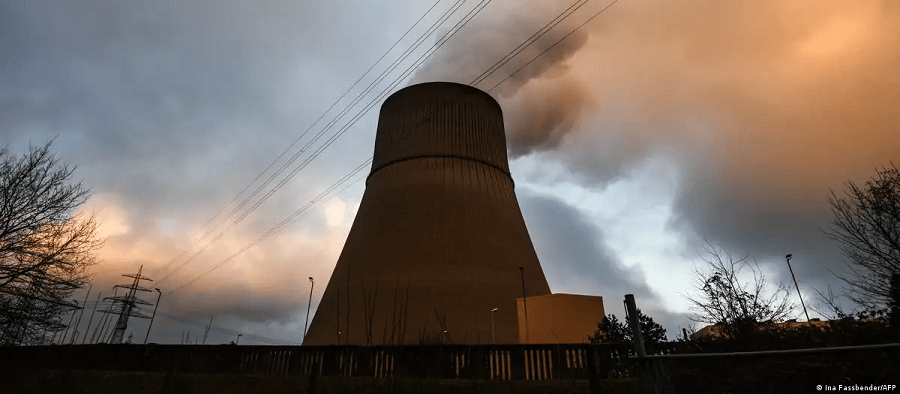
After scrapping nuclear reactors, Germany to spend billions on new gas power plants – The fossil fuel expansion is needed to ensure long-term energy security, according to industry and the government.

In a statement Monday, officials said the new strategy came “in addition to the consistent expansion of renewable energies,” and was key to ensuring steady power supplies “even in times where there is little sun and wind.”

German of the day: “Wer nicht hören will, muss fühlen”

That means those who refuse to listen shall feel the consequences.

The established, traditional political parties in Germany are still refusing to listen to the electorate. Their voters have had it. With the migrant madness, for one thing. And with crazy Green utopia (highest energy prices in Europe and climbing), for another. And if these parties won’t listen, then voters have no other choice but to vote for a party that will.

Alice Weidel’s hard-right politics is winning over Germans.

Our Berlin bureau chief sits down with the increasingly popular co-leader of the Alternative for Germany, the furthest-right of the country’s seven main political parties.

German of the day: Wärmepumpe

That means heat pump.

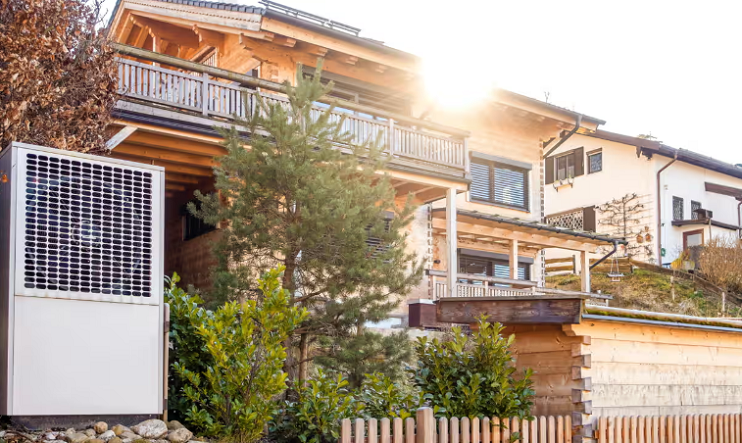
You know, the warming device that needs government subsidies to get anyone to install it (promised subsidies that will now no longer be offered)?

German heat pump rollout at risk as government suspends climate subsidies – Move could also undermine nine funding programmes, covering schemes from energy efficient homes to cargo bikes provision.

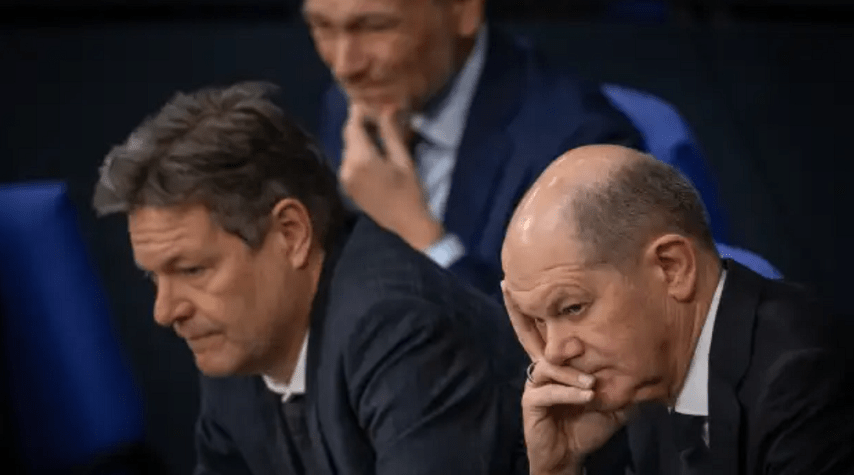
Nine funding programmes, covering everything from energy efficient homes to cargo bikes for commercial use, are now on hold as Olaf Scholz’s coalition government seeks to make savings of about €17bn (£15bn).

The government was thrown into a quandary last month over how to finance its ambitious environmental and industrial transformation programme (KTF) when the country’s highest court blocked its attempts to switch €60bn of pandemic-era borrowing to pay for it.

“Lost its luster?”

It’s called being confronted with reality.

This is a classic German Green phenomenon. As soon as they’re given power, they promptly proceed to shoot themselves in the foot by proposing “solutions” to non-existent problems that “regular folks” simply can’t understand, much less afford. They’ve been given enough rope, in other words.

How Germany’s Greens Lost Their Luster – The party was riding high when it entered the government two years ago. Now it is stumbling, blamed for driving voters to the far right.

What a difference two years make. And a Russian invasion of Ukraine. And rising energy costs. And a host of missteps that some even within the party concede has stalled the Greens’ momentum.

Today the Greens are widely viewed as a drag on the government of the Social Democratic chancellor, Olaf Scholz, which one poll gave a mere 19 percent approval rating. The Greens have drawn withering attacks from even their own coalition partners. To their opponents, the Greens have overreached on their agenda and become the face of an out-of-touch environmental elitism that has alienated many voters, sending droves to the far right.

German Politicians Bewildered

Like, what are we supposed to do? Take the concerns of our fellow citizens seriously (see Migrant Madness, unaffordable energy, the housing crisis, inflation, Ukraine, etc.)?

That’s out of the question.

Germany bewildered about how to halt the rise of the AfD – The far right’s rise is sending shock waves through the country’s political landscape.

In Germany, news regarding the seemingly unstoppable rise of the right-wing Alternative for Germany (AfD) appears on an almost weekly basis. But nowadays this isn’t just true of the notoriously AfD-friendly states in east Germany, it’s also spreading further west.

In Saxony, Thuringia and Brandenburg, the AfD is currently running well above 30 percent. The party is gaining ground in the former West German states of Hesse and Bavaria as well, where it is expected to land at around 15 percent in this weekend’s elections.

Green Germany looks more black to me

Black as night when you turn off the light.

The Green obsession with doing without is in full nighttime bloom.

Germany passes law to make energy savings compulsory – Germany’s lower house of parliament on Thursday passed a bill to make saving energy compulsory in all economic sectors, a move intended to help fight climate change and curb use of imported fossil fuels.

The Energy Efficiency Act, introduced by the Greens-led economy ministry, includes regulation for energy savings in public buildings, industry and fast-growing data centres across Germany, with the goal of a 26.5% cut by 2030 from 2008.

Spurred by fears that persistently low Russian gas supplies could lead to shortages, the German government introduced some initial energy-saving measures last year, including banning heating for private swimming pools and encouraging people to work from home.

Don’t cry for me, Argentina

Actually, go ahead.

Go ahead and cry for me, Argentina. We can cry together, if you want.

Germany Joins Argentina as Only G-20 Member Facing GDP Drop – Germany faces the only contraction in any Group of 20 economy aside from Argentina this year, according to the OECD, which cut its outlook through 2024.

The euro-zone country will suffer a 0.2% drop in gross domestic product in 2023 — down from a previous projection for stagnation, the Paris-based organization said in new forecasts published Tuesday. It will then grow only 0.9% in 2024, down from 1.3% anticipated in June.

What happened?

The Greens happened.

Now it’s US-Amerika‘s turn (some call it The Banana Republic).

Germany went from envy of the world to the worst-performing major developed economy. What happened?

For most of this century, Germany racked up one economic success after another, dominating global markets for high-end products like luxury cars and industrial machinery, selling so much to the rest of the world that half the economy ran on exports.

Jobs were plentiful, the government’s financial coffers grew as other European countries drowned in debt, and books were written about what other countries could learn from Germany.

No longer. Now, Germany is the world’s worst-performing major developed economy, with both the International Monetary Fund and European Union expecting it to shrink this year.

Revive Germany by strangling it?

What a novel idea!

Let’s give it a try.

Scholz’s Dream of Climate Revolution to Revive Germany Is Dying – Chancellor’s ambition for economic miracle is floundering.

Coalition is reeling from months of infighting over green plan…

Another big brake on growth and investment is energy costs. Although lower than last year’s records, gas and power prices are still between two to three times the level compared with before the war in Ukraine.

It’s the energy, stupid

They may beat them in footbal (2-1 last night, without a manager) but…

German economic weakness belies France’s outperformance – Germany’s economic weakness is casting a flattering light on France’s relative resilience that belies the otherwise middling performance of the euro zone’s second-biggest economy, economists say…

Germany’s manufacturing-focused economy is struggling to adapt to being cutoff from cheap Russian gas and the rise of the electric vehicle, said Charles-Henri Colombier with the Rexecode economics think tank in Paris.

Germany’s gas-hungry chemical industry has seen production fall 18% from 2019 levels while in France it is only 8%, Colombier said. Meanwhile, German motor vehicle production is down 26% and only 6% in France.