End of an era? Germany in disarray as US scolds staunchest European ally – Washington’s message at Munich security conference sends shockwaves through transatlantic alliance...
“Vance is a rightwing extremist politician supported by US Big Tech oligarchs, whose aim is to gradually destroy the EU,” said Anton Hofreiter, a German Green MP.
That means megalomania or having delusions of grandeur.
Also see Lachnummer. That means being a joke or a laughing stock.
Annalena Baerbock: Russia wanted to prevent me from becoming chancellor – German Foreign Minister Annalena Baerbock wants to thwart the US Gaza plans. Talks with partners are underway, she said on “Maischberger” – and emphasized her claim to power within the Greens.
Doesn’t that reflect German majority opinion? Well… No, it doesn’t. Not when the polls all indicate the opposite.
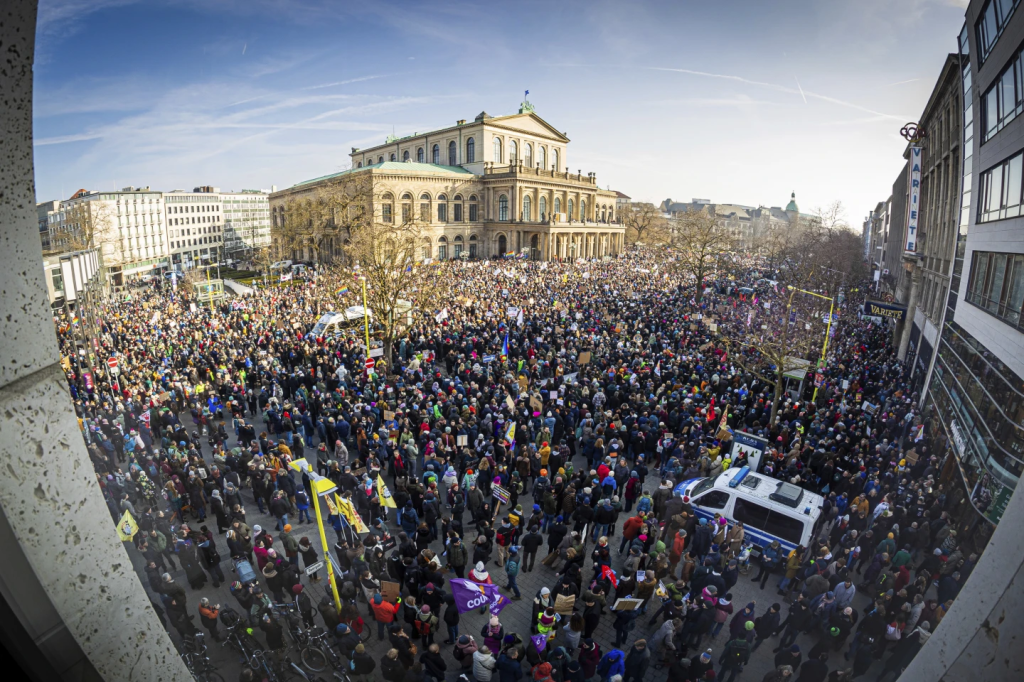
At least 200,000 protesters rally in Munich against far-right AfD ahead of German election – More than 200,000 protesters rallied in Munich, Germany, on Saturday against far-right extremism ahead of the country’s general election.
The far-right, anti-immigrant Alternative for Germany, or AfD, is in second place in recent polls and has prompted widespread protests across the country before voters cast their ballots on Feb. 23…
FDP deputy leader Kubicki rejects the idea that “firewall” demonstrations reflect majority opinion: Otherwise the red-green party would have made huge gains in the polls.
Germany slashes growth outlook in ‘serious’ diagnosis of Europe’s largest economy – The German government on Wednesday slashed its gross domestic product forecast to just 0.3% growth in 2025.
This is down from a previous forecast of 1.1% growth, but broadly in line with estimates from bodies like the International Monetary Fund.
“The diagnosis is serious,” Robert Habeck, Germany’s Economy and Climate Minister, said during a press conference.
That was different. And that worked out just fine. But…
Germany Says Europe Shouldn’t Become Overly Dependent on U.S. Energy – Europe must not become too reliant on U.S. oil and gas, German Economy Minister Robert Habeck said on Tuesday, a day after Donald Trump was inaugurated as the 47th U.S. President.
Europe needs to “meet the Trump administration with an outstretched hand, but not have our hand cut off,” Habeck said at the Handelsblatt energy summit in Berlin, just as President Trump urged Europe once again to buy more American oil and gas.
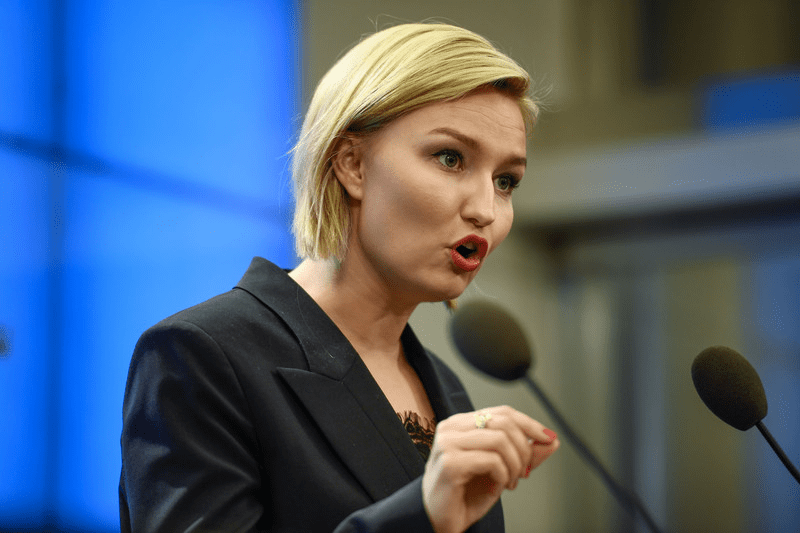
Swedish minister open to new measures to tackle energy crisis, blames German nuclear phase-out – Sweden is ready to introduce new measures to tackle the country’s soaring energy prices, Energy Minister Ebba Busch announced on Thursday (12 December), blaming Germany’s nuclear phase-out for the crisis in the country and at EU level…
One main reason Busch cited for the surge in electricity prices is Germany’s decision to dismantle its nuclear power plants, saying it also has detrimental effects for Europe.
“I’m furious with the Germans,” Busch told Swedish broadcaster SVT.
“They have made a decision for their country, which they have the right to make. But it has had very serious consequences,” she added.
It’s dark here all the time these days, in other words. And there’s not much wind either. “Renewables” don’t seem to like that for some reason.
A weather phenomenon dubbed ‘Dunkelflaute’ is causing havoc in Germany and pushing energy prices to 2-decade highs – A weather phenomenon dubbed “Dunkelflaute” that causes chilly, low-wind conditions is sweeping across Europe and causing fresh havoc to Germany’s embattled economy, where energy prices have risen to a two-decade high.
A Dunkelflaute, translated as “dark doldrums” or “dark wind lull,” is the bain of renewables companies, with an extended period of low wind and cloudy weather hurting their ability to generate electricity from either wind or solar.
German industrial output unexpectedly falls in October – German industrial production unexpectedly fell in October, owing mainly to declines in energy production and in the automotive industry, the federal statistics office said on Friday.
Production was down by 1.0% in October from the previous month, the office said.
No, not Annalena. Else. Next time somebody called Else will warn them.
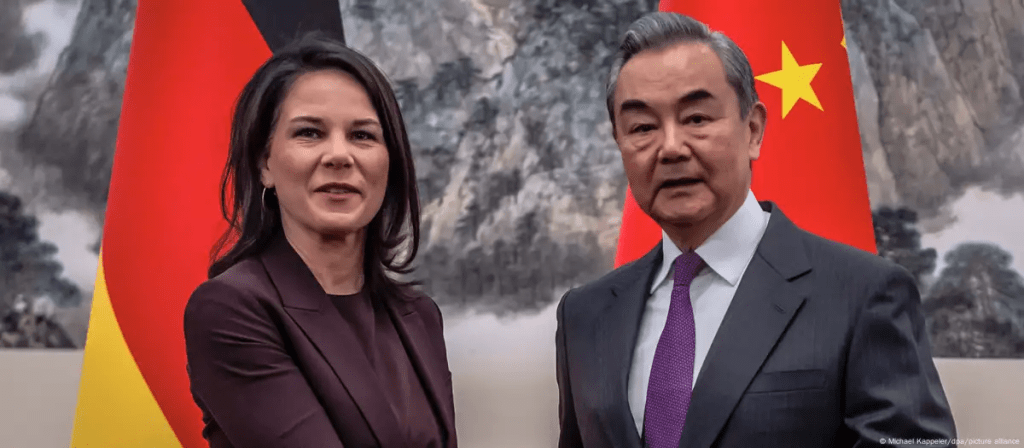
Germany’s Baerbock warns China over Russia support – Germany’s Annalena Baerbock made her second visit to Beijing since taking office. In addition to discussing Russia’s war in Ukraine, Baerbock urged China to “engage constructively” over EV tariffs.
German Fortune 500 companies have announced over 60,000 layoffs this year, but the biggest employee cull is still to come – German companies in the Fortune 500 Europe have announced over 60,000 layoffs this year, in a sign of the country’s ongoing economic malaise that has left manufacturers reeling.
Major German employers, including Bosch, Thyssenkrupp, Deutsche Bahn, and Siemens, have this year announced plans to lay off thousands of workers in a bid to combat falling profits following a rocky post-COVID economic landscape.