German Of The Day: Deutschsein

That means being German.

Deutschsein

And surprisingly, despite all the constant self-chastisement that Germans love to indulge in, the majority of Germans surveyed still feel positive about that. About being German, I mean.

And the latest survey also says: The favorite EU country of 47 percent of Germans asked is… Germany. Way back at second place is Italy with seven percent. Spain comes in third at six percent.

“Ich denke an dichte Fenster! Kein anderes Land kann so dichte und so schöne Fenster bauen.”

Working Germans Totally Inefficient These Days

Whereas the number of working Germans who put in a 48-hour workweek back in 1995 was 1.3 million, some 1.7 48-hour workweek Germans are needed today to get the same amount of work done. Or so I assume…

Working

Was für Luschen. What a bunch of duds.

Während 1995 etwa sechs Millionen Beschäftigte regelmäßig am Samstag oder Sonntag gearbeitet haben, waren es im vergangenen Jahr bereits 8,8 Millionen und damit jeder vierte Beschäftigte.

German Of The Day: Stinkefinger

That means stinky finger. You know, as in the finger?

Stinky

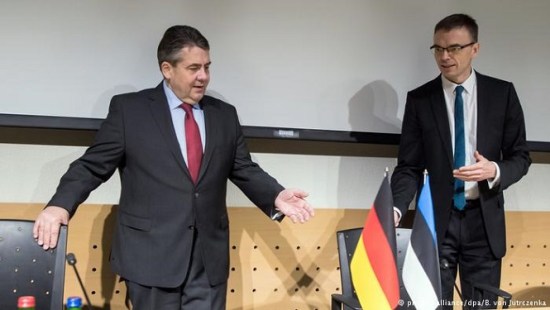
SPD boss Sigmar Gabriel recently got some Sommerloch good press by doing what is generally considered to be a bad thing. Only he was flipping off neo-Nazis who were heckling him so that made it a good thing.

Getting in a little more mileage out of it, he has now said in an interview that his only regret is not having used two stinky fingers (no, not the peace sign, he means two hands).

“Ich habe nicht beide Hände benutzt.”

PS: A Sommerloch or summer hole is the “silly season” during summer vacation months typified by frivolous or unimportant news stories in the media.

173 Stations

And 166 of them are ugly as sin. That’s Berlin’s subway system for you, folks.

Station

But, hey. Beauty is in the eye of the Schwarzfahrer (“black rider” or fare dodger). So enjoy them already or something.

The city’s U-Bahn system also felt the impact of the Berlin Wall, which divided the city for nearly three decades. Many train lines pre-dated the Wall, so some of the West Berlin lines necessarily passed through East Berlin stations. These stations were closed and guarded, and became known as ghost stations. The guards were visible to the West Berlin passengers as the trains slowly moved through the dimly lit stations.  

Ninjas Not Allowed In School

I meant niqabs, of course (I always mix those two up for some reason).

Veil

A Muslim woman who had been accepted to night school in Osnabrück showed up for class wearing a niqab. When asked to remove it she refused and was subsequently expelled. She then went to court to fight the decision but didn’t bother to show up for a court appointment set to help clarify the matter. The court has now decided in favor of the school.

The whole thing is very schleierhaft, if you ask me. You know, “veiled in mystery?”

Eine Muslima, die an einem Osnabrücker Abendgymnasium mit einem Gesichtsschleier am Unterricht teilnehmen wollte, ist vor Gericht gescheitert.

PS: In a related story, you can now pick up pepper spray at one of Germany’s popular drugstore chains. Supply and demand and the invisible hand. Capitalism is a wonderful thing, folks.

Germans Pissed Off At Smiling Olympic Athletes

Who lose, I mean.

Sieg

The nerve or something. “The Hahner twins Lisa and Anna ended their Olympic marathon race more than 21 minutes behind the winner and more than 15 minutes on their best performance, in position 81 and 82. It looked as though they completed a fun run and not an Olympic race.”

You’re supposed to win, verdammt (dammit)! Stomp the opponent under your Nikes or whatever Olympic athletes wear at a time like this and NOT come across the finish line holding hands and, well, smiling. It’s attitudes like these that make the Olympics seem as if it were supposed to be some kind of an uplifting experience, symbolizing the joy of participating and sharing, a rare occasion when all of humanity comes together as one. You know, fantasy stuff like that.

You want some German of the day, ladies? How about Sieg? You make us Sieg to our stomachs just looking at you. Losers!

“Number 81 and 82 was definitely not what we had hoped for. Whether we are satisfied? No. But crossing the finish line was nevertheless one of our greatest sporting moments.”

German Of The Day: Dirndl

A dirndl (German: [ˈdɪʁndl̩] ( listen)) is a type of traditional dress worn in Austria, South Tyrol and Bavaria. It is based on the traditional clothing of Alps peasants. Dresses that are loosely based on the dirndl are known as Landhausmode (“country-inspired fashion”).

This down here is not one of them.

Dirndl

Ein Gespenst geht um in Deutschland. Es trägt ein langes dunkles Gewand, das nur die Augen ausspart.

Would Kilgore Trout Tell A Lie?

It’s special ebook offer time again already, folks. Deal with it.

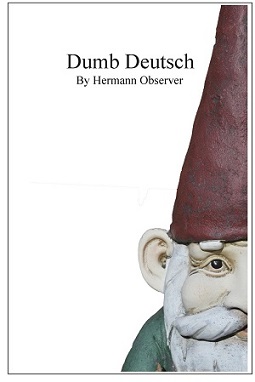
Dumb Deutsch

Dumb Deutsch: Absurd German Language Errors (auch für deutsche Leser geeignet)

Also at iTunes, Smashwords, Barnes & Noble, etc. For a limited time only or something.

“Very funny book, relating dumb things people say while trying out their high school German. Laughing so hard at my normally quiet workplace I had tears in my eyes, my boss walked by and asked if I was OK. Oh yeah! She has a great sense of humor with an eye toward languages. Buy this book and laugh yourself silly!”

Kilgore Trout

German Of The Day: Butt and Fuchs

Butt is a short form for halibut (although in this case it’s just somebody’s name). Fuchs means fox. Not like anybody cares here.

Butt

Linus Butt and Florian Fuchs were part of a German team that destroyed their Canadian opponents 6-2 in a group stage fixture on Saturday in Rio de Janeiro.

Footage shows the two men standing standing with their backs to the camera during the game with the surnames on their shirts side-by-side.

But Twitter immediately reacted with one user, Kris Kristensen, posting the image along with the caption: ‘This one’s for the 12 year old in all of us.’

Poor But Sexy, But Poor

Those were the days. Berlin used to be just (arm aber sexy) poor but sexy.

Poor

Now Berlin is poor but sexy, but poor. At least when it comes to trying to earn a living here.

The German capital pulls down the per capita income for the entire country. According to Eurostat (the European statistics office), Germany’s gross national product (with an emphasis on gross) would climb 0.2 percent if they could just find a way to factor out losers like us here in Berlin.

Poor? Yo capital is so poor it can’t afford to pay attention.

Die Hauptstadt drückt auf das Pro-Kopf-Einkommen der gesamten Bundesrepublik: Das Bruttoinlandsprodukt je Einwohner würde um 0,2 Prozent steigen, wenn man Berlin und seine Einwohner ausklammert, wie das Institut der deutschen Wirtschaft (IW) auf Basis von Daten des Europäischen Statistikamtes Eurostat errechnete.