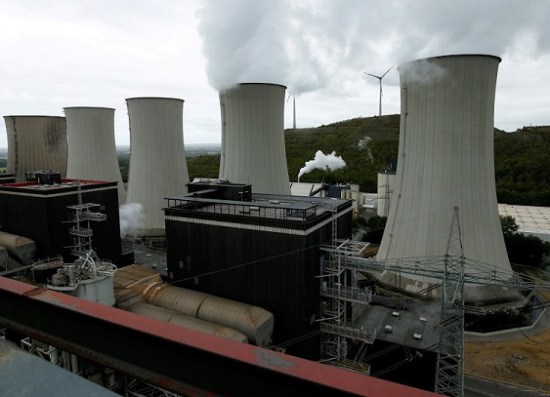
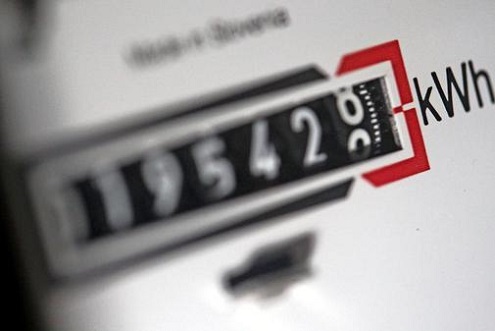
Green Germany looks more black to me

Black as night when you turn off the light.

The Green obsession with doing without is in full nighttime bloom.

Germany passes law to make energy savings compulsory – Germany’s lower house of parliament on Thursday passed a bill to make saving energy compulsory in all economic sectors, a move intended to help fight climate change and curb use of imported fossil fuels.

The Energy Efficiency Act, introduced by the Greens-led economy ministry, includes regulation for energy savings in public buildings, industry and fast-growing data centres across Germany, with the goal of a 26.5% cut by 2030 from 2008.

Spurred by fears that persistently low Russian gas supplies could lead to shortages, the German government introduced some initial energy-saving measures last year, including banning heating for private swimming pools and encouraging people to work from home.

It’s the energy, stupid

They may beat them in footbal (2-1 last night, without a manager) but…

German economic weakness belies France’s outperformance – Germany’s economic weakness is casting a flattering light on France’s relative resilience that belies the otherwise middling performance of the euro zone’s second-biggest economy, economists say…

Germany’s manufacturing-focused economy is struggling to adapt to being cutoff from cheap Russian gas and the rise of the electric vehicle, said Charles-Henri Colombier with the Rexecode economics think tank in Paris.

Germany’s gas-hungry chemical industry has seen production fall 18% from 2019 levels while in France it is only 8%, Colombier said. Meanwhile, German motor vehicle production is down 26% and only 6% in France.

The best we can offer you is five

Although originally shooting for at least ten, Germany’s Greens must now sheepishly admit that the best they can offer the country is five tough years of economic stagnation.

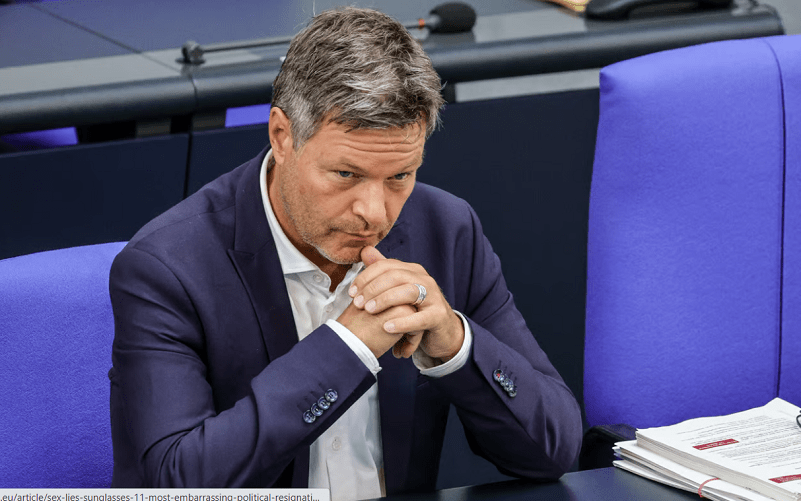
Germany faces 5 tough years, economy minister warns – Berlin should borrow money to subsidize energy for companies or risk losing its industry, Robert Habeck.

Germany faces five difficult years of green industrial transition that “will put a burden” on people, Economy Minister Robert Habeck warned — while urging his government to approve fresh subsidies to safeguard the country’s industrial base.

We Not Only Supply You With Nuclear-Generated Electricity Already

(just like the Czech Republic). We’ll supply you with gas now too.

France starts sending natural gas directly to Germany – Technical adjustments were necessary as the single pipeline between the two countries was originally intended only to deliver gas (from Russia) from Germany to France.

If you haven’t noticed, Germany’s Green doesn’t stink.

Fun fact for you CO2 fans out there: The Germans generate 10 tons of CO2 per capita per year (some call it the “Carbon Footprint”), the nuclear-friendly French only do 6.

German Nuclear Power Plant Explodes

Just kidding. Hardy, har, har. Everybody knows Germans don’t have nuclear power plants anymore. Well, not many. One less now for sure.

Former German nuke plant towers demolished in morning blasts – The two cooling towers of a former nuclear power plant in southwestern Germany have been demolished in a pair of early-morning explosions whose timing was kept under wraps to prevent crowds from gathering during the coronavirus pandemic

“Germany” To Protect Consumers From Rising Electricity Prices?

The rising electricity prices that “Germany” caused in the first place, you mean?

Consumers

Well, not quite. The “German taxpayer” will have to protect consumers from these rising prices, as usual. It’s a brilliant business plan that only governments like “Germany” can think up. The consumer/taxpayer pays twice, see? It’s not like anybody has to ask them.

Germany is planning to protect consumers and manufacturers from the impact of abandoning cheap coal-fired power, which Berlin is looking to ditch for environmental reasons, according to a government body’s draft paper.

The Coal Commission, which is tasked with organizing the exit from coal, said in a 133-page draft document seen by Reuters that companies and private households should be spared from heavy price increases.

“The necessary funds must be made available by the state to finance the recommended measures.”

The Short Answer Is No

Not without nuclear energy.

If Germany Can’t Quit Coal, Can Anyone Else?

Coal

It would seem like a major step toward Prime Minister Angela Merkel’s goal to cut greenhouse gas emissions by 40 percent of 1990 totals by 2020. But German utilities just can’t seem to quit burning coal. Some power plants are switching to cheaper imported black coal from the United States, Russia, or Colombia. And at the same time, Germany is also digging more lignite, or brown coal. Lignite is 50 percent water and yields much less energy than the shiny black anthracite. But lignite is easy to bulldoze from massive strip mines that dot Germany’s northwest and eastern border with Poland. Among Europe’s power plants, Germany’s brown coal stations constitute six out of 10 of the worst polluters.

“It’s like organizing your own funeral.”


Germany’s Green Planners Confident That Growing Wind And Solar Power Will Lead To Even Higher Power Costs

But who cares, right? There’ still Luft nach oben (room for improvement). Germans are only number two when it comes to paying the highest electricity bills in Europe (only the Danes pay more).

Strom

Germans already footing the second-highest electricity bills in Europe may face even higher costs from the country’s decision to exit nuclear power early next decade. While there’s no risk of blackouts, costs could rise if transmission gaps emerge, according to Germany’s Bnetza regulator. Europe’s biggest power market is closing its last atomic plants in 2022 and is counting on a mix of mothballed lignite plants, wind and solar power expansion and grid stability measures to keep outages down…

Consumers this year may pay about 24 billion euros ($26.4 billion) in compulsory clean-energy-support fees, levies that are added directly to power bills.

“The lights will stay on. Yet there are two risks in bridging power gaps, namely redispatch and intervention in the market to drive generation up or down that may be cost factors.”

Eco-Power?

As in enormous-cost-power?

eco

And green power must be short for greenback power, right? Only they have to pay in euros here in Germany.

You’re never going to believe this: Energy prices will be rising dramatically again next year in Germany (same procedure as every year). It has something to do with this little thing they call the “eco-power levy” here (levy sounds better than tax). It’s going up another 8.3 percent. But it’s for the Energiewende so that’s a good thing, or something. Hey. It’s not easy being the world’s leader in renewable energy but somebody has to do it. And you still don’t mind paying for it… And you still don’t mind paying for it… And you still…

Öko-Strom-Umlage steigt um 8,3 Prozent.

Germany Leaps Forward Again

In the saving the world game, I mean.

Unsinn

And here you thought the Germans shutting down their nuclear power plants after an accident in Japan was hardcore enough (and it was). Now they’re going to outlaw internal combustion engines (albeit not until the year 2030).

Amazing Scheiße, I find. It does make me wonder what they’re going to be outlawing next, however. I would have bet on the wheel but it’ll be pretty much taken care of as soon as the internal combustion engines go so I’m now going to put my money on fire itself. Do you have any idea how much CO2 cooking your food releases into the atmosphere? Me neither, but you can be sure that it’s way too much. At least in Germany.

Being a subscriber to Mad Magazine, when I first saw the title of this article at Gizmodo recently, I assumed I’d mixed up my bookmarks and gone to the wrong site. “German Lawmakers Vote to Ban the Internal Combustion Engine.” Oh, come on, man. That can’t be right, can it? The home of some of the higher performance engines in the history of fine cars can’t seriously be talking about this, can they? Well color me embarrassed because, with a few caveats, it turned out to be true.