Because their industries are dying, or already dead.
And this is primarily due to its climate emissions targets.
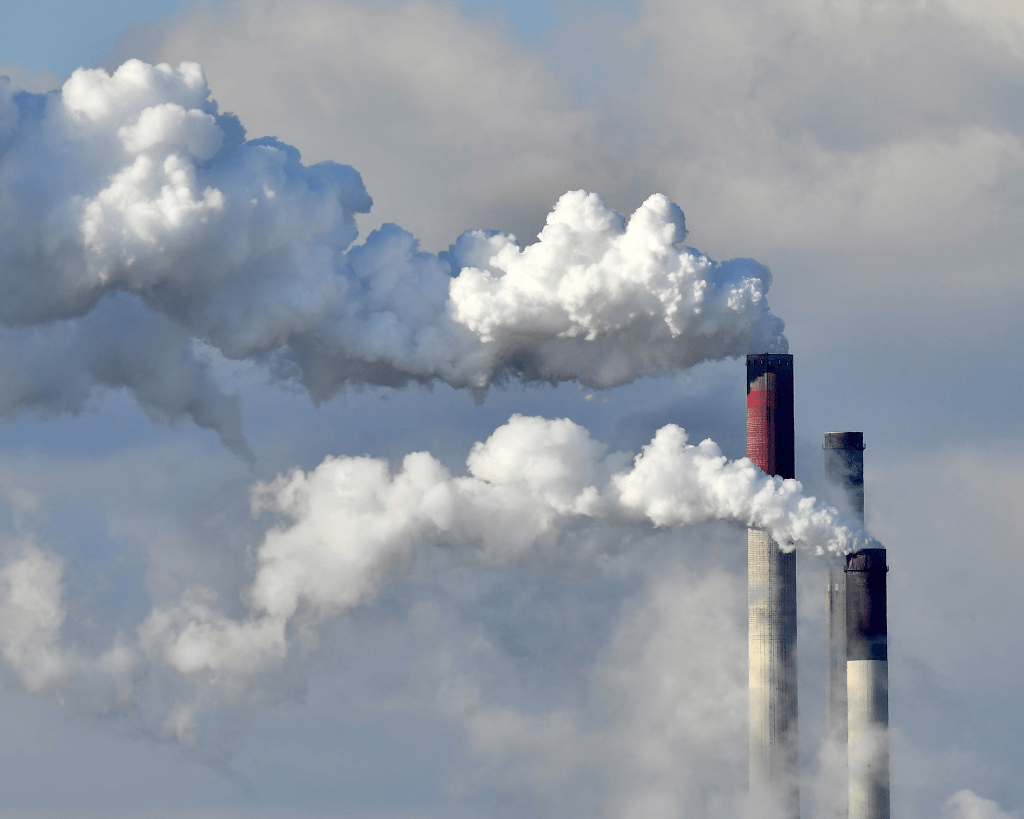
Germany misses climate targets as emissions barely fall in 2025 – Greenhouse gases dropped just 0.1% last year as environment minister criticises lack of improvement.
Greenhouse gas emissions in Germany have again missed targets set by the Climate Protection Act and barely fell at all in 2025.
Emissions decreased by just 0.1% last year compared to the previous year, according to data from the German Environment Agency.
No offense, ma’am. But German misses just ain’t what they used to be.
Syrian-Kurdish streamer Rose Mondy crowned Miss Germany 2026 – A Syrian-Kurdish gamer and livestreamer took the Miss Germany 2026 crown this month, highlighting how the long-running contest has evolved from a traditional beauty pageant into a platform for social voices.
Rose Mondy, a 26-year-old of Syrian-Kurdish origin, was crowned last Saturday during the competition’s final at Bavaria Film Studios near Munich.
Surging Energy Costs Put German Industry ‘Really in Danger’ – Four years after the Russian invasion of Ukraine sent energy prices soaring, the war in Iran is posing another challenge to efforts to revive European factories.
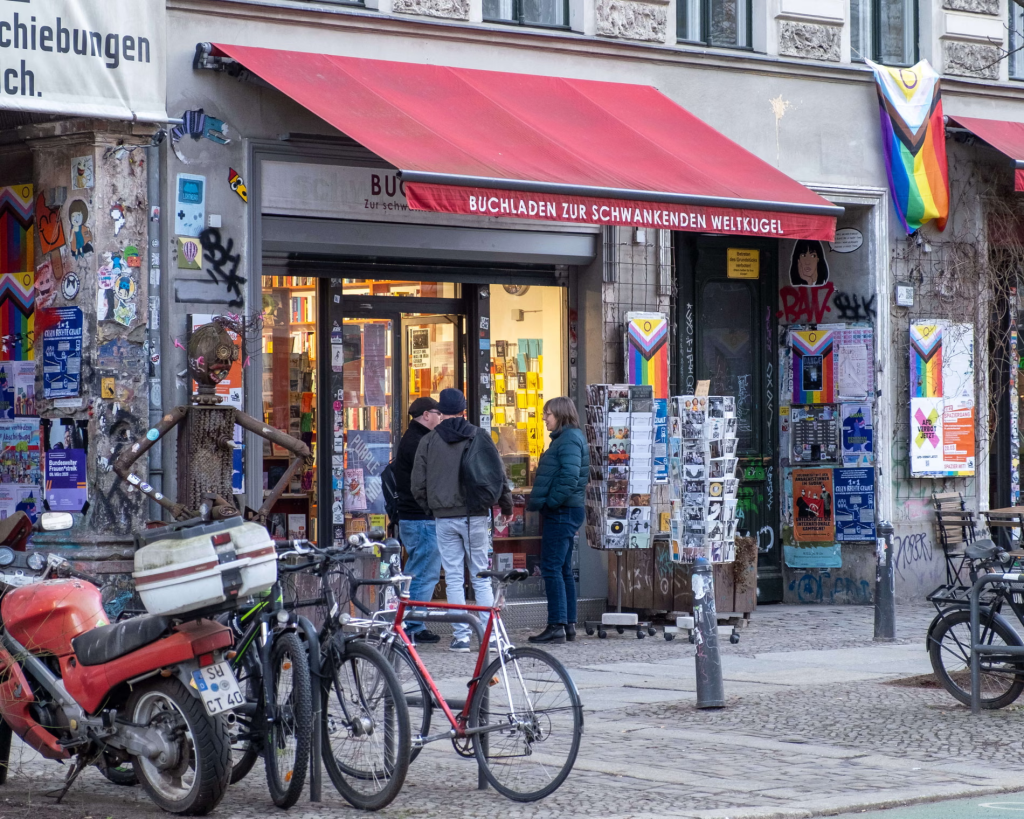
Why independent bookshops strike fear in the heart of Germany’s culture tsar – There is a particular kind of danger that smells like paper and dust. You find it in independent bookshops. Those with uneven wooden floors and handwritten staff recommendations, where someone has shelved Audre Lorde next to Karl Marx and a debut novelist from Neukölln. Places where no algorithm is trying to guess who you are before you have the chance to change your mind.
I walk in for a novel and walk out with a theory of the state, a pamphlet on housing struggles, a Palestinian poet I had never heard of. No “for you” page in an online store would have suggested it. The bookseller did. Independent bookshops are dangerous because they interrupt us. They do not optimise our curiosity. They derail it. Is that the reason why Germany’s culture commissioner, Wolfram Weimer, is now consulting the domestic intelligence agency before approving funds to bookshops?
Every year, the German Bookshop prize, awarded on behalf of the federal government’s commissioner for culture and the media, serves as a financial injection for more than 100 independent, owner-managed bookshops all over Germany. An independent jury selects the winners, based on criteria such as carefully curated literary selection and cultural events. Usually, the public doesn’t take much notice of the prize; its weight on the public purse is barely significant. But for small bookshops operating on narrow margins, the prize money of between €7,000 and €25,000 makes a tangible difference.
This year, for the first time, three bookshops disappeared from the jury’s list, according to an investigation by the newspaper Süddeutsche Zeitung. The ministry of culture deleted them, due to “information of relevance to the domestic intelligence agency”, it states. What kind of information? Nobody knows, not even Germany’s commissioner for culture himself, since the domestic intelligence agency (Bundesamt für Verfassungsschutz) is not allowed to divulge it. A quick look at the three bookshops is telling: they are antifascist, they are proud of it and they are institutions in their communities.
German start-up plans 30-megawatt AI data centre in boost to sovereign control – German start-up Polarise plans to build a new 30-megawatt artificial intelligence data centre that would double Germany’s domestically-run computing capacity as European nations push to gain more control over critical tech infrastructure.
The facility, set to come online in the Bavarian town of Amberg in mid-2027, could eventually expand to 120 MW, the company told Reuters.
Energy bottleneck in Middle East is damaging German economy – Expensive energy, rising prices and disrupted supply chains are all bad news for economic growth. The German government is alarmed by events in the Middle East.
When the US and Israel attacked Iran, the response was not long in coming. Iran is no longer allowing ships to pass through its coastal waters. The Strait of Hormuz, the bottleneck in the Persian Gulf through which 20% of the global oil trade passes every day, is now effectively blocked.
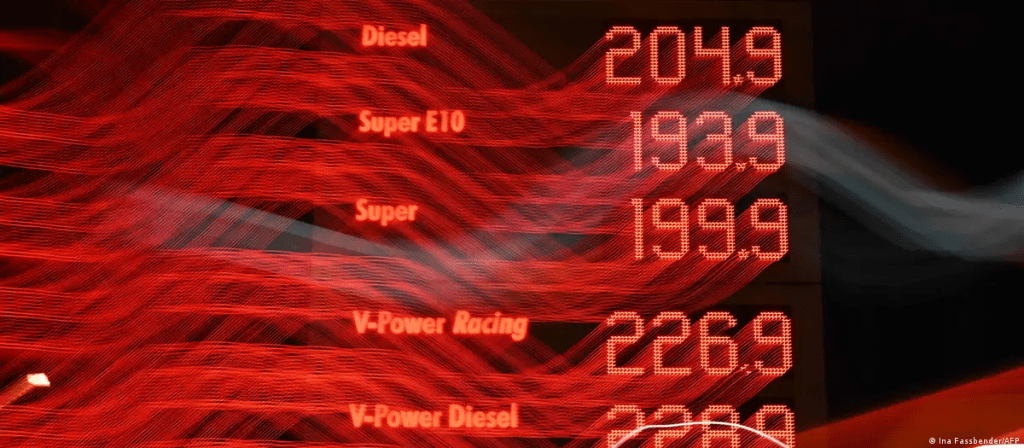
After the attack, the price of oil immediately rose sharply. Prices for gasoline and diesel also skyrocketed at German gas stations. Depending on the region, premium gasoline even went as high €2.50 ($2.89) per liter. The average price for diesel is currently just over €2, which is €0.30 higher than before the attack on Iran.
That means those declared dead live longer, or there’s life in the old dog yet.
At least I hope so, in this case. There aren’t many political parties in Germany that dare to call for freedom of choice – or freedom itself.
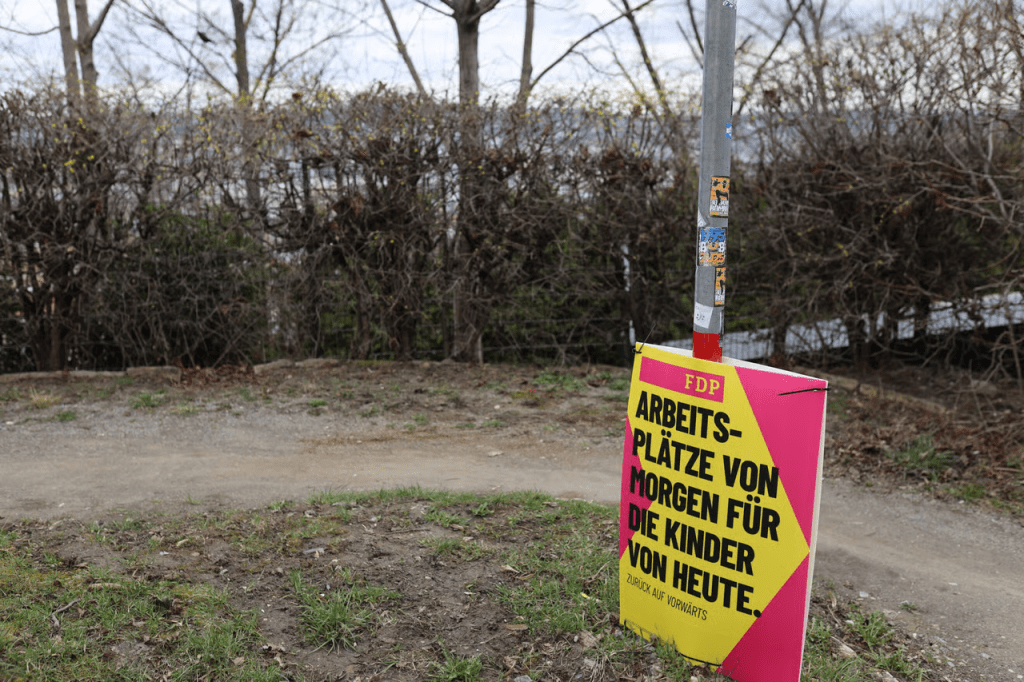
Germany’s pro-business liberals risk death blow in regional vote – The Free Democratic Party has played a key role in German politics for most of the postwar era, but a poor result in a state vote on Sunday could mean its demise.
Germany’s pro-business Free Democrats, on the brink of political extinction, face a make-or-break state vote this Sunday that party leaders believe may well be their last chance to claw back relevance.
Leaders of the fiscally conservative Free Democratic Party (FDP) — which was part of Germany’s previous, ill-fated coalition government under former Chancellor Olaf Scholz — have long pinned their hopes for a national revival on this Sunday’s election in the southwestern state of Baden-Württemberg, traditionally one of the party’s strongholds.
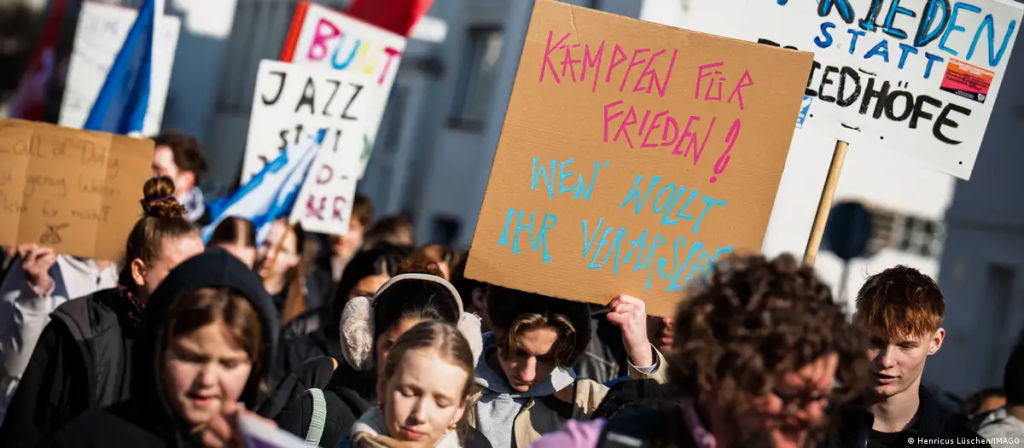
German high school students protest against military service – Tens of thousands of high school students took to the streets of cities all over the country to protest against the reintroduction of military service. Many people believe that conscription is inevitable.
Young people gathered in Berlin’s central Potsdamer Square on Thursday and marched through the German capital to protest against the government’s plans to reintroduce military service. While the police counted around 3,000 participants, organizers claimed there were 6,000 demonstrators in Berlin and 50,000 in more than 130 towns and cities across Germany.
“I don’t think I’ll be dying for my friends, relatives or acquaintances, in the worst-case scenario,” 17-year-old Shmuel Schatz, spokesperson for the School Strike Committee, told DW’s Gasia Ohanes. “Rather, in the end, only for those who are put into the trenches for the interests of large corporations like Rheinmetall, ThyssenKrupp, and others, so they can line their pockets at the expense of war.”
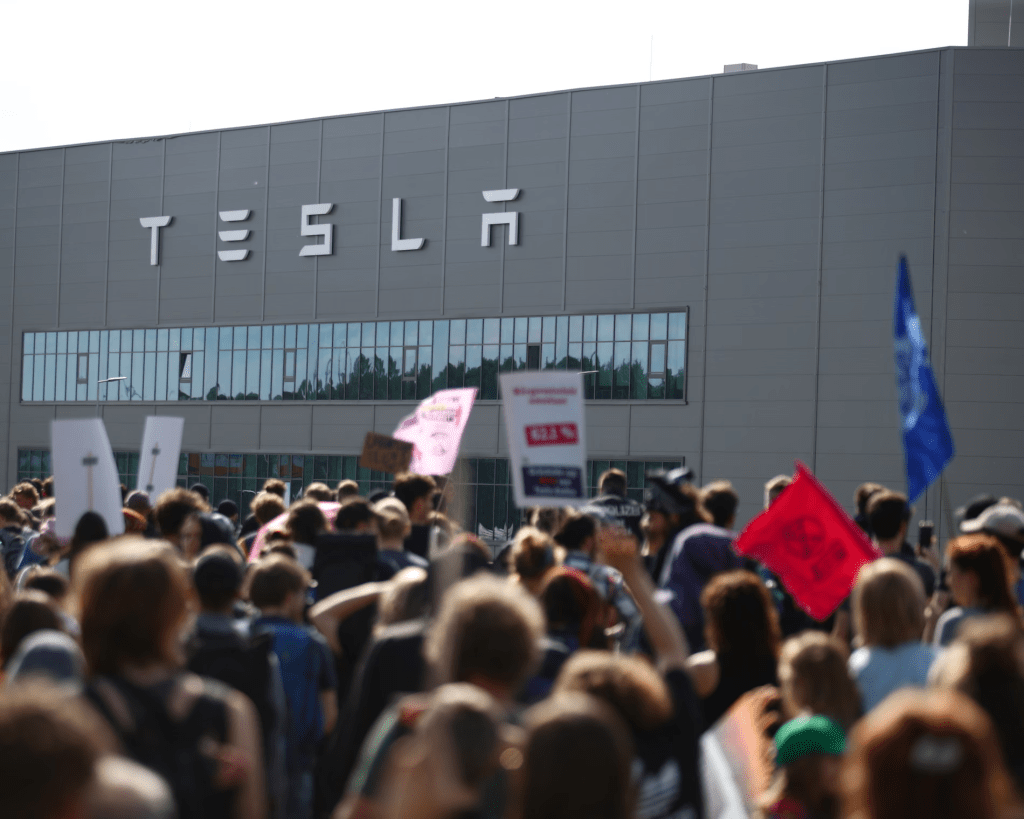
Union tries to seize control of works council at Tesla’s German factory – Lawsuits and slander claims fly in IG Metall’s battle with Elon Musk over employment rights and conditions.
Europe’s largest trade union is trying to gain control of the works council at Elon Musk’s Tesla gigafactory near Berlin, in an industrial relations showdown marked by lawsuits and mutual accusations of slander.
The works council, an elected body of employees that negotiates everything from working hours to pay deals with a company’s management, is considered an entrenched aspect of the German corporate world, particularly in the car industry.
But it was a bone of contention at the Tesla plant in Grünheide, about 20 miles (30km) south-east of Berlin, even before the gates opened almost four years ago.
The Iran conflict is ruining German vacation plans!
Call in the Germany military – to get German vactioners out.
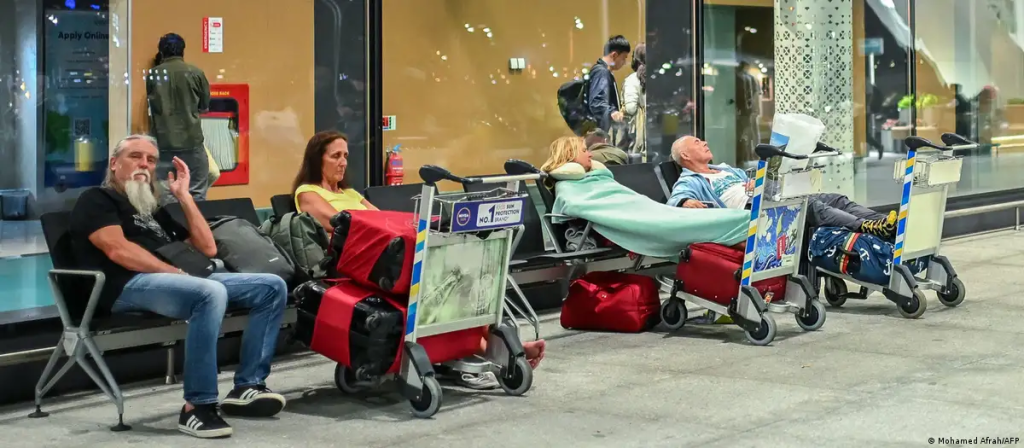
Iran war: Tens of thousands of German travelers stranded – German tour operators say at least 30,000 customers have been left without travel options after thousands of flights were canceled across the Middle East because of the US-Israel war with Iran.
Tens of thousands of people on trips organized by German travel agencies have been affected by US-Israel war with Iran, a leading trade group said on Monday.
Figures from the German Travel Association suggest that some 30,000 tourists are unable to fly home amid the hostilities, which have prompted several countries in the region to close their airspace, while many airlines have put flights into and out of the crisis area on hold.
German flagship carrier Lufthansa is among those airlines. The company said that airspace over Israel, Iran, Lebanon, Jordan, Iraq, Qatar, Kuwait, Bahrain and the Saudi airport of Dammam will not be used by Lufthansa and its subsidiaries until at least March 8. United Arab Emirates airspace will be avoided until March 4.


 Observing Hermann