And why was Germany the key?

Because Putin (and everybody else the world) knows that Germany is erpressbar (blackmailable, open to blackmail).

Just like the current US-Amerika government of… whoever is actually running the government at the moment.

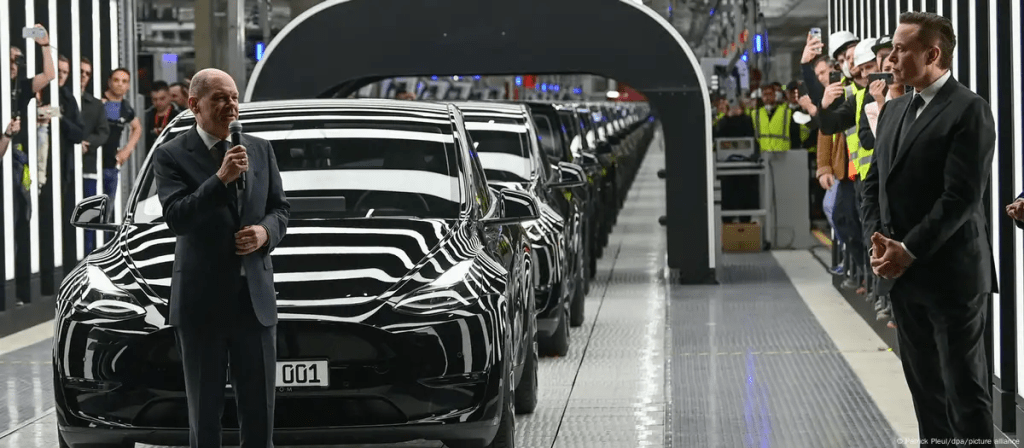
Why Germany was key to prisoner swap deal with Russia – The German government’s decision to release a convicted Russian killer serving a life sentence for murdering an exiled Chechen in Berlin in 2019 was crucial for the prisoner swap between Russia and the West…

The main figure in the swap, which involved several countries, was Vadim Krasikov, a Russian convicted of killing a former Chechen militant in Berlin in 2019.

A clear message to future blackmailers: The German government lets a convicted murderer go free after two years in prison, just like that, somebody who bumped off one of Putin’s critics right here in Berlin’s Tiergarten, in broad daylight.

How offensive

Time to go on the defensive, again.

Germany blames China for ‘serious’ cyber attack – Berlin says Beijing behind 2021 hack on precision mapping agency…

The BKG, itself a part of the interior ministry, collects precision data about “the properties and position of every point on the surface of [the] country,” according to its website.

Its data systems are linked to many pieces of critical national infrastructure. After the attack was discovered, German security authorities worked to purge the BKG’s systems of Chinese intruders. The agency says it now believes its databases to be completely secure…

The accusations against Beijing come just weeks after the German government agreed a plan with telecommunications companies to strip Chinese technology from the country’s 5G networks over security concerns.

Economy shrinks, inflation expands…

Sounds just like back home in US-Amerika. What’s not to like?

German economy unexpectedly shrinks, inflation ticks higher – The German economy unexpectedly contracted in the second quarter after skirting a recession at the beginning of the year and July’s inflation rose, showing the continuing struggles of the euro zone’s biggest economy.

Germany’s gross domestic product contracted by 0.1% in the second quarter compared with the previous three-month period, preliminary data from the statistics office showed on Tuesday.

Green energy is fun!

In Green Unicornland, maybe.

But in real countries like Germany where you have to pay real subsidies you can’t afford to pay anymore, that’s where the fun must eventually stop.

Germany’s Ballooning Subsidy Costs Show Challenge of Going Green – Subsidies are draining budget as green power appeal surges Shift may set tone for others contemplating cost of transition.

Germany is buckling under the weight of ballooning renewable energy subsidies, raising questions for governments across the world about how long they can afford to prop up green investments.

German of the day: Erics Lampenladen

The means Eric’s Lamp Shop (Eric Honecker’s Lamp Shop).

Das waren Zeiten. That means those were the days.

A demolished communist palace and other rubble: How Berlin is managing its GDR buildings and monuments – An exhibition commemorates the demolition of the former parliament building in the German capital in 2008, an example of the persistent erasure of traces of socialism in the city.

No illegal aliens here

The Germans call them “irregular migrants.”

But even the wacky German left is starting figure out that “irregular migration” is maybe sort of not such a good thing. Not that they’ll ever actually do anything about it. But still.

Germany: Scholz says irregular migration must ‘come down’ – First-time claims for asylum in Germany fell by a fifth in the first six months of the year. The chancellor said border checks will continue, to further limit the number of migrants entering through the land borders.

“In general, we intend to continue strictly controlling the German borders,” Scholz told the regional paper. “We want to limit irregular migration, as I have announced. The numbers have to come down.”

German of the day: Verbieten

That means to forbid, prohibit, ban, outlaw (see verboten).

As in shutting down Iran’s major islamist extremist beachhead in Germany, the “Blue Mosque” in Hamburg.

And it only took thirty (30) years for Germany to do this.

Germany shuts down Islamic Center Hamburg – The Islamic Center Hamburg (IZH) was under investigation for several months over its alleged support for Lebanon’s Hezbollah group which is backed by Iran. Hezbollah is classified as a terrorist group by Germany.

Heart-shaped box, OK

But Germany-shaped void?

That tune will never be a hit.

The Germany-shaped void at Europe’s heart – Olaf Scholz’s government is punching below its weight in Brussels.

Last month Olaf Scholz and Emmanuel Macron entered an eu summit with a plan. The German and French leaders agreed that a “strategic agenda” document, drawn up to set the eu’s priorities for the next five years, was inadequate. The passages on climate and migration were weak, and what about defence? But their extensive rewrites, drawn up just before the meeting, sparked a revolt among the other leaders, Italy’s Giorgia Meloni among them. Voices were raised, fingers jabbed, and the pair retreated in humiliation…

We welcome your investment in our future…

We love your missles, honest.

Germany welcomes military investors and industry complex professionals of all levels of experience who share our vision of a prosperous future of preventing or at the very least surviving a Russian attack.

US missiles are welcome in Germany, foreign minister says – Baerbock’s comments came in response to criticism from within the German government coalition.

Sanctions work!

In theory, at least.

Spy-linked Russians restart trade with German toolmaker – Heller Tools exported machinery to entities linked to a covert FSB smuggling network.

Companies linked to a Russian spy ring have resumed buying machinery from a German toolmaker — just months after the manufacturer was warned about sales to the same smuggling network.

Analysis by the Financial Times has established that Heller Tools, a Dinklage-based group founded in the 19th century, sold a total of $1.2mn of drills and other tools to companies linked to the so-called Serniya smuggling operation.