Electric Cars Bad, Too

For the climate, I mean.

How piquant or exquisite or unintentionally funny or something. An eco-study by an eco-institute (Öko-Institut) has just found out that eco-cars of the ecolectric kind are not nearly as ecological for the ecology as assumed (is there an eco in here?).

Basing its findings upon the amount of additional electricity these cars will have to use in the future, the study determined that if this energy does not come from renewable energy sources (a most unlikely likelihood at this time, it appears), then this increase in electricity production will actually prove to have a detrimental effect upon the so-called climate balance.

Exhaust or not, it must be clear by now that this subject will never be exhausted.

Als Grund nennt das Öko-Institut die Strommengen, die durch Elektroautos verbraucht werden. Die Klimabilanz wäre nur dann ausgewogen, wenn dafür zusätzliche Mengen erneuerbarer Energie in den Strommarkt eingeführt würden.

Don’t Worry, Be Happy

God punishes us, I mean you, by giving you what you want.

The 1960s saw demonstrations across West Germany against the Vietnam war and the 1980s brought large protests outside some U.S. bases against plans to deploy new medium-range nuclear missiles. U.S. forces have always been viewed by some, especially on the political left, with hostility, as occupiers.

“We Germans fought for the Russians to go, now we are fighting for the Americans to stay.”

Well We Can’t Excel At Everything

Like when it comes to anti-Semitism and bad old fashioned anti-Jewish thought crime.

Honestly, let’s put this latest study in perspective and maybe not paint the Germans as being the Hollywood Nazis they aren’t for once (but just this once).

Sure, 20 percent is a lot. But you know that you know you thought it was higher (or wanted it to be). And “the study — which draws on several different surveys and other research — puts Germans in the middle of the pack in Europe, showing more latent anti-Semitism in countries such as Poland, Hungary and Portugal, and less in Italy, Britain, the Netherlands and France.”

And what happens to that 20 percent once you subtract the extremist right/Islamic fringe and those who think like and/or support them? I’m all for subtracting them, by the way, but we don’t live in a perfect world. What can I say? It’s a never ending story.

Ob auf Fußballplätzen, im Netz oder in islamistischen und rechtsextremen Milieus – Judenfeindlichkeit ist in der deutschen Gesellschaft noch immer gegenwärtig.

Crisis, Doomsday And The End Of The World As We Know It

I don’t usually tend to panic when reading newspapers, but when German journalists start writing articles critical of the media’s “eternal ramblings about doomsday,” I get very nervous indeed. This is news, in other words, primarily because this isn’t news to me.

Evelyn Finger’s main concern here is the German obsession with “the” Krise (crisis) in general (crises plural) and the latest so-called Krise der Demokratie (crisis of Democracy) in particular.

“In the meantime (it started out long ago with “the oil crisis,” she believes) we have become all too accustomed to terms like education crisis, energy crisis, climate crisis and, most recently, financial crisis, debt crisis and euro crisis. We have all hoped that these crises would not prove to become any more threatening than they already are, especially since our linguistic capacity to express more crisis seems to have been exhausted: World financial crisis! But a new threatening term has been spooking the debates as of late: A crisis of Democracy. Is there really such a crisis or is the chatter about it the real problem?”

We all know the answer to that question, of course. She rightly finds this obsessive German Angslust (passion for fear) ridiculous and has no trouble exposing it for what it is; mindless, self-indulgent, neurotic nonsense. But I do wish she would have had the decency to have warned me first. I don’t like stumbling accross articles like this in German newspapers, articles that make sense by expressing something we used to call “common sense.” If I had wanted to read articles like that I wouldn’t have bought a German newspaper in the first place.

But thanks anyway, Evelyn. You may have shaken me up a bit, but I really do hope you have a pleasant week.

Das Wort Krise hatte seinen Schrecken schon fast verloren. Es klang in den letzten Monaten auch bei dramatischer Nachrichtenlage etwas schwach und durch häufigen Gebrauch abgenutzt.
The Three Percent Solution?

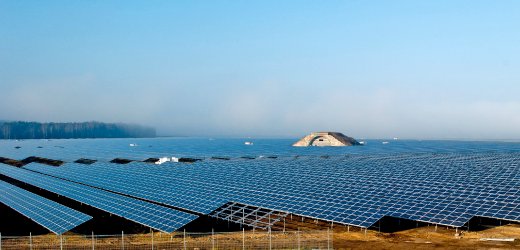
Three percent. That’s how much solar energy contributes to Germany’s overall energy mix (now don’t go be a jerk and break it to the Germans that the sun doesn’t shine very much here).

But that doesn’t really matter because, jeepers, that measly three percent only costs consumers half of the total 17 billion euros they have to shell out for renewable energy here.

It’s the principle of the matter, you see. If the Germans left this solar energy stuff up to the free market (that means no subsidies), then solar power’s contribution would be even lower than three percent – at none of the cost – and just think about how ridiculous they would look then.

And (even) the Spiegel says: Solar Subsidy Sinkhole

As The Energy Turnaround Turns

Now that the German Energiewende (energy turnaround) is here, tens of thousands of new green jobs have been created. Well, not quite yet actually. But it won’t be long now.


After all, once Berlin decided to permanently switch off the country’s eight oldest nuclear reactors and close the remaining ones still online by 2022, everyone here was absolutely ecstatic (at least those who didn’t work in the energy sector were). Sometimes you just have to give the people what they want, you know? And now they’ve got it. What they wanted, I mean

The same day the Energiewende was announced saw the first case in Germany of a solar panel manufacturer (Solon) announcing it was going into liquidation, threatening the loss of some 500 jobs. Then you had EON, Germany’s biggest power supplier, deciding to cut up to 11,000 jobs worldwide while its rival RWE shed 8,000. Then you had Solar Millennium. Then you had, oh I forget which one (there have been so many recently), solar something or something.

Hey, what’s a little job loss when it comes to the common green good (rhymes with Robin Hood)? These jobs are coming, people, sooner or later or maybe not even at all because, well, not even green jobs grow on trees.

Optimistic predictions that Germany’s decision to turn its back on nuclear energy will lead to the creation of hundreds of thousands of jobs in the renewable energy sector have met with scepticism.

Why Stop At Three Knut Memorials In Berlin?

Why not 40 instead?

It could have been a lot worse, though, believe it or not. This Knutmania stuff, I mean. Just imagine if he would have drowned in the Arctic instead?

Knut arrived on the scene at a moment when global warming was a growing topic, born the same year that the climate-change film “An Inconvenient Truth,” starring Al Gore, was released… Gore’s “An Inconvenient Truth” claim that polar bears were drowning in the Arctic because of melting ice packs has since been discredited.

Bis zum Ende der Ausschreibung in dieser Woche seien 40 Ideen, Skizzen Bilder und Modelle beim Verein der Freunde des Berliner Zoos eingegangen.

We’ll Import Power From Anywhere

Even from Austria, if need be. And need there be.

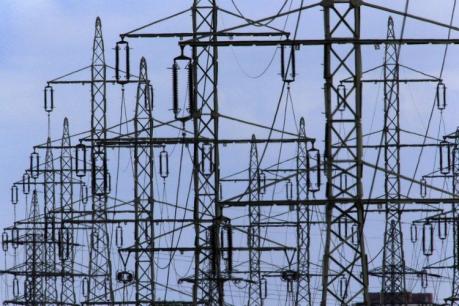
“Missing power lines” are the cause behind the missing energy being missed in Southern Germany these days, we are told. That’s why Austria is being asked to help big buddy Germany out with a little “emergency energy,” pretty please.

But Austrians do this gladly, I think, because they know that if those missing German power lines weren’t missing than those missing power lines would be transporting tons of wonderful wind energy from the high German north to those energy-hungry factories in the south (and beyond to Austria?) where it’s missing at the moment, the energy. Like I said. Or so the theory.

The missing German nuclear power plants that were shut off after Fukushima (that’s in Japan) aren’t being missed by anybody here, though. Forget about them. It’s not the missing German nuclear power plants. It’s the missing power lines that are missing, I mean messing everything up around here.

Die Bundesnetzagentur hatte vor langfristigen Engpässen bei der Stromversorgung gewarnt. Die Versorgungssicherheit bleibe durch den Atomausstieg für eine Reihe von Jahren angespannt.

Politically Incorrect Incorrectness (Correctness?)

As you may be aware of, if you take a critical stance toward Islam in and/or the Islamification of Germany, you are a very way bad person indeed and may even be what some here would call an intolerant and politically incorrect dirt ball.

But if you call yourself Politically Incorrect (PI) to begin with and make a big deal about thinking that way REAL LOUD then you’ve been outed for good and will eventually end up with the German Verfassungsschutz (Office for Constitutional Protection) on your tail.

That’s happening now, for no particular reason as far as I can see, other than the folks at the Verfassungsschutz suddenly have the need to think that the free-speaking Politically Correct just developed a dangerous and “disturbed relationship with the constitutional state.” That certainly took them awhile. PI has been around for years and hasn’t pulled any punches yet. Hmmm, and here I thought that free speech was as constitutional as apple PI, I mean pie, I mean Apfelkuchen.

Es gebe Anhaltspunkte dafür, dass etwa die Betreiber antimuslimischer Internetseiten “ein gestörtes Verhältnis zum demokratischen Rechtsstaat” hätten.