And Here I Was Getting All Geared Up…

For that traditional German Christmas Market feeling.
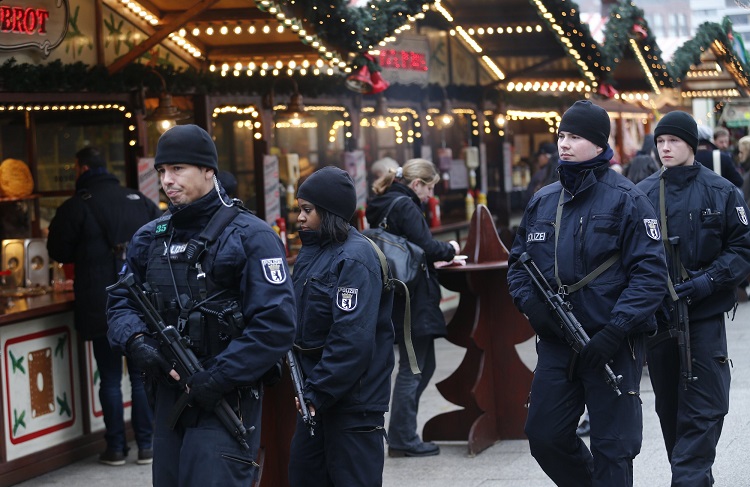
And then the next stupid Covid wave comes along and ruins everything! I’ll just have to drink my Glühwein at home alone, I guess.

Munich’s iconic Christmas market has been canceled for the second year in a row due to a significant rise in Covid-19 cases in Germany.

The “bitter news” was announced by the city’s mayor Dieter Reiter, who said he’d been left with no choice but to call off the popular event, which usually attracts around three million people annually, as the country grapples with record breaking infection rates.
How The Proof Of Vaccination Grinch Stole Christmas

In Germany. Ho, ho, ho, or something.

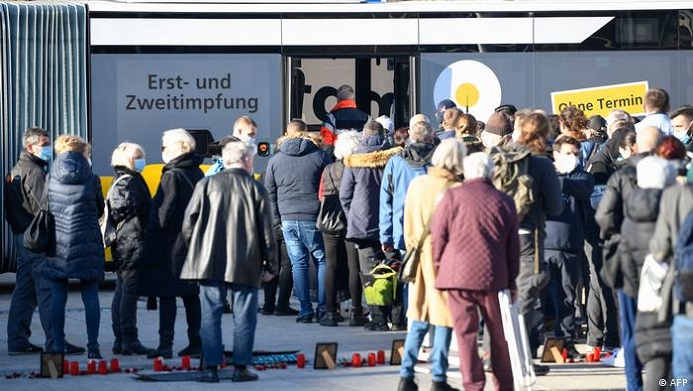
Coronavirus digest: Unvaccinated banned from some German Christmas markets – Hamburg has introduced tougher restrictions and Munich’s Christkindlmarkt has been ditched altogether. Meanwhile, Germany has recorded its highest ever daily caseload.

“It’s because I’m green, isn’t it?”

German Of The Day: Aussetzen

That means suspend.

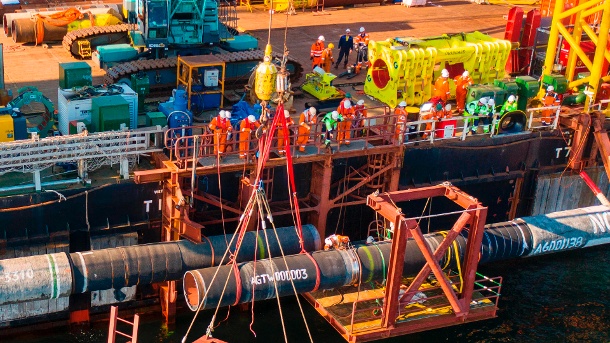
Certification of controversial Russian gas pipeline suspended by Germany – The United States and Ukraine oppose Nord Stream 2, which was completed earlier this year but is not yet in operation.

Germany’s network regulator said Tuesday that it has suspended its procedure to certify the operator of a new pipeline that would bring Russian gas to the country under the Baltic Sea because of an issue with the company’s status under German law.

Die Bundesnetzagentur setzt ihr Verfahren zur Freigabe des Gastransports durch die Gaspipeline Nord Stream 2 vorläufig aus.

Is It A Pangolin?

Is it a Piebald Squirrel? Maybe it’s a Kermode Bear?

Nope. But it is most definitely an extremely rare sighting in Germany. And in Berlin of all places. It is a so-called “pro-nuclear activist,” practically extinct, a highly endangered species indeed. They’re never seen in these parts. Not for very long. Poachers hunt them for their meat, hide, bones and hair.

German pro-nuclear activists make rare appearance in Berlin – With Germany set to shut down its last six reactors in 2022, a group of pro-nuclear activists made a rare appearance in Berlin over the weekend in the hope of reversing the decision. Operators, for their part, are wary of another abrupt policy change.

They’re Not Wearing Masks

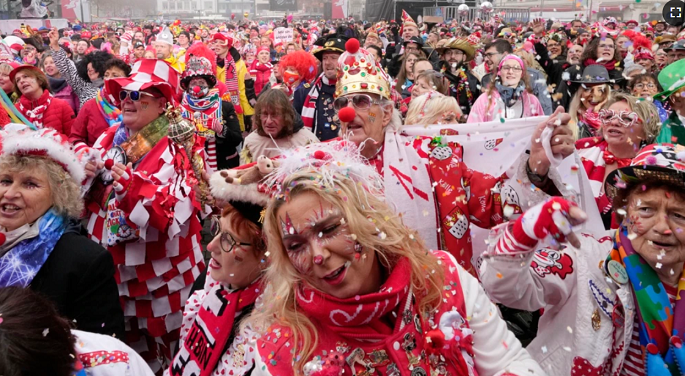
But some of them are wearing those red cardboard noses. Do they count?

The carnivals are being held despite the fact Germany is undergoing a fourth wave of COVID-19 infections, setting a record Wednesday for the number of daily infections.

And while the vaccine requirement was strictly enforced, the streets of Cologne were filled with people, side by side, without masks.

Thursday’s celebrations began with a somewhat ominous sign – designated so-called prince for the Cologne carnival, Sven Oleff, had tested positive for COVID-19 the previous day, a breakthrough case since he is fully vaccinated. The festival committee said he showed no symptoms and was feeling well.

Why Is Germany So Ill-Prepared?

The same reason every other country out there is ill-prepared – with the possible exception of China.

Nobody knows what they’re doing. The Germans just don’t know what they’re doing particularly well.

Why can’t Germany deal with the new COVID crisis?

Germany is deep into its fourth wave of the COVID-19 pandemic, but yet again its authorities and politicians seem ill-prepared. Has no one learned from the mistakes?

It goes like this, if you haven’t noticed:

Laurel: Get vaccinated to protect others.
Hardy: OK. Got vaccinated.
Laurel: And keep wearing a mask to protect others.
Hardy: But I got vaccinated.
Laurel: The vaccinated are just as contagious as the unvaccinated.
Hardy: Then why did I get vaccinated?
Laurel: To protect others.

We Don’t Want Your Kind Here

The German “2G” rule means allowing only those vaccinated or recovered from COVID-19 to enter indoor areas.

This means that Germany has become a place where the vaccinated must be protected from the unvaccinated. It all makes sense these days somehow. And that’s the scary part.

Germany’s capital Berlin will from Monday tighten the screws on unvaccinated people by denying them access to indoor dining, bars, gyms and hairdressers in an effort to contain a coronavirus resurgence.

Under new rules in the city-state, only fully vaccinated people and those who can show proof of recovery from Covid-19 can enter leisure facilities and a list of other selected venues — a system known as “2G” in Germany.

15,000 Objects?

Is that all?

In the 1980s, he began collecting postcards, posters, leaflets, coins, newspapers, magazines, documents, stickers, figurines, photographs and films that testify to anti-Jewish sentiment with the express purpose of making them available to museums and archives as educational tools. He invested an estimated €1m in his collection, which includes an array of posters relating to the Dreyfus Affair, the armbands, diaries, passports and drawings of Jewish people imprisoned in concentration camps, and advertising material for the infamous antisemitic Nazi propaganda film Jud Süss (1940).

The collection “will help us and our visitors reach a deeper understanding of how widespread antisemitic views, images and hate propaganda were in Germany and other European countries from the middle of the 19th century,” says Raphael Gross, the director of the German Historical Museum.

Sky-High Electricity Bills?

In Germany? No way. Or way?

Hey, saving the planet costs money. Just ask the German Greens who have introduced the costly (and doomed) bottomeless pit of renewable energy, save-the-planet regulation and smorgasbord of taxes on greenhouse gas emissions.

Germany’s export-oriented economy used to be a reliable engine for pulling Europe out of slumps. Now, as the continent emerges from a pandemic torpor, Germany is lagging behind.

German manufacturers are struggling to produce cars and factory equipment because of parts and labor shortages. They face surging energy prices that are making sky-high electricity bills even higher. And they must invest hundreds of billions of dollars over coming years to meet new clean-energy standards.