German Of The Day: Ausladung

That means disinvitation.
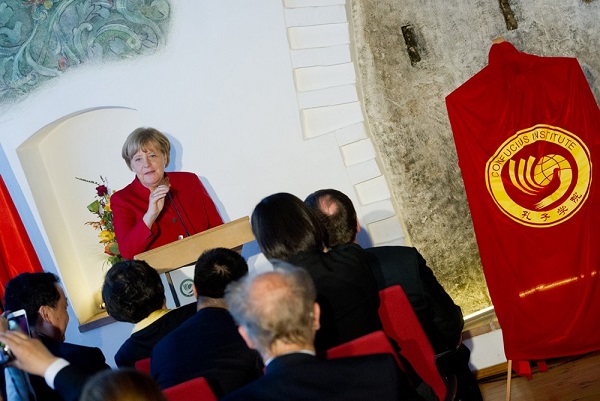
German Academic Freedom Is Now Decided in Beijing – German universities are bowing to China on censorship.

The two German journalists Stefan Aust and Adrian Geiges were disinvited from giving public talks at the German Confucius Institute about their new biography of China’s president, Xi Jinping: The Most Powerful Man in the World. The disinvitation came at the behest of the Chinese consul general in Düsseldorf. Aust told the German newspaper Die Welt that an institute staffer informed the journalists that “you cannot talk about Xi Jinping as a normal person, he is supposed to be untouchable and unmentionable now.”
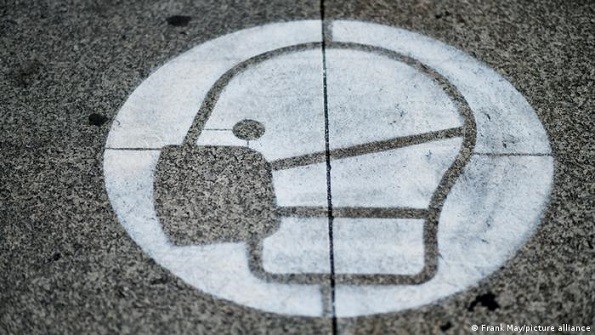
German Of The Day: Rasanter Anstieg

That means rapid rise. But willkürlich would have been a good German of the day, too. That means arbitrary.

Rapid rise as in: OMG! The Corona incidence rate in Germany is now at 130,2 and rising!

Arbitrary as in

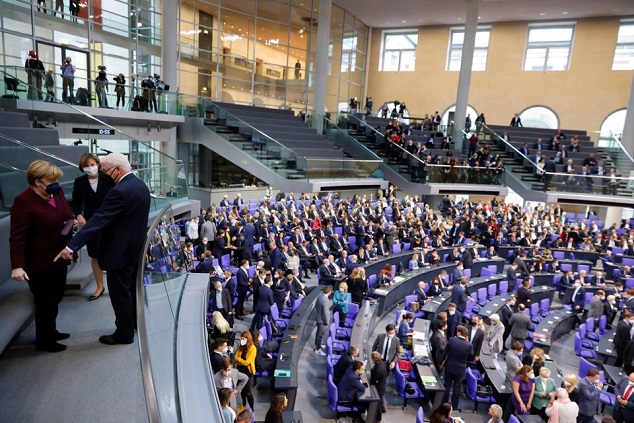
COVID: Germany set to end national state of emergency – Despite a rise in infections, the parties set to form a new government want to end the national state of emergency. But Germany should not yet expect a “freedom day.”

This just goes to show you how arbitrarily the panic buttons are pressed during our brave new COVID era. Just a few months ago, the Germans were losing sleep at night because the COVID incidence rate was threatening to rise over 30. Keep enjoying the show!

Experts Frustrated?

Well, we certainly don’t want that, do we?

It’s a terrible thing for experts when “misunderstandings” still persist. It makes them look bad. And that would only cause them more frustration.

Experts frustrated as German footballer says he has not had Covid jab – Immunologists say Bayern Munich’s Joshua Kimmich is mistaken and vaccine misunderstandings persist.

I have concerns about the lack of long-term studies.”

German Word Of The Day: Cringe

That means cringe.

OK, it’s the German Youth Word of the Year word of the day. But it still means cringe.

It’s a good word of the year, I find. For this year or any other year, these years.

Wenn Jugendliche etwas peinlich finden, nennen sie das häufig “cringe”. Besonders unter den bis 20-Jährigen ist dieser Begriff laut Langescheidt-Verlag weit verbreitet. Nun wurde er zum Jugendwort des Jahres gewählt.

German Of The Day: Tatort

That means scene of the crime. But when Germans hear the word, the first thing they normally think of is a TV show.

Tatort began as an experiment aimed at countering dubbed American crime shows’ market dominance and the success of other domestic productions. To take them on, ARD, one of Germany’s public broadcasters, tasked each of its regional affiliates with creating a series of crime shows featuring one of the cities or regions they served—incorporating its unique landscape, architecture, dialect, mentality, and economic characteristics. Each episode would be 90 minutes long—with no commercial breaks!—providing enough time to develop intricate plots set in distinctive environments. Surprisingly—even to the creators of this series—the audiences loved the new formula, and Tatort quickly earned the cult status it enjoys to this day.

Germans are obsessed with crime fiction, so much so that in German, the word Krimi—short for Kriminalroman (crime novel) or Kriminalfilm (crime film)—can also be used as a suffix to describe anything remotely suspenseful, such as a soccer match (Fußball-Krimi), chess competition (Schach-Krimi), or election (Wahl-Krimi).

As American As Apple Pie

That good old Greyhound Bus. Or at least it used to be. Now it’s as American as FlixBus.

FlixMobility, the $3 billion-German transportation startup that has doubled down on long distance buses and slowly and quietly gobbled up transit lines and operations across Europe, today announced a big move to raise its game in the U.S. The company announced that it is acquiring Greyhound Lines, the iconic U.S. bus network, from U.K.-based owner FirstGroup. Flix said the deal — which includes a vehicle fleet, trademarks, and related assets and liabilities — has an enterprise value on a debt-free/cash-free basis of $46 million, with an unconditional deferred consideration of $32 million with an interest rate of 5% per annum alongside that.

The World May Think Germany Is Hunky-Dory

But you can bet that’s only because the pollsters didn’t bother to ask any Germans.

Woke Germans (the only ones who count) love to hate Germany more than woke Americans love to hate US-Amerika (AKA The Banana Republic), if you can imagine that.

Soft Power: Germany Gets Record-High Approval From World – The world’s approval of Germany’s leadership during Chancellor Angela Merkel’s last full year in office in 2020 hit a new record high, not only for Germany, but for any global leader in more than a decade. The 52% median approval rating for Germany’s leadership in 2020 towered above ratings for Russia (34%), China (30%) and the U.S. (30%).

The FDP Decides

It seems pretty clear to me who the next German Finance Minister will be.

Their boss, Christian Linder, will get the job. If he doesn’t, it won’t come to this odd coalition of SPD, Greens and FDP.

Lindner and the FDP stand for low taxes, debt limitation and a hard line towards Germany’s European partners. The climate crisis is to be addressed by private investment and carbon pricing. The Greens, by contrast, have put climate first – and for that reason advocate large-scale investment, lifting Germany’s “debt brake”, and a pro-European policy that continues the steps taken in 2020 towards common, debt-financed investment policy. It is precisely in these policy areas – where the differences between the Greens (and the SPD) and the FDP are greatest – that the finance ministry is critical.