German business groups expect job cuts in 2026 as economic crisis drags on – A majority of German business associations expect job cuts in 2026 as the country’s economic crisis persists, with industry hit hardest by global protectionism and weak exports, a survey by the German Economic Institute IW showed on Monday.
Of 46 business associations surveyed, 22 anticipate workforce reductions next year. Only nine expect to increase hiring and 15 foresee stable employment levels.
Industrial giant Bosch shocks Germany with plans to cut 13,000 jobs – The Bosch group, one of Germany’s leading industrial players, has announced a far-reaching job cut programme. On 25 September the company said it would cut an additional 13,000 positions by 2030.
Germany’s Lufthansa To Cut 4,000 Jobs By 2030, Targetting Admin – Lufthansa set new financial targets for 2028-2030, including an adjusted operating margin of eight to 10 percent.
Does Germany need to work harder? Its government seems to think so – The average workweek in Germany last year was about 34 hours, according to Eurostat data, less than France and Greece as well as the average across the European Union, which was 36 hours. In addition, German labor productivity per hour has also been essentially flat since 2009.
A study by the Organization for Economic Co-operation and Development reports that Germans work the least among its member countries, clocking in at 1,335 hours per person per year in 2023, compared to 1,496 hours in the U.K. and 1,805 hours in the U.S.
Free money for all: Germany’s basic income experiment – One of the world’s most extensive studies on unconditional basic income was held in Germany. What does the experiment reveal?
… It is seen as a redistribution of wealth through taxes. In the activists’ calculation, Germany’s top earners — 10% of the population — would end up contributing a part of their income to everyone else. They estimate that 83% of the population would thereby have access to more money. The remaining 7% mid-earners would be unaffected by the redistribution scheme.
In times of rising populism, the basic income activists believe that this is a way to combat the population’s dissatisfaction due to wealth inequality.
Germany: Number of unemployed highest in 10 years – The number of unemployed people in Germany has risen to its highest in a decade. The rise comes as the weakness of Europe’s largest economy took its toll on the labor market.
German companies’ hiring plans drop to four-year low, Ifo finds – German companies are less willing to hire new staff than at any point in more than four years, data from the Ifo institute showed on Monday, as weakness in Europe’s largest economy has left its mark on the country’s labour market.
Ifo’s employment barometer fell to 93.7 points in October from 94.0 points in September, the lowest level since July 2020.
It’s a Volkssport (popular national pastime) here. It’s just what Germans do.
People resent living in a political system that takes at least half of what you earn and they “pay it back” every opportunity they get. And twenty sick days a year is nothing. Berlin cops and firemen, for instance, are “sick” more than twice that amount every year.
German bosses are blaming the country’s economic woes on ‘work-shy’ Gen Z calling in sick nearly 20 times a year – Germany is in a structural crisis—with falling exports, soaring energy prices, and weakening competitiveness in its most important sectors. But according to the bosses of Germany’s biggest businesses, the real problem is its workers taking too much sick leave.
Several German employers have lamented a record-breaking year for absences linked to illness.
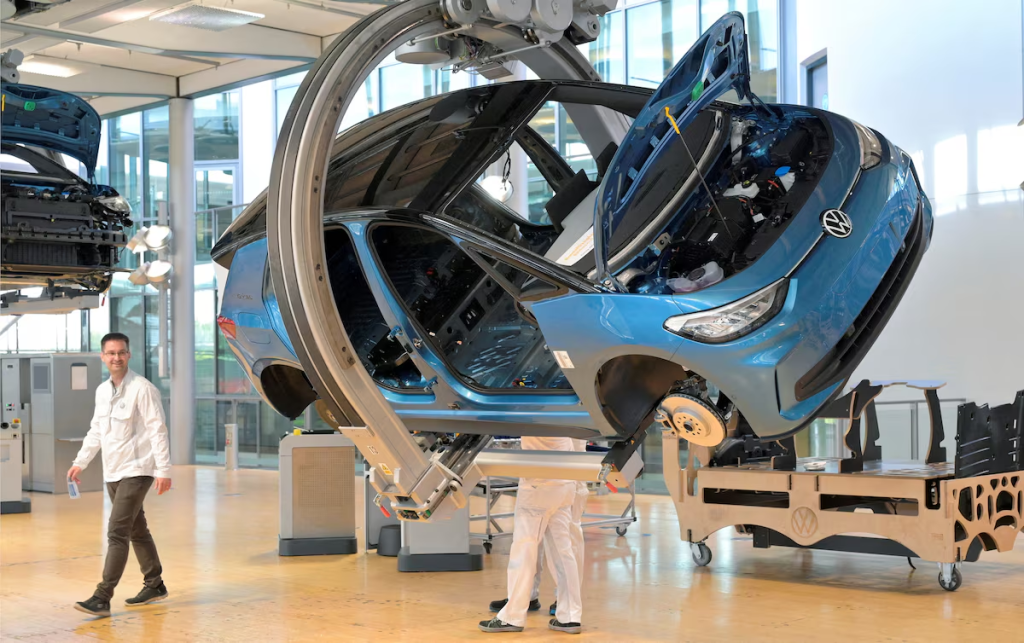
Driving on empty: The German government has few options to help an ailing car industry – Economy Minister Robert Habeck will meet with carmakers — but he has few weapons to stave off a car industry crisis.
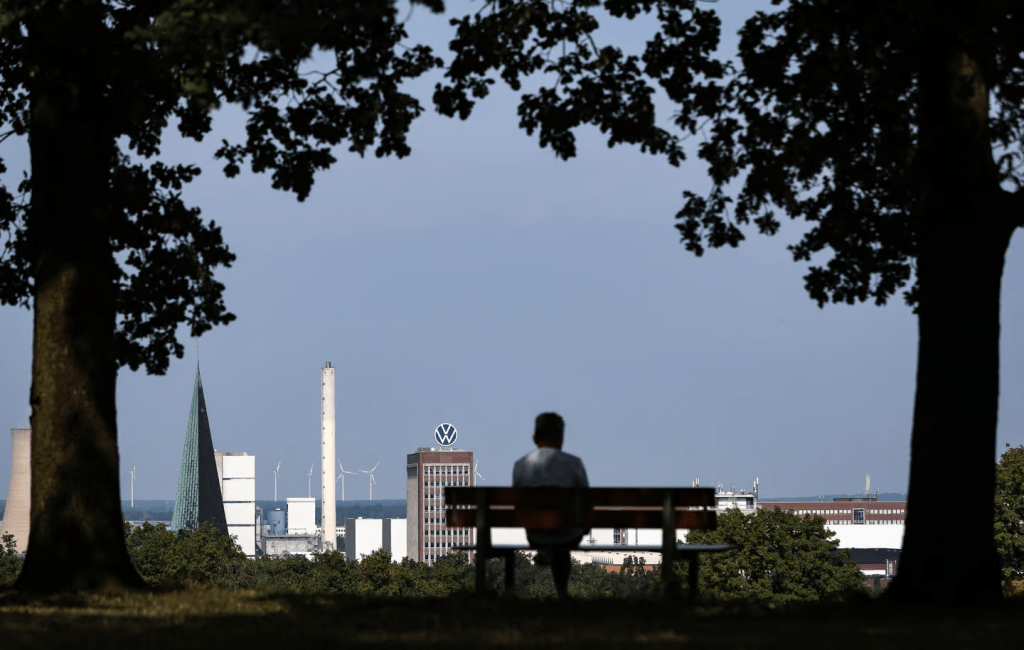
Threats of historic job cuts and plant closures at German car giant Volkswagen and plunging earnings elsewhere in the industry are prompting Federal Economy Minister Robert Habeck to hold crisis talks on Monday.
But strained federal finances, fights with China over car tariffs and looming EU environmental regulations leave Habeck with few tools to help an industry which is the country’s economic backbone.
some of the lowest salaries in Europe, the highest taxes in Europe (if not in the world), the highest social “contributions” (taxes) in Europe, some of the lowest retirement pensions in Europe (unless you’re a civil servant), the highest energy prices in Europe, the highest water and sewage costs in Europe, some of the highest real estate taxes and related bureaucratic costs in Europe, some of the highest rents and real estate prices in Europe and a catastrophic lack of available apartments. I’ll stop there. For now.
So don’t miss out on this opportunity, millennials!
Desperate for millennial talent, Germany launches ‘Opportunity Card’ giving migrants a year to look for a job – Between an aging population and an economy in seemingly perennial stagnation, Germany faces some major challenges. Could a visa aimed at attracting more young, hungry workers be the answer?
Germany is set to launch an “Opportunity Card” just in time for the summer, aimed at young foreign workers hoping either to eventually secure a long-term job or simply work in the country for a while.
That means sleeping in the office is the most healthy kind of sleep.
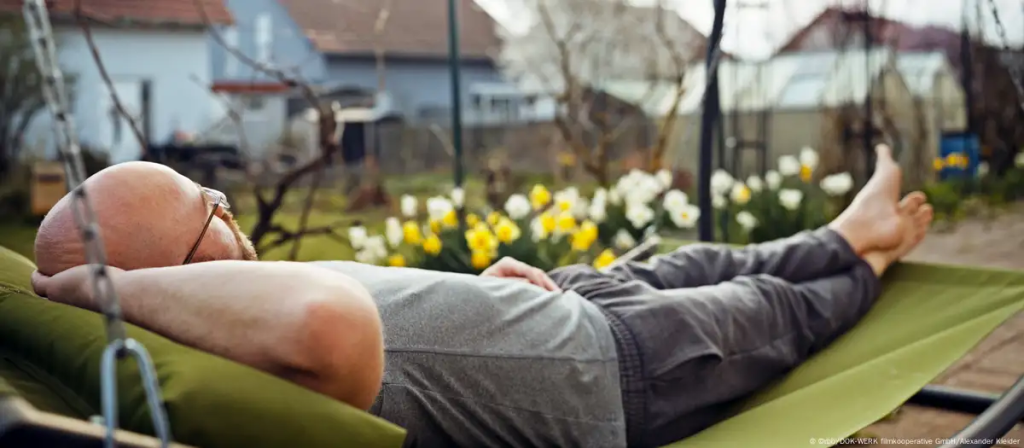
Have the Germans become lazy at work?
Germans have long been known for their diligence, sense of duty, reliability and productivity. Recent data suggests that Germans are working fewer hours. But that doesn’t tell the whole story.
A glance at current OECD labor figures can be startling. In 2022, the average American worked over 1,800 hours per year, while the average German worked only 1,340 hours. However, labor market researcher Enzo Weber from the Institute for Employment Research (IAB) in Nuremberg, Germany, dismisses suggestions of the once-industrious Germans now only wanting to enjoy their sweet lives.
“Germany has a very high female labor force participation rate compared to most other countries,” Weber told DW, noting that the main difference to other countries was that about every second woman works part-time, which mathematically lowers the average annual working hours.