That face you make when you can’t spend as much of other people’s money as you’d planned.
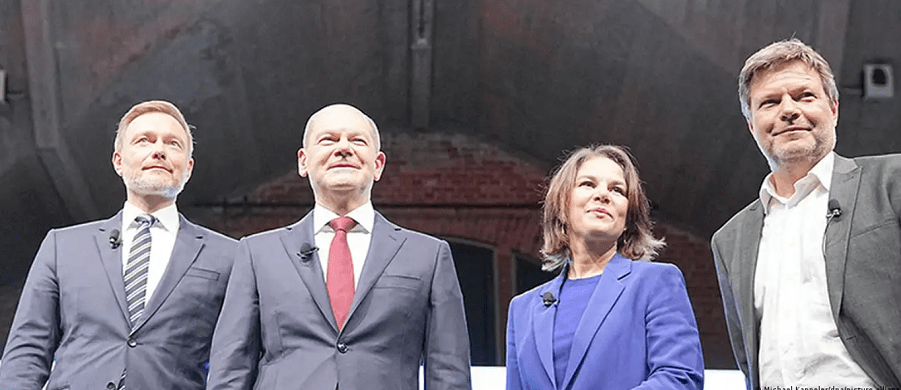
German court deals 60 billion euro budget blow to Scholz government – The German government froze major spending pledges focused on green initiatives and industry support on Wednesday after a constitutional court ruling on unused pandemic emergency funds blew a 60 billion euro ($65 billion) hole in its finances.
The decision threw into disarray budget negotiations taking place this week within Chancellor Olaf Scholz’s three-way ruling coalition, whose popularity has slumped as Europe’s biggest economy teeters close to another recession.
This is a classic German Green phenomenon. As soon as they’re given power, they promptly proceed to shoot themselves in the foot by proposing “solutions” to non-existent problems that “regular folks” simply can’t understand, much less afford. They’ve been given enough rope, in other words.
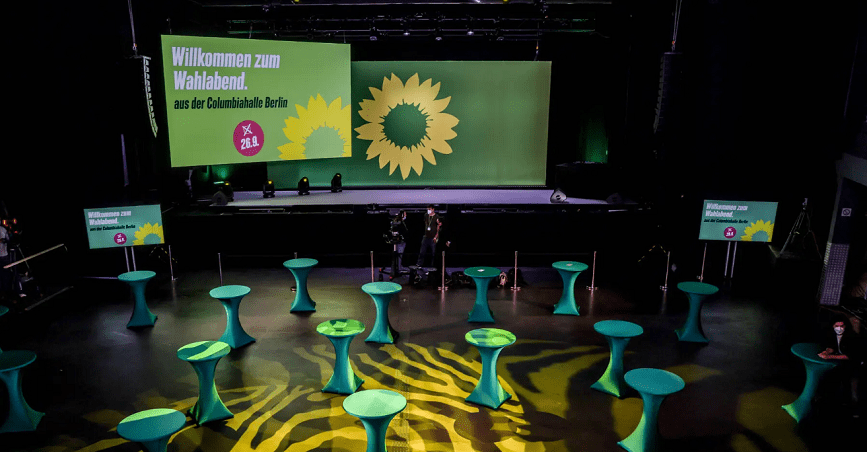
How Germany’s Greens Lost Their Luster – The party was riding high when it entered the government two years ago. Now it is stumbling, blamed for driving voters to the far right.
What a difference two years make. And a Russian invasion of Ukraine. And rising energy costs. And a host of missteps that some even within the party concede has stalled the Greens’ momentum.
Today the Greens are widely viewed as a drag on the government of the Social Democratic chancellor, Olaf Scholz, which one poll gave a mere 19 percent approval rating. The Greens have drawn withering attacks from even their own coalition partners. To their opponents, the Greens have overreached on their agenda and become the face of an out-of-touch environmental elitism that has alienated many voters, sending droves to the far right.
Not much. The little that is left of the Left is falling apart. Right and left, so-to-speak.
More power to you, lady.
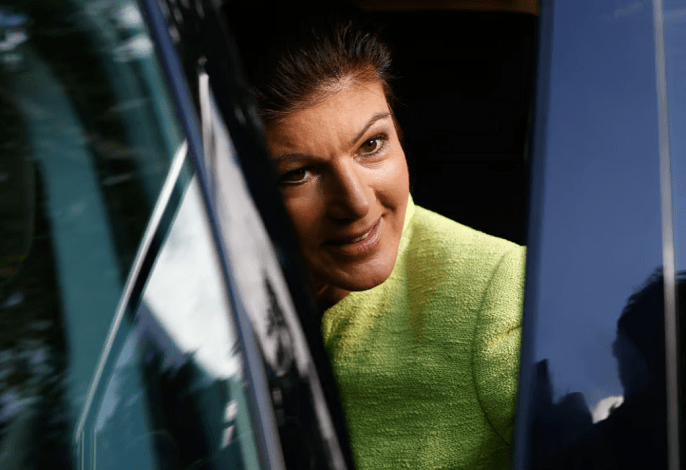
German hard-left icon set to start a new populist party – The new party would further scramble Germany’s fracturing political landscape — and likely peel away support from the far right.
Sahra Wagenknecht, the longtime face of The Left, which has roots in East Germany’s Communist Party, says her new faction will represent the large swath of the German electorate that is deeply frustrated with mainstream politics.
Like, what are we supposed to do? Take the concerns of our fellow citizens seriously (see Migrant Madness, unaffordable energy, the housing crisis, inflation, Ukraine, etc.)?
That’s out of the question.
Germany bewildered about how to halt the rise of the AfD – The far right’s rise is sending shock waves through the country’s political landscape.
In Germany, news regarding the seemingly unstoppable rise of the right-wing Alternative for Germany (AfD) appears on an almost weekly basis. But nowadays this isn’t just true of the notoriously AfD-friendly states in east Germany, it’s also spreading further west.
In Saxony, Thuringia and Brandenburg, the AfD is currently running well above 30 percent. The party is gaining ground in the former West German states of Hesse and Bavaria as well, where it is expected to land at around 15 percent in this weekend’s elections.
They clearly want to increase the popularity of the far-right AfD (Alternative for Germany).
It has to be what they want. Otherwise they would propose aggressive measures against Germany’s “immigrant dystopia,” like the AfD is doing – and eating what used to be their lunch.
The “traffic light” coalition currently in power makes no secret about having no intention of doing anything about the migrant meltdown, but of course no one here even expects them to do anything (see the Banana Republic of US-Amerika for a similar situation near you).
German far-right party surges on immigrant ‘dystopia’ – Alternative for Germany is stoking anti-migrant sentiment in the town of Görlitz — and nationwide.
Nationally it (the AfD) is polling at nearly 22 per cent, ahead of all three parties in chancellor Olaf Scholz’s coalition: the Social Democrats, Greens and liberal Free Democrats.
Germany has been becoming “a far-right stronghold.” For the past forty years at least (I’ve seen it, live).
So, you’d think that after all this time and effort these far-right folks might have finally built a stronghold that anyone with any sense would finally feel threatened by. Well, they haven’t. This is just another classic media and leftist party trope the German establishment recycles at regular intervals to allow their clientele to feel morally superior and signal virtue. You know. That “cry wolf” kinda thing? Call them Nazis and the people will love you for it.
Once Inoculated by Its Nazi Past, Germany Is Becoming a Far-Right Stronghold – Support for pro-Russia, anti-immigration Alternative for Germany surges as more voters lose faith in mainstream politics.
Step two: Once rent prices explode due to step one, introduce a rent freeze to end the few meager building projects still in operation.
Go Social Democracy!
Germany’s ruling party plans to curb rent increases – SPD set to unveil measures to tackle soaring costs facing tenants, says senior lawmaker.
Germany’s ruling Social Democratic party is set to propose a three-year rent break across the country, as tenants struggle to cope with the soaring cost of housing in Europe’s largest economy.
“We need to create breathing room — we need a rent freeze for the next three years,” senior SPD lawmaker Verena Hubertz told Bild am Sonntag, adding that Chancellor Olaf Scholz would outline measures on Monday to tackle the country’s cost of living crisis.
I know, it doesn’t ryhme as well as with “woke” but it’s OK. They’re woke too.
We’ll see for how much longer, though.
Nearly two-thirds of Germans want new government, poll says – A survey shows nearly two-thirds of voters want to pull the plug on Germany’s ruling coalition. The poll comes immediately after figures that show most Germans are unhappy with Chancellor Olaf Scholz and his government.
As many as 64% of Germans who answered in the survey released on Saturday said a change of government would make the country a better place…
Pollsters also asked about the so-called “traffic light” coalition of center-left Social Democrats (SPD), the Greens, and the neoliberal Free Democrats (FDP). Voters were asked how it measured up against Chancellor Angela Merkel’s “Grand Coalition” of conservative Christian Democrats/Christian Socialists (CDU/CSU) and the SPD.
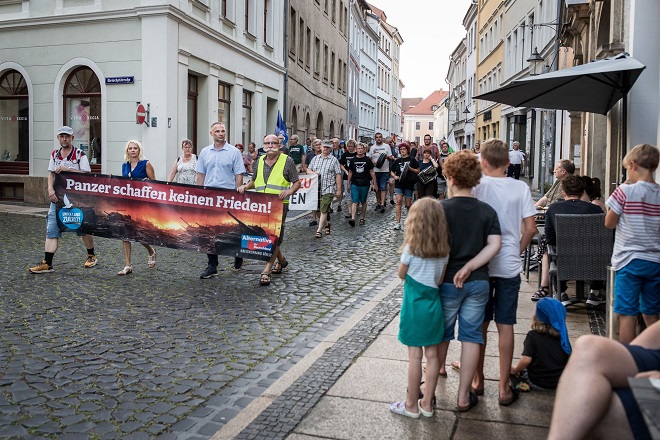
The “Nazi” name-calling strategy doesn’t seem to be working anymore (see the photo – get it?), all ye established, fat and sassy German political parties and media manipulators.
You might have to finally consider giving the German electorate what it actually wants. An end to mass illegal immigration, for example, or affordable energy. To name just two.
AfD: German voters shift toward far right – The AfD continues to gain ground in opinion polls amid high dissatisfaction with the government. Support for ending the taboo on cooperating with the populists is growing.
The far-right Alternative for Germany (AfD) has received another boost in the polls: If federal elections were held this week, the populist party would win 21% of the vote, putting it firmly in second place behind the center-right bloc of Christian Democratic Union and Christian Social Union (CDU/CSU), which remain the strongest force at 27%, despite taking some small losses.
That is according to the latest edition of the representative “Deutschlandtrend” survey, for which pollster infratest reached out to 1,297 eligible voters via phone or email between July 31 and August 2.
As in the previous months’ surveys, Germany’s center-left government again failed to win a majority. Chancellor Olaf Scholz’s Social Democratic Party (SPD), the largest party in the three-way coalition, would garner 17% — down from 25.7% when it came to power in the last general election in 2021.
In Germany? Because there is no place else for many conservative voters to go.
Angela Merkel turned the CDU/CSU into Social Democracy Light (the SPD). The conservatives behave like social democrats now and are frightened to stand up for conservative values. People with these values still exist in this country, however. Anything else I can help you out with?
Why is far-right populism so popular in Germany?
The Alternative for Germany is finding support from new voters, and has now won two local elections in a week. Why?