Times Change

Not. Not when it comes to government creating problems by having good intentions and then creating even greater problems by trying to solve the self-inflicted problems it just created. On and on this process goes. Politician generation to generation. Just like the families who now live around Berlin’s Sonnenallee in Neukölln (Little Beirut) will experience, being welfare recipients for many generations to come – instead of working  for a living like the Arab refugees who came before them, albeit “in an orderly manner.”

Neukölln

Of the nearly 695,000 migrants who applied for asylum in Germany in 2016, more than 62 percent received refugee status or humanitarian protection, which enabled them to work and receive welfare benefits, according to data from the Federal Office for Migration and Refugees (the same scandal-ridden authority we’ve been reading about these days). Among applicants from Syria, the figure was higher, at around 97 percent.

In contrast, 10 years earlier less than seven percent of asylum applicants in Germany received refugee status. A 2016 study by Bielefeld University found more than half of established migrants in Germany believe the newcomers should settle for less.

“When I saw what they received, I wished I was a refugee.”

German Of The Day: Vorschriften

That means regulations. You know, like the regulations that were “intentionally” ignored 97% of the time while asylum requests were being processed at the BAMF in Bremen?

BAMF

So much for German efficiency, again. And chalk one up to German corruption, while we’re at it. Again.

Larry the lawyer and his other lawyer buddies must be having a real heyday up there. By the way, how can you tell when a lawyer is lying? Their lips are moving.

Anwälte bekamen 97 Prozent ihrer Asylfälle anerkannt.

How Deportation In Germany Doesn’t Work

And keep in mind before your read this that half of those rejected asylum seekers actually selected for deportation are, well, never actually deported (they just don’t bother to show up for the flight, for instance).

Deportation

If an application for asylum is rejected, the Federal Office for Migration and Refugees issues a refusal notice and a deportation notice. The refusal notice says you have to leave within a certain time and warns that police will deport you if you don’t comply.

However, everyone has the right to appeal the refusal and postpone the deportation. There are several opportunities to appeal in the courts. The first appeal is through the administrative court. If this fails, you can take the case to a higher administrative court, and then in rare cases, to the Federal Administrative Court. After this, you can submit a complaint to the Federal Constitutional Court. If you believe that a deportation decision is violating your human rights, it is possible to appeal to the European Court of Human Rights in Strasbourg.

Even if you do not appeal a rejection, deportation can only take place if it is “practically possible and compatible with the law.” If deportation is not possible due to legal or medical reasons, the Migration Office can grant a tolerated residence permit. Currently, nearly 200,000 people in Germany hold a tolerated stay. Almost half of them have been tolerated for at least ten years.

Fast jede zweite geplante Abschiebung abgebrochen.

It Won’t Stop Here

After the “mistakes” the Federal Office for Migration and Refugees (BAMF) made in its rulings. The truth has a way of raising its ugly little head and there will soon be more to follow, I’m sure.

Migrants

An internal review by the Federal Office for Migration and Refugees (BAMF) of 4,568 asylum rulings had found that the Bremen branch knowingly and regularly disregarded legal regulations and internal rules, the Interior Ministry said…

More than 1.6 million migrants, many from the Middle East, have arrived in Germany since 2014, becoming a hot political issue which helped propel the far-right Alternative for Germany into parliament for the first time in last year’s election.

It’s alleged that the Bremen branch of the Office for Migrants and Refugees (BAMF), which is subordinate to the Interior Ministry, simply admitted more than 1,200 refugees to Germany without properly reviewing their cases. Bremen prosecutors are currently investigating whether bribes changed hands, and questions have been asked whether BAMF head Jutta Cordt kept herself adequately informed, and if she did enough to investigate the possible irregularities.

German Of The Day: BAMF

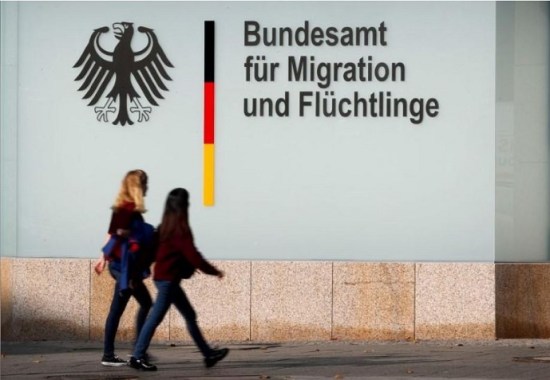
That stands for Bundesamt für Migration und Flüchtlinge, which means the Federal Office for Migration and Refugees. It turns out they should have translated that as the Bureau for Asylum and Migrant Fraud, however.

BAMF

This is one of those tip of the iceberg stories, folks. Employees at Bremen’s BAMF have been accused of improperly granting asylum in 1,200 cases between 2013 and 2017 and now an investigation has been launched in which 18,000 additional successful asylum applications will be reviewed. In the meantime irregularities at other BAMF offices have come to light.

Internal email correspondence at the Bremen office has emerged in which an upper-level manager appears to be aware of this systemic problem but asks that an internal investigation be carried out in a “noiseless” manner.  Nor should “everything be examined down to the last detail.”

Same old same old, isn’t it? We’re from the government and we’re here to help.

Angeschrieben wegen möglicher Unregelmäßigkeiten in den Bremer Asylverfahren, habe der zuständige Abteilungsleiter des Bundesamts im Februar 2017 zwar eine Prüfung angeordnet, zugleich aber verfügt, dass diese „geräuschlos“ geschehen solle. Er wolle nicht, heiße es in seiner E-Mail, „dass alles bis ins Detail geprüft wird.”

This Is Chump Change

With the emphasis on chump. What’s a mere 78 billion euros of migration-related spending through 2022 for Germany? Especially when everybody here knows that the amount will probably be three to five times higher?

Migration

It’s not like Germany needs this money to improve its rotten education system and schools, fix its backward digital infrastructure or spend more on defense, to name just a very few. No, German “leadership” knows where to set its priorities: To throw money helplessly at a crisis that she, I mean they, created.

Germany expects to spend around 78 billion euros on migration-related issues through 2022, including 31 billion euros to combat the root causes driving people to leave their homes and head to Europe, Der Spiegel magazine reported on Saturday…

German is working to integrate over a million migrants who entered the country in 2015 and 2016 after a key decision by German Chancellor Angela Merkel that has hit her popularity.

PS: German of the day: “Frau am Steuer, das wird teuer.” There’s a woman behind the wheel, that’s going to cost you (only it rhymes).

German Of The Day: Klartext

That means straight talk.

And that’s the kind of talk Angela Merkel was talking today when she said at the German Catholic Congress in Munster: “If everybody does whatever he feels like doing then that is bad news for the world.”

Klartext

She was referring, of course, to her reckless, emotion-driven, unilateral and illegal decision to provide refuge to anybody and everybody coming from Syria or anywhere else (provided they don’t have any identification papers on them), this having led to the ongoing refugee crisis in Germany and the rest of Europe.

Oh, oops! Sorry. Actually she was referring to Donald Trump’s decision to withdraw from the Iran nuclear deal. But, I dunno, same difference.

“Wenn jeder macht, worauf er Lust hat, ist das eine schlechte Nachricht für die Welt.”

“Germany Needs a New Approach to Deport Migrants?”

Yes, it certainly does. It ought to consider trying the so-called “deportation” approach I’ve heard tell about. You know, like actually deporting the hundreds of thousands that have already been turned down?

Deportation

Germany has a problem with migrants who have been denied asylum. Many of them don’t want to leave, and getting them to go is far from easy.

Last week, police in Ellwangen in the southwestern state of Baden-Wuerttemberg attempted to pick up a 23-year-old Togolese man at a refugee hostel to deport him to Italy, the country where he first crossed the border into the European Union. About 150 other Africans at the hostel wouldn’t allow it. They heavily outnumbered the 24 officers, and forced them to hand over the keys to the man’s handcuffs. The police had to retreat. They returned in force three days later and took the Togolese man away. Twenty-seven of the hostel residents are being held for rioting.

For 2016 and 2017, 406,153 people were denied asylum in Germany. In the same two years, only 49,300 people were deported or left “voluntarily” under pressure from authorities.

Germans Need To Become Better Integrated

In Germany. That makes sense. Sort of. Well, if you’re the head of Germany’s Federal Immigration and Integration Council it does.

Germans

I mean, think about it. They are already doing such a smash-up job integrating the millions of non-Germans out there that this phase of integration will soon be over with and then what are the folks who work over at Federal Immigration and Integration Council going to do? Get integrated back into the labor market (for real jobs)? Hardly.

And I have noticed, I must say, that more and more Germans just don’t really fit in here anymore. Worse still, many of these non-integrated Germans aren’t even open to the idea of letting themselves become properly integrated and even get downright hostile whenever you suggest that they do so. Not that I ever would, of course. I believe in cultural diversity. “Andere Länder, andere Sitten,” as the Germans say. Other countries, other manners. Live and let live, that’s my motto. Although I do wish that some of these non-integrated Germans would at least try to become more integrated in Germany society now and then. This parallel society nonsense ain’t cutting it, either.

“Viele Einheimische sind mit unserem politischen System unzufrieden oder finden ihren Platz in der deutschen Gesellschaft nicht.”

German Police Stand For The Rule Of Law

When not actually running away, that is.

Ellwangen

Around 200 African migrants in refugee accommodation in the small southern German town of Ellwangen have forced police to release a man who was due to be deported to the Congo.

The 23-year-old man was un-handcuffed by police who considered themselves outnumbered after the large crowd of refugees, reportedly mostly African, threatened violence against officers who had arrived in three police cars.

“They were so aggressive and threatened us more and more, so we had to leave the man behind and retreat to the gate [of the refugee facility],” one officer said, adding that there was some damage to the cars.

The migrants then sent a messenger to the police, bearing an ultimatum: that they had to remove the handcuffs from the Congolese national within two minutes, or that they would storm the gate.

The police decided to give the security guard at the refugee facility a key to release the man.

“I can only pay my colleagues great respect for having kept cool heads in such an aggressive and exceptional situation.”