Dying?

Long dead is more like it. The German Air Farce.

Air Force

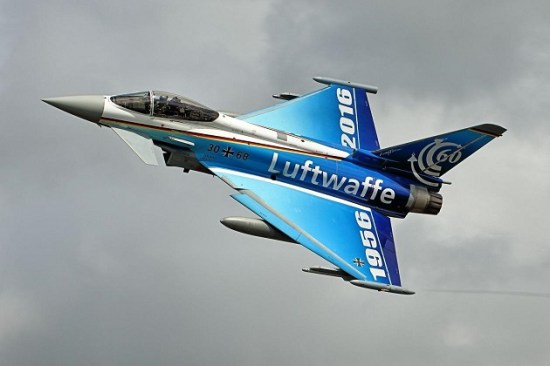
Germany’s Air Force Is Dying: Everything You Need To Know – AFebruary ministry report showed only 39 of 128 Eurofighter jets were available for training and combat use last year on average, and just 26 of 93 older-model Tornado fighter jets.

The problem – for anybody on the outside out there – is assuming that anyone here gives a damn. And the punchline: The German defense minister directly responsible for this just got promoted and will now be running the EU. Get it?

Die Luftwaffe is at a low point.

Happy Potato Day

Just in case you didn’t know, Germans have this thing with patatoes. That’s why a group of German agi-taters lobbied to make August 19 Potato Day.

Potato

I guess that makes the rest of us speck-taters.

Not that I’m complaining or anything, I’m just a commen-tater, folks.

The Germans’ insatiable love affair with potatoes – They were once guarded by the king and are sometimes eaten with apple sauce. For Potato Day on August 19, here are some things you maybe didn’t know about potatoes in Germany…

By the way, how can you tell how fast a German potato is going? Check its spud-ometer.

What Goes Up

Must go flat.

Flat

And then shrink.

Germany’s economy is now shrinking – The mood music had grown so ominous that the shock was somewhat muted. After weeks of dismal survey and industrial-output numbers, it was little surprise to learn on August 14th that Germany’s gdp had contracted by 0.1% in the second quarter of 2019 compared with the previous three months. The economy has been essentially flat over the past year. Household spending, bolstered by wage growth in a tight labour market, has held up but the slump in manufacturing, which represents over one-fifth of output, is deepening. Companies are cutting work hours and issuing profit warnings. Many analysts think Germany is heading for outright recession.

Will the government open the spending taps? Probably not.

“Crotchety, Over-Critical Culture” Part II

As reported earlier, Germans themselves will be the first to admit that, when it comes to entrepreneurship, they have a “crotchety, over-critical culture, with its fear and condemnation of failure,” but it is what it is and they are what they are.

Cars

There’s even a saying/joke here that goes “anything in Germany that is not expressly permitted is forbidden.” Take electric cars, for example. Their production may not be expressly forbidden but the German automobile industry is doing its damnedest to pretend like they don’t exist. One could say this has more to do with “never touch a running system” (this industry still makes piles of money) but it really gets down to being crotchety again. They’re missing the boat and they know it.

Concern is rising in Europe’s automobile heartland about the economic impact of the industry’s move to electric vehicles from gasoline-powered cars.

Officials and executives in Germany fear the country’s big car companies and rich ecosystem of suppliers and service providers are insufficiently prepared for the transition, and that their leadership may not be assured in an electric-car world, threatening jobs, tax revenue and even growth.

Assembling electric cars isn’t as complex or labor intensive as making traditional vehicles and relies partly on imported technology. At the same time, China has made rapid forays in electrification and is shaping up as a potentially formidable competitor in the field.

The trepidation is particularly acute in the city of Stuttgart, hub to one of the country’s biggest automotive clusters at the heart of the nation’s dynamic south. It comes as Europe’s largest economy is showing signs of weakness amid a chill in global trade.

“The greatest catastrophe would be if the industry fell asleep at the wheel. It is crucial for jobs that companies like Daimler make a massive push into this technology and build locally.”
“Crotchety, Over-Critical Culture”

Comparing Germany’s entrepreneurial business world to Silicon Valley’s? This post will be even shorter than usual.

Silicon

One reason why California continues to draw talent out of Germany is the contrast between Germany’s crotchety, over-critical culture, with its fear and condemnation of failure.

This compares unfavorably with California’s inspiring can-do optimism and fail early, fail often, keep trying until you succeed” mantra. Additional reasons are the much higher salaries paid to engineers and programmer in California, the sunnier, warmer weather and California’s huge head start in building a startup-friendly business ecosystem.

“We need to build critical mass in one city, and that city is Berlin. It’s built a global reputation as a cool, hip, affordable city with a lively startup scene. We should double down on that.”


A Show Of Forest

Greta joins forces with the Robin Hoodlum activists of Hambach Forest in Germany. You know, in Media Hyperspace? Nothing can stop them now or something.

Greta

Climate activist Greta Thunberg makes surprise visit to German forest – While on her way to a UN climate conference, 16-year-old climate activist Greta Thunberg stopped in western Germany to stand with activists at the Hambach Forest. The woods have been threatened by a nearby lignite mine.

Greta & Co really need to get out (of the forest) more and gather a little real world experience. For health reasons alone. As William James (The varieties of Religious Experience) once put it: Spiritual excitement takes pathological forms whenever other interests are too few and the intellect too narrow.

“This is so important because it is so symbolic.”

German Forests Dying Again

And again, and again…

Forest

The first big German forest death that I remember was way back when in the 1980s. It was caused by something they called “acid rain” and this led to the Waldsterben or “forest death” epidemic, or Waldsterben 1.0. It was a terrible death and a dog gone shame.

But now, with Waldsterben 2.0 in the year 2019, German forests (already dead) are dying again, only this time it’s due to climate change (extreme heat, storms and new insect plagues). RIP or something.

Flash forward three decades and, to the untrained eye, Germany’s forests resemble that man in Monty Python and the Holy Grail: not dead yet.

What Difference Does It Make?

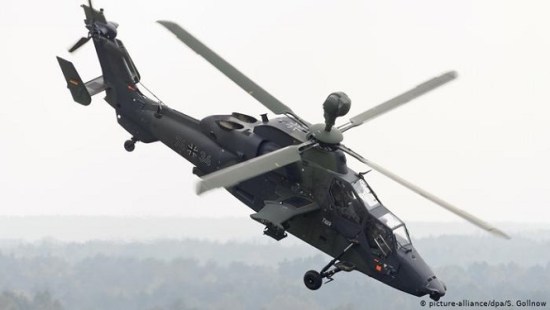
Germany: Bundeswehr grounds ‘Tiger’ helicopters due to technical faults.

Tiger

The Bundeswehr and Bundesmarine (German army and navy) ain’t ever going to be deployed anywhere anyway so who cares if nothing works or not?

Bundeswehr’s enduring equipment woes – The incident is the latest in a series of embarrassments for the Bundeswehr and the German government concerning equipment, especially as regards government-issue aircraft. Chancellor Angela Merkel, Foreign Minister Heiko Maas, and Finance Minister Olaf Scholz have all been delayed by faulty airplanes while carrying out official duties in the past year. Bundeswehr officials have also long complained that much of their equipment is outdated and broken, as increasing defense spending becomes more and more unpopular politically.

“Security is the top priority for the Bundeswehr.”

Inexpensive Meat?

We’ll fix that for you real quick. For your own good, of course.

Meat

Germany: ‘Meat tax’ on the table to protect the climate – meat is relatively cheap for consumers in Germany. But that could all be about to change as lawmakers from across the political spectrum back proposals aimed at climate protection and animal welfare.

German politicians from the Social Democrats (SPD) and the Greens on Wednesday proposed raising the value added tax (VAT) on meat to the standard rate of 19%. Currently, meat is taxed at a reduced rate of 7% like most foodstuffs.

“A meat tax, such as increasing the VAT to 19%, could be a way forward.”

PS: German Oddity 10. Germans have more words for taxation than Eskimos have for snow.

German Of The Day: Flaschenhals

That means bottleneck.

Flashenhals

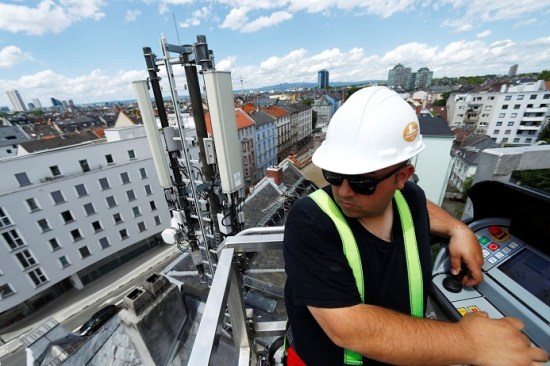
Germany is looking for new ways to power its economy as the traditional growth engines of manufacturing and exports falter. But the country’s outdated internet is acting as a bottleneck.

The sorry state of the online network has become a national joke and an economic liability. Germany ranks 33rd in the world in average monthly fixed broadband connection speeds, and 47th for mobile, according to Speedtest Global Index.

“It’s too slow. If you’re really world class in production, having a ranking of, say, [33rd] in working internet does not fit together with that image.”