Angela Merkel Visits Hong Kong

Just kidding. Why would she do that?

Angela Merkel

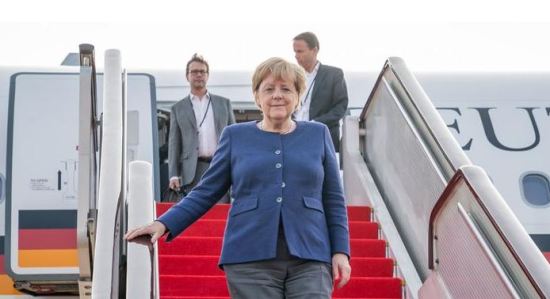
German Chancellor Angela Merkel was welcomed with military honors in China on Friday with a business delegation in tow, hoping to secure an economic agreement.

China is Germany’s largest import market and, after the USA and France, and also its most important export market. In 2018 the two countries traded goods worth almost €200 billion ($221 billion).

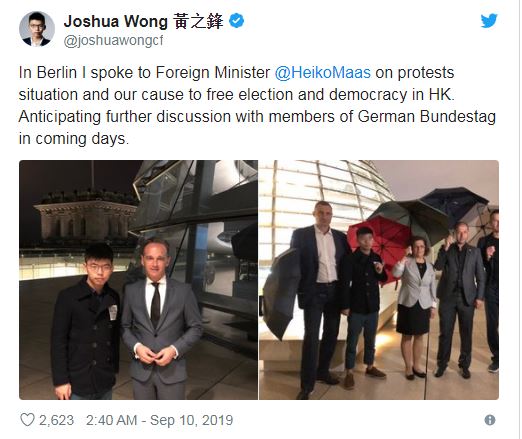
Hong Kong protesters make plea to Chancellor Merkel.

Save Money At Your Own Risk, Thrifty Germans

That virtue is going to cost you in today’s Europe.

Cash

Germany in Uproar as Negative Rates Threaten Saving Obsession – Germany’s overcrowded banking industry has long contended with sub-par profitability, but after five years of negative rates, lenders are running out of ways to offset the hit to earnings. With the country gearing up for regional elections next month, the ECB is an easy target for a country known for its risk-averse attitude to money and its habit of hording savings in checking accounts. At 2.35 trillion euros ($2.6 trillion), no other country in the euro area has a larger pile of retail deposits.

“These suggestions show how far the undesired side effects of the ECB’s negative rates stretch.”

Speaking Of Null…

Zero, that is.

Debt

Germany May Abandon Its Beloved Black Zero – Chancellor Angela Merkel is still clinging to her policy of a balanced budget, but it is becoming increasingly clear that Germany’s economic downturn could soon usher in a return to deficit spending…

For years now, a balanced federal budget, known here in Germany as the “schwarze Null,” or black zero, without any fresh borrowing, has been a permanent fixture of German fiscal policy. After four decades of chronic borrowing to finance the German national budget, the shift stood for the renunciation of the debt state and became a symbol of sound policy. But now the issue is the subject of debate again — not only due to expensive political plans, but also the threat of a recession in Germany…

“We can accomplish the tasks at hand without accruing new debt.”

German Of The Day: Null

That means zero. Nothing. Nada.

Zero

And zero is what you get if you purchase the world’s first 30-year bond featuring – zero income. Not much of an outcome there. What a steal. In more ways than one.

Germany Regrets Size of Bond That Pays Nothing as Auction Flops – The world’s first 30-year bond featuring zero income struggled to find buyers, prompting Germany’s debt agency to admit the sale may have been “too large.”

The nation failed to meet a 2-billion-euro target ($2.2 billion) for the auction of notes maturing in 2050, signaling that negative yields across Europe may finally be taking their toll on demand. It’s another sign that the global bond rally may be coming to a halt now that more than $16 trillion of securities have negative yields.

“The broader conclusion is that this is an ominous sign for cash bonds.”

What Goes Up

Must go flat.

Flat

And then shrink.

Germany’s economy is now shrinking – The mood music had grown so ominous that the shock was somewhat muted. After weeks of dismal survey and industrial-output numbers, it was little surprise to learn on August 14th that Germany’s gdp had contracted by 0.1% in the second quarter of 2019 compared with the previous three months. The economy has been essentially flat over the past year. Household spending, bolstered by wage growth in a tight labour market, has held up but the slump in manufacturing, which represents over one-fifth of output, is deepening. Companies are cutting work hours and issuing profit warnings. Many analysts think Germany is heading for outright recession.

Will the government open the spending taps? Probably not.

“Crotchety, Over-Critical Culture” Part II

As reported earlier, Germans themselves will be the first to admit that, when it comes to entrepreneurship, they have a “crotchety, over-critical culture, with its fear and condemnation of failure,” but it is what it is and they are what they are.

Cars

There’s even a saying/joke here that goes “anything in Germany that is not expressly permitted is forbidden.” Take electric cars, for example. Their production may not be expressly forbidden but the German automobile industry is doing its damnedest to pretend like they don’t exist. One could say this has more to do with “never touch a running system” (this industry still makes piles of money) but it really gets down to being crotchety again. They’re missing the boat and they know it.

Concern is rising in Europe’s automobile heartland about the economic impact of the industry’s move to electric vehicles from gasoline-powered cars.

Officials and executives in Germany fear the country’s big car companies and rich ecosystem of suppliers and service providers are insufficiently prepared for the transition, and that their leadership may not be assured in an electric-car world, threatening jobs, tax revenue and even growth.

Assembling electric cars isn’t as complex or labor intensive as making traditional vehicles and relies partly on imported technology. At the same time, China has made rapid forays in electrification and is shaping up as a potentially formidable competitor in the field.

The trepidation is particularly acute in the city of Stuttgart, hub to one of the country’s biggest automotive clusters at the heart of the nation’s dynamic south. It comes as Europe’s largest economy is showing signs of weakness amid a chill in global trade.

“The greatest catastrophe would be if the industry fell asleep at the wheel. It is crucial for jobs that companies like Daimler make a massive push into this technology and build locally.”
“Crotchety, Over-Critical Culture”

Comparing Germany’s entrepreneurial business world to Silicon Valley’s? This post will be even shorter than usual.

Silicon

One reason why California continues to draw talent out of Germany is the contrast between Germany’s crotchety, over-critical culture, with its fear and condemnation of failure.

This compares unfavorably with California’s inspiring can-do optimism and fail early, fail often, keep trying until you succeed” mantra. Additional reasons are the much higher salaries paid to engineers and programmer in California, the sunnier, warmer weather and California’s huge head start in building a startup-friendly business ecosystem.

“We need to build critical mass in one city, and that city is Berlin. It’s built a global reputation as a cool, hip, affordable city with a lively startup scene. We should double down on that.”


What Difference Does It Make?

Germany: Bundeswehr grounds ‘Tiger’ helicopters due to technical faults.

Tiger

The Bundeswehr and Bundesmarine (German army and navy) ain’t ever going to be deployed anywhere anyway so who cares if nothing works or not?

Bundeswehr’s enduring equipment woes – The incident is the latest in a series of embarrassments for the Bundeswehr and the German government concerning equipment, especially as regards government-issue aircraft. Chancellor Angela Merkel, Foreign Minister Heiko Maas, and Finance Minister Olaf Scholz have all been delayed by faulty airplanes while carrying out official duties in the past year. Bundeswehr officials have also long complained that much of their equipment is outdated and broken, as increasing defense spending becomes more and more unpopular politically.

“Security is the top priority for the Bundeswehr.”

Inexpensive Meat?

We’ll fix that for you real quick. For your own good, of course.

Meat

Germany: ‘Meat tax’ on the table to protect the climate – meat is relatively cheap for consumers in Germany. But that could all be about to change as lawmakers from across the political spectrum back proposals aimed at climate protection and animal welfare.

German politicians from the Social Democrats (SPD) and the Greens on Wednesday proposed raising the value added tax (VAT) on meat to the standard rate of 19%. Currently, meat is taxed at a reduced rate of 7% like most foodstuffs.

“A meat tax, such as increasing the VAT to 19%, could be a way forward.”

PS: German Oddity 10. Germans have more words for taxation than Eskimos have for snow.

German Of The Day: Igelsex

Go figure. It’s pronounced “eagle sex” but it means hedgehog sex.

Igelsex

Germans kept up at night by noisy igelsex (that’s hedgehog coupling) – Police called out to reports of nocturnal disturbances find hedgehogs ‘having fun.’

I don’t buy it, though. I think these Germans were kept up at night, tossing and turning, worrying about the German economy.

“Germany’s economy is highly dependent on exports, and that’s what’s hitting the German economy now. If the trade conflicts persist for many more years, this will hit Germany very hard.”