German Of The Day: SPD

That stands for the Sinking Party of Deutschland. Or was it for Sterbende (dying) Partei Deutschlands? One of those.

SPD

I’m talking sinking, folks. Low. How low, you ask? I’ll tell you how low. Why, a pool released today indicates that the SPD’s national popularity rating is now so low that it has dropped behind that dreadful, awful and completely unacceptable AfD party. Times change, comrades. Thanks for your help there, Angela Merkel (she’s not SPD, of course, but her wild and crazy refugee policy has made the AfD what it is today: The second largest party in the Bundesag – and they’re not done yet). The SPD help make up Germany’s current grand coalition, you know. It doesn’t look like their help will be very much help for very much longer, however.

Es ist der nächste Schock für die Sozialdemokraten: Die SPD liegt in einer bundesweiten Umfrage nur noch auf dem dritten Platz – hinter der AfD.

Another German Initiative Bites The Dust

Although they moan the loudest about it, Germans and other vocal continental moaners have finally succeeded in doing away with that awful, terrible and truly horrible daylight savings time nonsense – an idea that they introduced in the first place.

Time

The German Empire and Austria-Hungary organized the first nationwide implementation, starting on April 30, 1916. Many countries have used it at various times since then, particularly since the energy crisis of the 1970s.

A European Union online survey has concluded that a vast majority of the bloc’s citizens are against switching between summer and winter time. All signs point towards the EU now putting a stop to changing the clocks.

More than 80% of respondents to the largest online survey in EU history are in favour of abolishing changing the clocks in summer and winter, German newspaper Westfalenpost reports, citing well-informed sources in Brussels.

Es wäre sinnlos, die Bevölkerung erst zu einem Thema zu befragen, und dann, wenn es einem nicht passe, dem nicht zu folgen.

PS: Of the roughly five million Europeans who actually took part on the online survey over three million of them were German.

Left Now Right?

No, let’s call it Right Goes Left. How about Left Right Left?

Wagenknecht

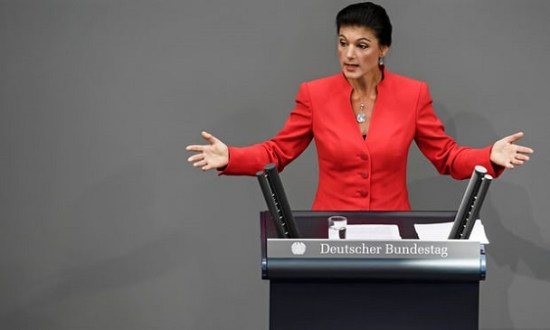
This perennial leftist Frontfrau (lead singer) has just thrown up her hands in desperation about what to call her new collective (collectivist?) lefty movement of malcontents (there’s a big demand for movements like that these days) and finally settled for #aufstehen (stand up, rise up).

Leftwing politicians are singing the praises of border control while rightwingers call for expanding the welfare state. Old political certainties could be turned upside down in Germany this summer as the far ends of the country’s political spectrum both moot a “national social” turn.

A new leftwing movement soft-launching in Germany in August aims to part ways with what one of its founders calls the “moralising” tendency of the left, in an attempt to win back working-class voters from the far-right Alternative für Deutschland (AfD).

SPD-Vize Stegner kritisiert das Projekt als “Egotrip notorischer Separatisten.”

They Keep Getting My Hopes Up

But they’re not going to sucker punch me this time, either. Not when they come at me with this “Merkel is in big trouble and this could be the end” stuff.

Merkel

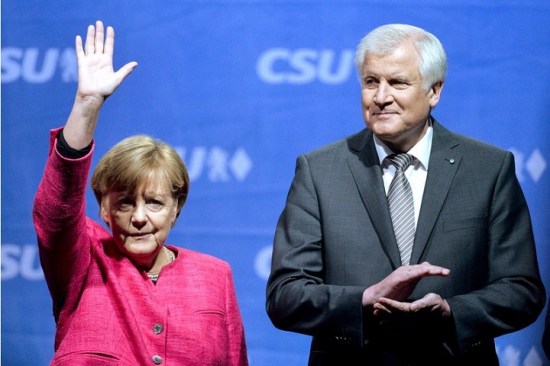
I’ve been through this too often before. I will not be swayed by their Chruchill-esque come-on: “Now this is not the end. It is not even the beginning of the end. But it is, perhaps, the end of the beginning.” I mean, wouldn’t it be great if it really were the end of the beginning? I’ll take the beginning of the end if necessary but the end of the beginning would be way cooler. If it can’t be the actual end, I mean. The actual end would be best of all, of course. That goes without saying. But we’re not there yet. Or are we? Damn it! Here they go tricking me into getting my hopes up again.

A resolution to Germany’s government crisis proved elusive Sunday after the head of the Bavaria-only Christian Social Union in Angela Merkel’s conservative bloc offered his resignation rather than back down from his stance against the chancellor’s migration policies…

If Seehofer does step down, it is not immediately clear what effect the move would have on a three-week impasse between Merkel and her CSU partners, which has centered on his resolve to turn away some types of asylum-seekers at Germany’s borders.

„Dass es ernst ist, weiß jeder.”

German Of The Day: Totgesagte Leben Länger

That means “those declared dead live longer” or there’s life in the old dog yet.

Merkel

Sure, Angela Merkel’s approval rating has long become a disapproval rating and nearly half of Germans polled would like to see her step down now but what does that have to do with anything? There is no direct balloting for the office of Chancellor or they would have voted her out of office years ago. The parliamentary majority decides. And harmless little old Angela Merkel has spent years bumping off anyone in her party who could even remotely pose a threat to her position as boss lady. Nope, things will just keep plugging along, one painful step in the wrong direction after the other. Same procedure as last year, Miss Sophie? Same procedure as every year, James.

By the way, did you know that most great catastrophes don’t just happen suddenly, out of nowhere and overnight? They usually result after a long accumulation of smaller mishaps, mistakes and poor decisions has taken place.

Berlin. Angesichts der aktuellen Regierungskrise um die Asylpolitik ist fast jeder zweite Deutsche für eine Ablösung von Bundeskanzlerin Angela Merkel. In einer Umfrage des Meinungsforschungsinstituts YouGov sprachen sich 43 Prozent dafür aus, dass Merkel zurücktritt und ihr Amt an einen Nachfolger oder eine Nachfolgerin übergibt.

Crisis? What Crisis?

It’s not like the migrant crisis I singlehandedly caused is a crisis or anything. They just call it that.

Ricin

Or that this so-called migrant crisis I unleashed also caused the surge in populism that is currently surging in Germany. Or that any of these so-called migrants are endangering the German public. They’re not. It’s those yuicky terrorists that came into the country illegally with them. When they came into the country illegally, I mean. What, me worry?

Not Angela Merkel. She’s the Blob. Changes form at will. And nobody can lift her up out of that chair. Right?

Not even 100 days after she negotiated her way to a fourth term as German leader, Angela Merkel is mired in a political crisis that underscores Europe’s divisions over immigration amid a surge in populism.

Das in Köln sichergestellte Rizin hätte für Hunderte toxische Dosen gereicht. Verfassungsschutzpräsident Maaßen nimmt an, dass mit dem Gift ein Anschlag geplant war.

Beware Of Low-Flying Objects

Like Germany’s SPD.

Nahles

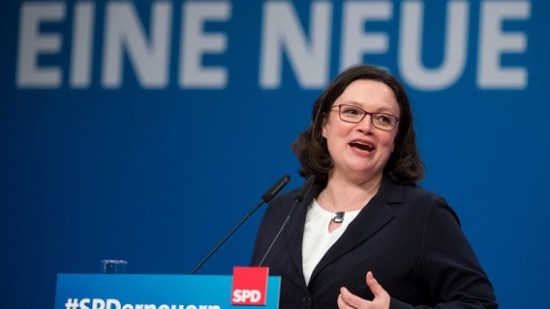
Their new boss lady, Andrea Nahles, has brought them down to an altitude of 17 percent – that’s the percentage of the German electorate that is still prepared to vote for them.

But watch it, folks. They’re tricky. I think it’s intentional. How could you sink this low if it wasn’t on purpose? And once they get under the radar like that they can turn up anywhere and start strafing you when you least expect. You know, with new money resdistribution plans or other social justice air warrior maneuvers? Or maybe just crash and burn altogether. Hard to say for sure. Either way it’s only only going to get uglier.

Nach dem RTL/n-tv-Trendbarometer verliert die SPD im Vergleich zur Vorwoche und erreicht nur noch 17 Prozent. Alle anderen Parteien blieben bei ihren Werten. Die Union liegt demnach bei 34 Prozent, die Grünen bei 13, die AfD bei zwölf, die Linken bei zehn und die FDP bei neun Prozent.

Perfect For The Job

As head of a “worker’s” party like Germany’s SPD, I mean: Somebody who has never worked a day in her life.

Nahles

Folks like that know best how to distribute/redistribute other people’s money. I guess this election means that the SPD commrades want to stretch out their party’s long and excruciating terminal illness for as long as they possibly can. Good choice, workers. She is clearly the best man for the job.

Andrea Nahles has become the first woman to lead Germany’s Social Democrats — though by a disappointing margin of votes…

After garnering a meager 66.35 percent of delegate support at a special conference in the western German city of Wiesbaden on Sunday, Andrea Nahles takes over a Social Democratic Party (SPD) in an unprecedented crisis.

Scarcely a year ago, SPD delegates had unanimously elected Martin Schulz, the longtime president of the European Parliament, as party leader and chancellor candidate. The result was a historic national electoral debacle against Angela Merkel’s Christian Democrats (CDU), leaving the SPD deeply divided over policy and personnel.

After initial refusals, party leaders decided to extend the grand coalition with Merkel’s CDU and Bavaria’s Christian Social Union, which allies with the chancellor’s conservatives. Nahles’ job is to remake and re-energize the SPD while ensuring that its cabinet ministers can do their jobs with minimum of interference by fellow Social Democrats.

“Solidarity is one of the main things missing in this globalized, neoliberal turbocharged world.”

If The Deutsche Post Does It It’s Different

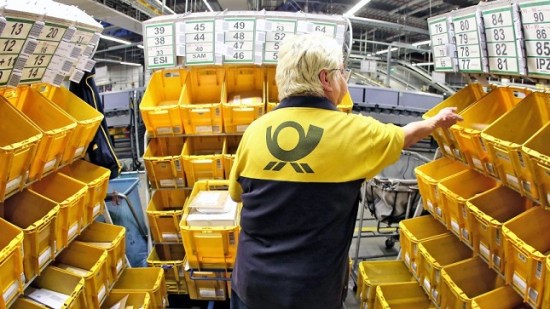
As usual, German Scheiße doesn’t stink.

Deutsche Post

When it comes to data mining = Cambridge Analytica = Facebook = US-Amerika, we’re talking pure evil. The Deutsche Post, on the other hand, is the Deutsche Post so it ain’t no big deal – when they do the same thing. The outrage hält sich in Grenzen (is kept within limits).

Deutsche Post sold client microtargeting data to the Christian Democrats and Free Democrats before the 2017 elections. Is this a scandal along the lines of Cambridge Analytica in the US? That depends on whom you ask.

“German ‘data-driven’ canvassing cannot be compared with the highly sophisticated US campaigns, which use reliable data, experimental findings and data modeling to identify individual voter targets.”

German Of The Day: Aneinander vorbeireden

That means to talk at cross purposes. In this case when German politicians use the same word in different ways – gehören (meaning both to belong to and ought to belong to).

Islam

In an interview with the German newspaper BILD Seehofer said: “Islam is not a part of Germany. Germany has been influenced by Christianity. This includes free Sundays, church holidays and rituals such as Easter, Pentecost and Christmas. However, the Muslims living in Germany obviously do belong to Germany.”

This statement conflicted with the position of German Chancellor Angela Merkel. Merkel said, even though Germany has been influenced mainly by Christianity and Judaism, there are more than four million Muslims in the country, they “belong to Germany and so does their religion.”

Hey, depending upon how you look at it, Germany does not belong to Germany. Neither does Christianity belong to Germany. Let’s not even start with Judaism. So I think Horst Seehofer is right on the money when he says that Islam does not belong to Germany, either. What’s the big deal? We’re all not in this together, folks.

Da muss man schon präzise sagen, was mit dem Ausdruck “gehört” eigentlich gemeint sein soll. Das kann man ja als schlichte Bestandsaufnahme oder Feststellung meinen: Man gehört zu einer bestimmten Familie oder einem Verein an. Man kann es aber auch so verstehen wie bei der Formulierung: Kinder gehören zeitig ins Bett. Dann bekommt die Aussage eine Sollens-Komponente und erhält eine ganz andere Bedeutung. Und drittens könnte die Frage angesprochen sein, ob der Islam die Bundesrepublik Deutschland in ähnlicher Weise geprägt hat wie das Christentum. Je nachdem, mit welchem Akzent man das Wort “gehört” verwendet, bekommt dieser Satz einen anderen Sinn. Diese Unterschiede werden in der politischen Diskussion leider nicht beachtet, und deswegen redet man munter aneinander vorbei. Das ist vorhersehbar und langweilig.