Why? Because it’s May Day, that’s why. You know. Tradition and all that? Yawn.
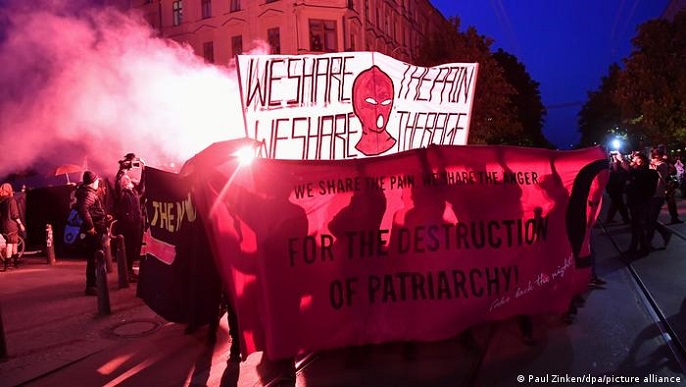
Germany: Feminists and squatters kick off early May Day protests in Berlin – Thousands of people marched through the German capital to protest against violence against women ahead of May Day. The crowd dispersed following clashes with the police.
And it sure is reassuring to know that a big European war like that could never, ever happen again. Cold or otherwise. Right?
The situation in Germany after World War II was dire. Millions of Germans were homeless from Allied bombing campaigns that razed entire cities. And millions more Germans living in Poland and East Prussia became refugees when the Soviet Union expelled them. With the German economy and government in shambles, the Allies concluded that Germany needed to be occupied after the war to assure a peaceful transition to a post-Nazi state.
What the Allies never intended, though, was that their temporary solution to organize Germany into four occupation zones, each administered by a different Allied army, would ultimately lead to a divided Germany.
“Only over time, as the Cold War eroded trust between the Soviet Union and the Western Allies, did these occupation zones coalesce into two different German nations.”
“Even in Hamburg, which is more than 150 km (93 miles) from the island,” he told me, “a schoolteacher kept a document which said the British had warned everyone to leave doors and windows open to help the buildings withstand the blast.”
Why shouldn’t they? It’s served them really well in the past.
The German Faith in Authority – The ongoing pandemic revealed two problematic aspects of German society. Firstly, there appears to be widespread faith in government bodies and their decisions – and secondly, and conversely, there is a lack of scepticism towards the political process and the players in it. This includes the lack of a critical approach towards mainstream media.
“While the German is still pondering, the French have been to the streets three times already.”
It’s never been tried before but the times they are a changin’ and call for desperate measures.
It goes like this: Instead of developing their own comparable European weapon system that will take three times longer to develop and cost three times more than planned (and then not work), Germany will buy a fully-functioning weapon system from US-Amerika that already exists and is immediately deliverable instead.
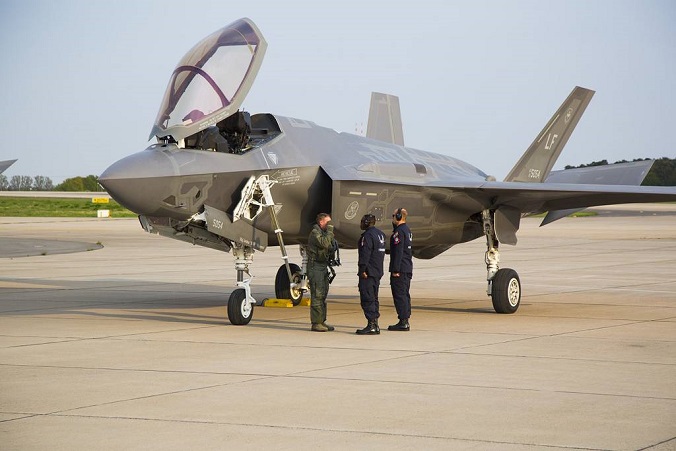
Germany to buy F-35 warplanes for nuclear deterrence – Germany will buy up to 35 copies of the U.S.-made F-35 fighter jet, reversing years-long plans that saw the fifth-generation warplane eliminated from consideration, defense leaders announced Monday.
In U-Turn, Germany Will Send Weapons to Ukraine – Germany will send weapons to Ukraine including antiaircraft missiles and tank-busting rockets in a reversal of earlier policy, German Chancellor Olaf Scholz said Saturday.
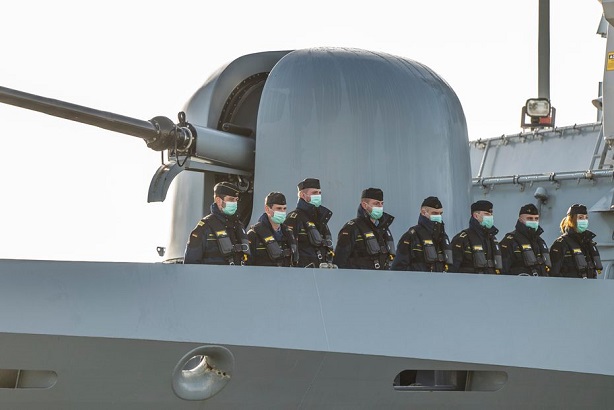
The U-turn was triggered by the Russian invasion, which Mr. Scholz said marked a turning point. “It is our duty to support Ukraine to the best of our ability in defending against Putin’s invading army,” Mr. Scholz said in a statement. “That is why we are delivering 1,000 antitank weapons and 500 Stinger missiles to our friends in Ukraine.”
You know, like “Thousands of opponents against the Corona measures took to the streets again nationwide Monday night?” And that came from one of Germany’s state TV channels too. Reminds me a bit of 1989. Sort of.
Thousands protest against Corona measures – Once again, numerous people have taken part in protests against the Corona regulations and against compulsory vaccination. The situation escalated in several cities: demonstrators attacked emergency forces.
Four injured after old WWII aircraft bomb explodes in Munich – Four people were injured when an old aircraft bomb exploded at a bridge near Munich’s busy main train station on Wednesday, police said on Twitter, raising the number of wounded from three earlier.
Germans just yawn about this stuff. Happens too often. My personal favorite from a few years back:
In the 1980s, he began collecting postcards, posters, leaflets, coins, newspapers, magazines, documents, stickers, figurines, photographs and films that testify to anti-Jewish sentiment with the express purpose of making them available to museums and archives as educational tools. He invested an estimated €1m in his collection, which includes an array of posters relating to the Dreyfus Affair, the armbands, diaries, passports and drawings of Jewish people imprisoned in concentration camps, and advertising material for the infamous antisemitic Nazi propaganda film Jud Süss (1940).
The collection “will help us and our visitors reach a deeper understanding of how widespread antisemitic views, images and hate propaganda were in Germany and other European countries from the middle of the 19th century,” says Raphael Gross, the director of the German Historical Museum.





 Observing Hermann