Germans Finally Manage To Bring Muslims And Jews Together

To protest against restrictions on circumcision, that is. They’ll be getting together in Berlin to holler and shout and raise hell this Sunday, for instance. Warms your heart, don’t it?
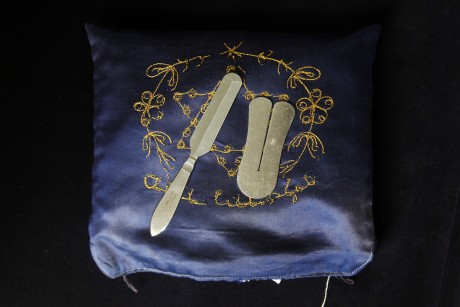
When it comes to “flagrant interference” in religion, Germans may indeed have a long and proven track record and all, but as expected, they have clearly bitten off more than they can chew this time with their latest perfectly pointless and completely unnecessary stab at this ancient Jewish and Muslim practice.

They’re backpeddling as fast as they can, of course, but it’s too little too late and now everybody has hurt feelings and, well, that’s what you get for fixing things that ain’t broken.

“Gut gemeint ist leider nicht unbedingt gut gemacht.”

German Wind Offensive More Offensive Than The Rest Of Us Thought It Was

Well that didn’t take very long. Now it’s “Germany’s offshore fiasco.”

Germany wants to pepper its northern seas with offshore wind turbines as part of its ambitious energy revolution. But strict laws, technology problems and multiple delays are turning the massive enterprise into an expensive fiasco. Investors and the public are losing patience.

The Latest Radical New Concept

After years of deliberation, the German Justice Department has finally decided to take a bold leap into uncharted legal waters and official declare that theft should be punishible. OK, in this case it’s “data theft.”

Wow. Talk about a great leap forward for German Gerechtigkeit (justice) or something. The background: Like junkies in need of their next fix, German tax officials (usually from SPD led state governments) have been regularly purchasing stolen goods in recent months; data CDs containing lists of German tax evaders with Swiss bank accounts. Needless to say, the SPD & Co. are unhappy about this rather belated juristic revelation.

Is this the beginning of the end of the means justifying the end? Or was it vice versa?

“Datendiebstahl soll strafbar sein.”

Buy Our Debt, Please

Angela Merkel just finished up another quick and dirty visit to China, this time to calm the Chinese down about the euro zone debt crisis and, well, to grovel for money. Neither aim was achieved just yet. But hey, you’ve got to be really patient with the Chinese, I’m told.

“The trip has a lot of ambitions: one, is to explain the euro zone debt crisis to the Chinese and two, convince the Chinese to keep supporting the euro zone and buying the bonds from some of the euro zone countries such as Italy and Spain and also Germany.”

And just in case you were wondering, no. She did not find the time to express German concern for human rights violations in China during this visit.

As Europe’s crisis persists, China increasingly sees Germany—its largest European trading partner—as a vital player in pulling the continent out of its slump, analysts say. Mr. Wen said his talks with Ms. Merkel Thursday have made him “more confident” in Europe’s ability to resolve the crisis.

Do you have that in brown?

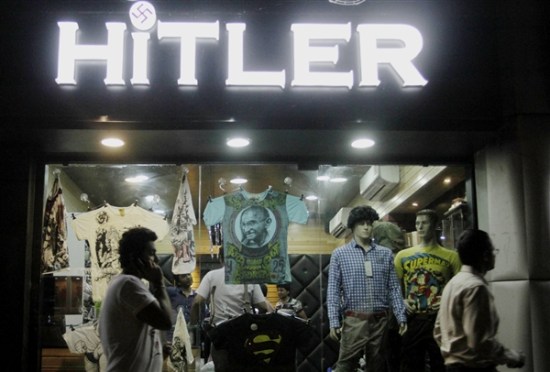
“I didn’t know how much the name would disturb people.”

He added that to him Hitler was just the nickname given to his business partner’s grandfather, who was known for his “strict nature.”

Nicht zum ersten Mal gibt es in Indien Ärger um den Namen Hitler. Mal nannte ein Restaurantbetreiber sein neues Café “Hitler’s Cross”, mal nahm ein Händler eine Bettwäsche mit dem Namen “The Nazi Collection”, bedruckt mit Hakenkreuzen, ins Sortiment auf.

Grid Your Teeth

And just keep on paying. Or how about grid and bare it?

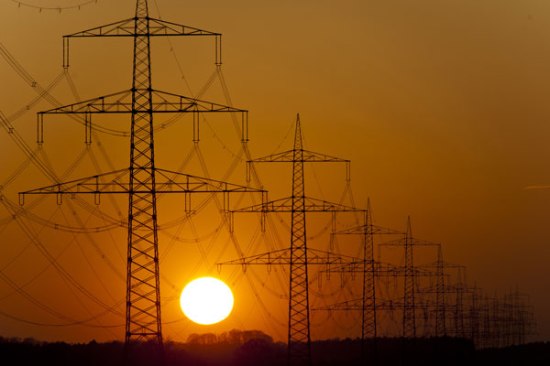
Germany’s power grid hasn’t kept up with the explosion of new alternative energy sources — particularly the offshore windparks being built in the Baltic Sea and the North Sea off the country’s north coast. Many of those projects are at a standstill, with no way to deliver the power they generate to the mainland.

On Wednesday Merkel’s cabinet hopes to agree on a stop-gap measure to compensate power companies for losses accrued as a result of the delays, but again it will be German consumers who will ultimately suffer.

“The primary reason for the problem lies in the ‘third path’ policymakers have chosen to lead us into the renewable future. There is neither a centrally planned economy to steer the energy system nor are the rules of the market economy allowed to regulate the system according to the laws of supply and demand. Instead, a model of ‘decentralized planned economy’ is being pursued. Municipalities, states, the federal government and the European Union are all creating plans independent of each other and of those affected. There is no coordination…. The result is a fair amount of chaos with policymakers struggling to keep up. Everyone is aware that the situation cannot continue if the renewable energy revolution is to be a success. As such, the question is whether we want to move from where we are today in the direction of a centrally planned economic model or rather in the direction of market economy principles.”

The 30 Percent Solution

That’s how much more German households will likely have to pay for energy in the coming years due to the country’s way cool “energy turnaround.”

Investments of at least 150 billion euros will be needed in the next few years and that’s just the beginning and absolutely positively nothing is working out reibungslos (smoothly) as not planned. And that’s the crux of the biscuit: This is what happens when you do your panicked decision making first and your planning later.

“Wir müssen davon ausgehen, dass die Gestaltung der Energiewende länger dauert als geplant.”

The Symptoms Of The Times

Withdrawal, I am told, can refer to any sort of separation, but is most commonly used to describe the group of symptoms that occurs upon the abrupt discontinuation/separation or a decrease in dosage of the intake of medications and recreational drugs.

In order to experience the symptoms of withdrawal, one must have first developed a physical/mental dependence (often referred to as chemical dependency).

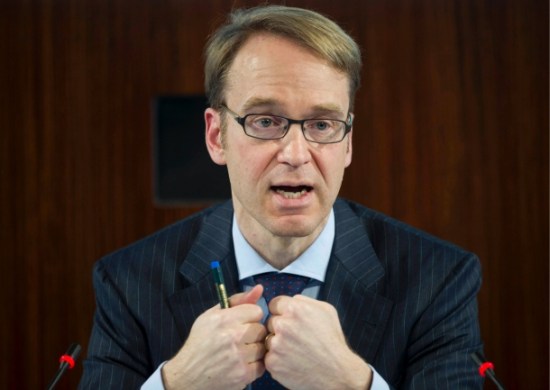
„Notenbankfinanzierung kann süchtig machen.“

Must See TV 4 Me

Finally, German TV for the rest of us. Hot diggity dog.

A new mini-series is starting on ZDFneo called “German Angst” and promises to finally and definitively answer a question that has been puzzling me for many years: “Are Germans really as neurotic as everybody thinks they are and just what is it that they are afraid of?” Actually, it’s the second part of that question I’m interested in. I already know the answer to the first part.

Of course if the show can actually hold that promise or not, that’s another thing. And how the hell are they going to find all this out in just 6 short episodes?

“Ich bin Autor und Reporter auf der Suche nach der Angst.”

Size Matters

There appears to be only one thing that Germans love more than being greener than green and concerned about saving the environment (and having to pay soaring fuel prices all the damned time in the process).

And that’s buying big honking high-horsepower cars with ever bigger engines all the freakin’ time. Vroom! Vroom!

In the first seven months of 2012, the average horsepower of the engines of new cars sold in Germany stood at 138 hp, up from a previous record of 135 hp seen in 2011 and 130 hp in 2010.

Die Deutschen lieben immer stärkere Autos – im Schnitt hat jeder Wagen um drei PS zugelegt.