German of the day: Das waren Zeiten!

That means “those were the days!”
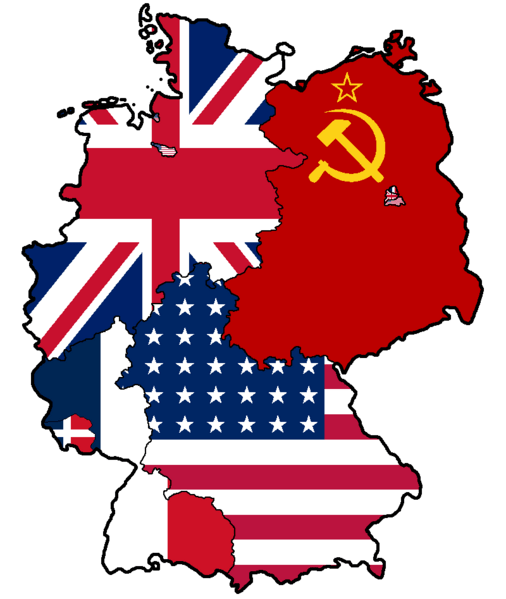
When everything still worked in Germany. Before German reunification.

5 facts about German Unity Day – On October 3, Germany celebrates the reunification of East and West. How did it come about — and how is it celebrated? How do Germans feel about reunification today?

Following the end of World War II in 1945, a defeated Germany was divided into four occupation zones, controlled by the Allied powers: the United States, France, Great Britain and the Soviet Union.

In 1949, two states emerged: the democratic Federal Republic of Germany (FRG) in the West, and the socialist German Democratic Republic (GDR) in the East, with the latter being under Soviet control. From that point on, Germany was divided…

The best time to cross the Elbe was in November…

When fog obscured the visibility along the river.

Refugees had to endure freezing temperatures, scaling barbed-wire fences and hiding from soldiers on patrol. Getting caught meant a one-way ticket to one of East Germany’s special prisons — if you were not shot…

How Germany’s “death Strip” Became A Sustainable Lifeline.

Me Too

I miss the Cold War too. Good times. MAD times (Mutually Assured Destruction).

How I do wish we could turn back the clock.

After the wall came down – with the more benign cousin of today’s callous capitalism the victor – we took a summer trip to Berlin in the ever-dependable family BMW (it looked like an East German Trabbi compared to modern cars today). I remember sitting in the back listening to Madonna’s latest album on my Walkman as the bright energetic Berlin streets slipped by the car window. Besides the Brandenburg Gate, we bought giant furry Russian winter hats and military cap badges and chunks of the wall being sold on lines of tables.

Happy days. The global standoff was over, with us coming out on top. How did we let that slip through our fingers?

And So The Cold War Began

The original one, I mean.

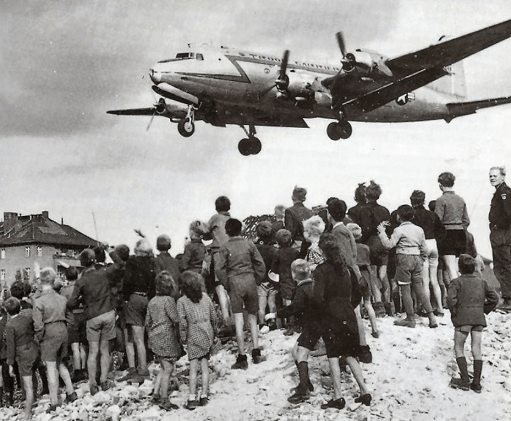
On June 26, 1948, the largest humanitarian operation in history began, later known as The Berlin Airlift, which prevented West Berlin from capitulating to the Soviet blockade.

When the wartime alliance between the Western Allies and the Soviet Union ended and friendly relations turned hostile, the question of whether the western occupation zones of Berlin would remain under Western Allied control or whether the city would be absorbed into Soviet-controlled East Germany led to the first crisis of the Cold War.

How Germany Was Divided After World War II?

Pretty much in half.

And it sure is reassuring to know that a big European war like that could never, ever happen again. Cold or otherwise. Right?

The situation in Germany after World War II was dire. Millions of Germans were homeless from Allied bombing campaigns that razed entire cities. And millions more Germans living in Poland and East Prussia became refugees when the Soviet Union expelled them. With the German economy and government in shambles, the Allies concluded that Germany needed to be occupied after the war to assure a peaceful transition to a post-Nazi state.

What the Allies never intended, though, was that their temporary solution to organize Germany into four occupation zones, each administered by a different Allied army, would ultimately lead to a divided Germany.

“Only over time, as the Cold War eroded trust between the Soviet Union and the Western Allies, did these occupation zones coalesce into two different German nations.”

German Of The Day: Luftraum

That means airspace.

As in: Time To Acknowledge Ukrainian Airspace Is As Dangerous As 1961 Berlin.

The tools are different, and the location has changed, but NATO and Russian President Vladimir Putin are engaged in a repeat of an epic October 27, 1961, Cold War standoff, when combat-ready American and Soviet tanks faced off in Berlin. Back then, the Soviets were reneging on Post World War II agreements that guaranteed the wartime allies unfettered access to East Berlin, and America successfully sent tanks to the border crossings to maintain those rights.

Today, the Ukraine border is a modern-day Checkpoint Charlie, and, instead of tanks, American reconnaissance platforms are confronting Russian anti-aircraft missile batteries and fighter aircraft. And, rather than backing out of post-World War II access agreements, Russia is set to renege on a guarantee of Ukraine’s sovereignty.

Berlin Tegel Airport Closing June 1, 2020

And Berlin Brandenburg Airport opens October 31, 2020. Let’s do the math.

BER

So, Berlin is down to just one world-class horrible airport for like five months? Until the next world-class horrible one comes along, I mean? Sheesh. Although with all this Corona going on maybe nobody will even notice.

Personally, I will miss Tegel. Maybe because it was so small and in the middle of town like that. You could walk around the entire main terminal in five minutes. Adieu, Tegel. It was in what used to be called the French Sector, after all.

This comes as the airport has seen a huge drop in passenger numbers, with passengers currently amounting to 1% of normal amounts. The company running the airport is allegedly losing one million Euros per day, so closing the airport will save costs.

The Spy Who Left Me

Buried in the woods somewhere in West Germany thirty years ago.

Spy

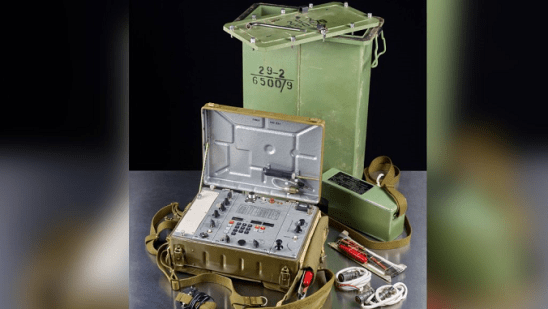
Sophisticated Soviet spy radio discovered buried in former forest in Germany – Archaeologists digging for the remains of a Roman villa near the German city of Cologne have found a sophisticated Soviet spy radio that was buried there shortly before the fall of the Iron Curtain.

The spy radio was buried inside a large metal box that was hermetically sealed with a rubber ring and metal screws. Although the radio’s batteries had run down after almost 30 years in the ground, the box hissed with inrushing air when it was opened…

The scientists suspect agents would have used the spy radio to send secret reports back to the Soviet Union about observation of the Jülich Nuclear Research Centre, about 6 miles (10 km) west of where it was found; or of the military air base at Nörvenich, about the same distance to the southeast, where U.S. Pershing nuclear missiles were based until 1995.

More Like A Stepfather

Who beat you like a red-headed stepchild.

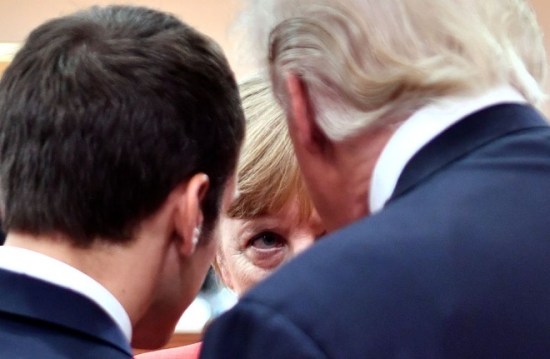
For Germans, Losing the U.S. to Trump Is Like Losing a Father – The 30th-anniversary celebration of the Berlin Wall’s collapse comes with grief over the end of a special relationship.

Trump

I don’t know if I can hold back the tears but give me a second or two. There. I’m much better now. Thanks. But this massive output of cheap emotion has a heavy taste of déjà-vu in it for me, folks. The Germans already had their hearts broken and lost their special relationship back with W., didn’t they? And we don’t even want to talk about how heartbroken they were with Ronald Reagan HIMSELF. They don’t even want to have to think about him today. Some thirty years later. You know, thirty years after he made possible the fall of the Berlin Wall? Wait a minute. I’m chocking up again…

Berlin gets unwanted Ronald Reagan statue – Ronald Reagan is already an honorary citizen of Berlin, so city authorities have always deemed a statue inappropriate. Nonetheless, a bronze replica of the former president is set to be inaugurated at the US Embassy.

Reagan