Coming This Fall?

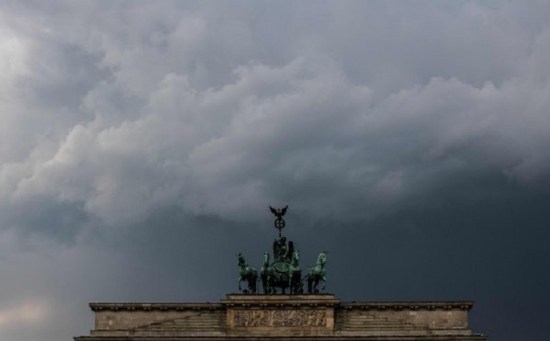
The Fall of the German Empire.

Empire

The third German empire is a different animal altogether. Repudiating both militarism and racist mysticism, it has been built slowly and painstakingly across three generations, in cooperation with other powers (including its old enemies the French), using a mix of democratic and bureaucratic means. Today Germany bestrides its Continent, but German power is wielded softly, indirectly, implicitly — and when the fist is required, it takes the form of fiscal ultimatums, not military bluster or racial irredentism.

But still the system is effectively imperial in many ways, with power brokers in Berlin and Brussels wielding not-exactly-democratic authority over a polyglot, multiethnic, multireligious sprawl of semi-sovereign nation-states. And thinking about the European Union this way, as a Germanic empire as well as a liberal-cosmopolitan project, is a helpful way of understanding how it might ultimately fall…

Sounds great. Stay tuned or something. Netflix, right?

This Could Mean War Or Something

Tariff war. World War T. You know, the end of the world as we know it? Then it’s all over but the crying. And the Zombie Apocalypse. It’ll be  Zombie Apocalypse Now, so-to-speak.

Steel

Yawn.

Berlin holds little hope that the EU will be granted a further exemption from US metals tariffs beyond a May 1 deadline. Washington has offered the bloc a reprieve to speed up talks on a series of trade issues.

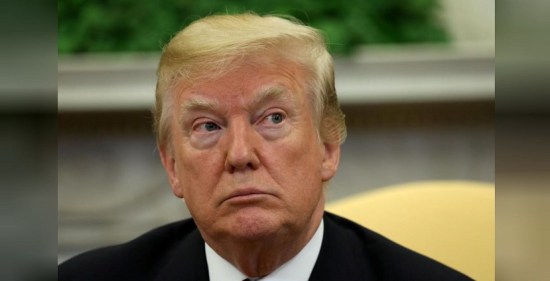
The German news agency DPA reported on Thursday that the upcoming meeting between Chancellor Angela Merkel and US President Donald Trump — scheduled for the weekend — was unlikely to win the EU a further exemption from higher steel and aluminum tariffs planned by Washington.

Citing government sources, DPA said the Trump administration’s plans to impose a 25 percent tariff on steel and 10 percent on aluminum imports to the United States would likely come into effect on May 1.

But maybe something miraculous will happen at the absolutely very last second to hold off trade war Armageddon. Maybe it won’t. Hard to say for sure so be sure to stay tuned.

Bundesregierung befürchtet Handelskrieg mit den USA

That Was Close

Just in time, people. Brussels has just proudly and loudly announced that it plans to encourage and better protect whistleblowers in order to help them “bring light to scandals that would otherwise remain in the dark.” You know, like the Facebook thing, the Panama Papers, scandals like that. Or maybe like this one right down here?

EU

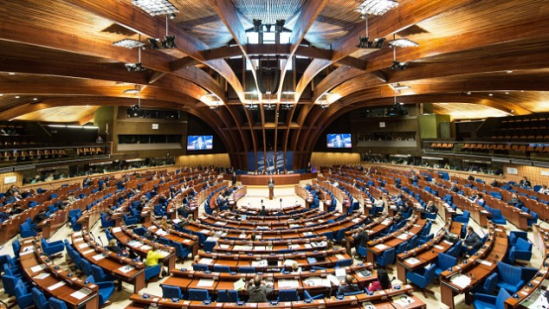
“Experts Strongly Suspect Corruption in the European Council.” Several members of the European Council are suspected of having taken bribes from Azerbaijan in exchange for political support.

Perfect. They really think these things through, don’t they? So now it’s time to step up to the plate and start shedding some light on this for us, European Council whistleblowers. But don’t worry. Brussels will protect you. Oh, I forgot. You are Brussels. Why, see? Then there’s even less for you to worry about.

“Es sollte keine Strafe dafür geben, das Richtige zu tun.”

In A Word: Yes

Is Germany Protecting Russia’s Gazprom From Latest Anti-Trust Discovery?

Gazprom

German companies like BASF and Wintershall may be successful at lobbying their government to keep the new Russian pipeline going, despite opposition from Washington. Such are the worries being made behind closed doors within the state owned Central and East European (CEE) gas companies that are no fans of Russia’s Gazprom.

On April 10, someone leaked the Statement of Objections against Gazprom from the European Union’s competition authority known as the Directorate-General for Competition (DG Comp). The leaked document was a 270-page report of abuse cases filed by nearly every Gazprom partner in eastern Europe, including Poland where the news first broke last week…

As Gazprom is responsible for nearly a third of all of Germany’s foreign gas supply, and because Germany has two big companies with money on the line with Gazprom projects, some believe Brussels is ready to let Gazprom off the hook from disputes with at least five countries.

“DG Comp is said to be pressured by some high-ranking German officials to make a soft deal with Gazprom so they can start building the new Nord Stream 2 pipeline.”

“Trump is awful but…”

“He’s right.”

Handelsbilanz

Uh-oh. All bets are off now. I may have found a German economist who is willing to take an unpopular stand and defend certain aspects of the Trump administration’s policy. Unpopular? Sacrilegious is more like it, right?

“On one side there’s the EU with a trade surplus that is mostly supplied by the huge German surplus. On the other side is the USA that has been living with deficits for 30 years. Germany is the world’s largest surplus country and the USA is the world’s largest deficit country. The trade practiced between these two national economies may be free but it is not efficient. This criticism of the German undervaluation strategy – that is, the relatively weak salary increases combined with a weak euro – has been around since presidents Bill Clinton and Barack Obama. Politicians in Congress have warned about making trade deals with notorious surplus countries. Trump is just the first one to do anything about it.”

“Every country can do whatever it wants – but not when it is part of a currency union in which there are no exchange rates that could be adjusted. Germany procures an advantage in global trade not just due to the quality of its products vis-a-vis its EU partners, the USA and other countries. In the past 15 years salaries in Germany have remained far behind productivity. We gain advantages over other national economies through wage dumping.”

“Will the punitive tariffs have a real effect on the German economy? Not so quickly. They have just been little needle pricks up until now. But if the EU now pursues the loud-mouth announcements made by Commission President Jean-Claud Juncker and reacts with its own punitive tariffs it is possible that the USA’s reaction will be more massive. Yet Trump is merely following a very simple rule here that no one in Germany wants to believe: The losers in such a trade conflict will be the trade surplus countries and the winners will be the deficit countries.”

Aber wenn die EU jetzt den großmäuligen Ankündigungen des EU-Kommissionspräsidenten Jean-Claude Juncker folgt und mit eigenen Strafzöllen reagiert, kann es sein, dass die USA noch massiver reagieren. Trump folgt doch einer einfachen Regel, die in Deutschland niemand wahr haben will: Verlieren werden in einem solchen Handelskonflikt die Handelsüberschussländer und gewinnen werden die Defizitländer.

What’s A Few 4500 Billion Euros These Days?

Give or take 1000 billion? Fur European taxpayers, I mean. When the financial system “Draghi crases” and burns after the interest rates start heading up again.

Drahgi

Bank expert Markus Krall shows in the book “The Draghi Crash” what drastic measures are needed to save Europe from the death of the financial system. Five measures are necessary – otherwise threatening costs up to 4500 billion euros.

The vast abuses in the banking sector hang like a sword of Damocles on Europe. “We are all trapped in the trap that the ECB has dug for itself and us with its Keynesian interest rate policy,” warns Markus Krall. The imbalances in the credit sector are so huge that even a small turnaround in interest rates could lead to a crash.

The problem: the Eurozone countries do not have the resources to deal with the consequences this time around. In Germany 3000 billion euros of national wealth are at stake. Krall estimates the total amount of defaulted loans in the European banking system to be at least 1000 billion euros. And when interest rates rose, an unprecedented wave of bankruptcies threatened Europe’s zombie companies. “That costs again up to 1500 billion euros,” said the consultant.

Staatsschulden, Lebensversicherungen, Bankbilanzen – Banken-Experte Markus Krall zeigt in dem Buch “Der Draghi-Crash”, welche drastischen Maßnahmen nötig sind, um Europa vor dem Exitus des Finanzsystems zu retten. Fünf Maßnahmen seien nötig – sonst drohen Kosten bis zu 4500 Milliarden Euro.

EU + Brexit = 3.5+ For Germany

That’s 3.5 billion more. Euros. To pay, I mean. Annually.

Oettinger

Somebody has to compensate for the Brexit shortfall and Greece won’t answer the phone. Nor will Italy, France or anybody else out there. Maybe the EU dream team back then should have tried a little harder to keep Britain in and compromised just that little tiny bit more but hey, that was then and this is now. Get out your checkbook, Berlin.

What a mess.

Konkret sprach Oettinger gegenüber der Bild-Zeitung von “mindestens 3 oder 3,5 Milliarden Euro” jährlich. Zu den neuen Aufgaben gehörten etwa der Schutz der Außengrenzen oder der Kampf gegen Terror. Zudem könnten zusätzliche Zahlungen Deutschlands dazu beitragen, die durch den Austritt Großbritanniens aus der EU entstehende Lücke zu schließen.

No More Döner For Dinner?

Huh? That’s absolutely, positively my favorite German food!

Döner

Leave it up to the Enlightened Left to help protect us from ourselves again.

The EU’s Umweltausschuss (ecology committee) plans to restrict the use of phosphates in frozen meats. A loophole in their legislation had allowed frozen Döner Kebab to contain phosphates up until now. Only fresh Döner will be allowed to have phosphates in the future.

The problem here: Almost all of the Döner restaurants in Europe depend upon frozen Döner meat being delivered to them. Some 500 tons of it are eaten every day. 80% of that in Germany. Over 110,000 jobs would be affected. And please note: The same EU bureaucrats (from another EU department, of course) have declared that 4200 mg of phosphates per day does not pose a health hazard. A Döner Kebab has on average 134 mg.

What can you say? What else can you say? “I’m from the government and I’m here to help.”

Wegen Sozialisten und Grünen im EU-Parlament – Dem Döner droht das Aus!

German Of The Day: PESCO

That’s actually English and stands for Permanently Stalled Cooperation, I think. It is the EU’s attempt to move closer to having permanent joint European armed forces.

PESCO

But they’ll never manage this, of course. Most European nations don’t even live up to their NATO obligations right now.

Seit vielen Jahren ringen die Europäer um eine gemeinsame Verteidigungspolitik, der Erfolg war bisher äußerst überschaubar. Das aber könnte sich nun ändern: Am Montag haben die Außen- und Verteidigungsminister von 23 der 28 EU-Staaten dem Europäischen Rat mitgeteilt, in der Verteidigung künftig gemeinsame Wege zu gehen. Zumindest vorerst nicht dabei: Dänemark, Irland, Portugal, Malta – und natürlich Großbritannien, das ohnehin die EU verlassen will.

PS: Is she sexually harassing those guys up there?