Merkozy This Is Not

How about Hollmerk?

The two capitals (Berlin and Paris) always begin from very different positions, whether there is a socialist or conservative administration in Paris.

The concern in Berlin is over what is seen as the absence of a clear strategy on eurozone reform from the new French government. There is a deep suspicion that France is happy to have a weaker euro, higher inflation, and a looser monetary policy than Germany.

Mr Hollande’s refusal to incorporate the recent “fiscal compact” into the French constitution is one reason that Germany is now pushing for every country to sign a bilateral budget “contract” with the European Commission, that can be enforced by a powerful budget commissar… But Paris regards Ms Merkel as being overly focused on building deeper European political integration in a way that ignores deep-seated reticence in France reflected in the 2005 referendum defeat of the then-planned EU constitution. 

Big Sister Assures Germans That 47-Percent Price Hike Actually Not Such A Bad Thing If You Think About It

Not.

Worried about grassroots unrest after Germany’s electrical grid operators announced they were nearly doubling the charge consumers will pay to finance subsidies for renewable energy as Germany phases out nuclear power, Big Sister herself has reacted boldly and decisively by going into hiding and pretending as if none of this were really happening.

Long used to this tactic, worried German consumers were assured, sort of, as they will now be paying an additional 60 euros per year, “taking overall add-on power taxes up to about 185 euros.” But that’s just the start, of course.

Sheesh. Why do Germans see everthing energy turnaround-related so negatively these days? You know, like as in black? Or like as in blackouts, I should say?

“The costs for consumers and industry of the electricity price charge for renewable energy has risen to an unbearable degree.”

German “Critical Thinking” vs. American Debate Culture

Here is another interesting German commentary by American Eric T. Hansen in Die Zeit.

I’d like to translate it all, but I can’t, so I won’t (no time). Here are a few highlights, though:

Critical thinking does not allow for self-criticism. Where would we be then?

Critical thinking is not debating, it’s finding concensus, or, as I call it, harmony nagging (Harmonienörgeln): Two people criticize a third person so long until the two become friends.

If I want to hear a new or even a different perspective on something, I have to turn to the Anglo-American press. Regarding certain questions – for instance whether nuclear energy, genetically modified corn or having Mitt Romney as president might also have certain advantages – many of my German friends are not even aware that two sides to these arguments even exist.

I too understand Mitt Romney’s positions quite well and suspect that he would make just as good (or bad) a president as Obama. In America that makes me an intellectual. In Germany that makes me a right-winger.

Everything is so serious for the Germans, and they need to know immediately: “Who is my friend, who is my enemy?” For Americans and their debate clubs, however, there is always an element of playfulness involved.

Auch ich verstehe die Positionen eines Mitt Romney gut und ahne, dass er ein ebenso guter (oder schlechter) Präsident wie Obama wäre. In Amerika macht mich das zu einem Intellektuellen. In Deutschland macht mich das zu einem Rechten.

The Amazing Disappearing Political Party

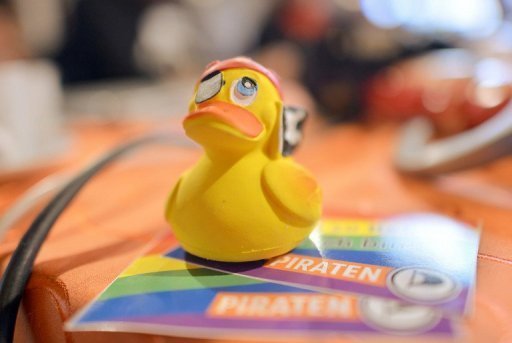
Who says that in-fighting and a complete absence of credibility, character, policy, tactics or strategy can’t get you anywhere? It got Germany’s Pirate Party to nowhere fast. So you better take one quick look at them while you still can.

They’re down to five percent in the polls at the moment, and sinking fast. But let’s move on now and just try to remember them for all the good things they accomplished while they were still here among the living (hell if I know, I thought you might have).

Die Piraten liegen einer neuen Umfrage zufolge nur noch bei fünf Prozent und müssen damit um den Einzug in den Bundestag bangen.

What Are 20,000 Jobs?

If they are being offered for the sake of Germany’s beloved Energiewende (energy turnaround), I mean (and if you’re not one of the 20,000, of course)?

There is a certain logic here. I think. First you phase out German nuclear power plants because of the Fukushima disaster in Japan (I still haven’t figured out this part yet), then you phase out thousands of Japanese jobs due to the loses incurred by the energy companies due to this hasty (as in immediate) phase-out.

Oops, sorry. I just took a closer look at the article. Those are German jobs that are about to be phased-out, of course. Duh. Look folks, I’m not a German energy turnaround expert here you know. Forgive me for the confusion. Technically, it’s not even mine. I’m just trying to pass it on as best I can.

Branche verliert durch Atomausstieg Geld – Eine Reihe von Studien hatte in früheren Jahren bereist festgestellt, dass der Netto-Effekt der Ökostrom-Subventionen auf dem Arbeitsmarkt bestenfalls Null ist.

German Wind Offensive More Offensive Than The Rest Of Us Thought It Was

Well that didn’t take very long. Now it’s “Germany’s offshore fiasco.”

Germany wants to pepper its northern seas with offshore wind turbines as part of its ambitious energy revolution. But strict laws, technology problems and multiple delays are turning the massive enterprise into an expensive fiasco. Investors and the public are losing patience.

Grid Your Teeth

And just keep on paying. Or how about grid and bare it?

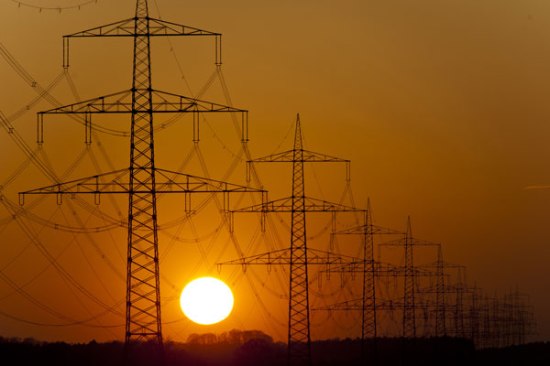
Germany’s power grid hasn’t kept up with the explosion of new alternative energy sources — particularly the offshore windparks being built in the Baltic Sea and the North Sea off the country’s north coast. Many of those projects are at a standstill, with no way to deliver the power they generate to the mainland.

On Wednesday Merkel’s cabinet hopes to agree on a stop-gap measure to compensate power companies for losses accrued as a result of the delays, but again it will be German consumers who will ultimately suffer.

“The primary reason for the problem lies in the ‘third path’ policymakers have chosen to lead us into the renewable future. There is neither a centrally planned economy to steer the energy system nor are the rules of the market economy allowed to regulate the system according to the laws of supply and demand. Instead, a model of ‘decentralized planned economy’ is being pursued. Municipalities, states, the federal government and the European Union are all creating plans independent of each other and of those affected. There is no coordination…. The result is a fair amount of chaos with policymakers struggling to keep up. Everyone is aware that the situation cannot continue if the renewable energy revolution is to be a success. As such, the question is whether we want to move from where we are today in the direction of a centrally planned economic model or rather in the direction of market economy principles.”

The 30 Percent Solution

That’s how much more German households will likely have to pay for energy in the coming years due to the country’s way cool “energy turnaround.”

Investments of at least 150 billion euros will be needed in the next few years and that’s just the beginning and absolutely positively nothing is working out reibungslos (smoothly) as not planned. And that’s the crux of the biscuit: This is what happens when you do your panicked decision making first and your planning later.

“Wir müssen davon ausgehen, dass die Gestaltung der Energiewende länger dauert als geplant.”

Clean Power Cleaning Us Out

The German textile industry, among others, is mad as hell and isn’t going to take it anymore. Not when it comes to having to pay billions into the governments way cool Ökoenergie-Förderung (clean energy surcharge = tax).

That is why three companies now plan to challenge this surcharge subsidizing renewable energy in court.

More good government in action again, I guess. Energy companies have to pay the price for electricity generated through renewable technologies, and transfer the extra cost on to their customers. While energy-intensive industries like aluminum or steel are free from the surcharge, most of the textile industry has to pay.

“You cannot get an energy turnaround for free.”

Biomass Movement Is Over (If You Want It)

Remember the days when crops were something people would eat?

Well the German National Academy of Sciences Leopoldina has just found out that that maybe wasn’t such a bad idea after all.

The German mania for “bioenergy” seems to have already had its day in the solar-powered sun. The academy’s report “Bioenergy – Chances and Limits” concludes that bioenergy is just a lot of bio gas (or hot bio air, if you prefer).

It plays “a minor role in the transition to renewable, sustainable energy sources in Germany at the present time and probably in the future,” requiring more surface area, creating higher greenhouse gas emissions and being more harmful to the environment than other renewable sources.

So what are we going to do with all those imported soybeans now? Eat them? Hey, the plan looked good on green paper, though.

“Die Produktion von Biokraftstoffen stellte eine extrem ineffiziente Nutzung der verfügbaren landwirtschaftlichen Fläche dar.”