Big Phasehout Payout On The Way

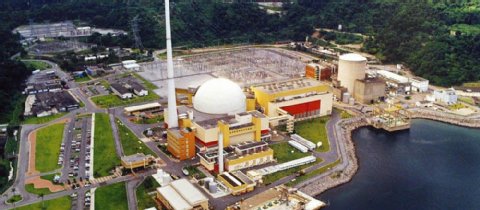
A three-month closure imposed by the government on RWE’s Biblis A and B reactors as an immediate response to the Fukushima accident was illegal, a German court has ruled.

Phaseout

The administrative court for the German state of Hesse has found the state ministry of the environment acted illegally on 18 March 2011 when it issued an order for the immediate closure of the Biblis units.

This decision, as well as a tax on nuclear fuel levied in anticipation of continued operation of nuclear plants before the phaseout decision, have cost German nuclear operators dear: RWE estimated that the phase-out cost the company over €1 billion ($1.3 billion) in 2011 alone.

Any claims for damages against the state of Hesse would be decided in subsequent civil court proceedings.

Germany Not Trying To Dominate Europe

Honest. Why try when it comes so naturally?

Gauck

No, seriously folks. Poor German President Joachim Gauck. He certainly means well (and somebody’s talking head has to say this stuff, I guess), but how can you not think that Germany is imposing a “diktat” on the rest of the continent when he goes out of his way to tell you that Germany is not imposing a “diktat” on the rest of the continent?

“In Germany, more Europe doesn’t mean a German Europe. To us, more Europe means a European Germany.”

Well, nice try, but you forgot about the German European Germany variation. It’s not that we don’t trust you, Germany. It’s just that we don’t trust you. It’s called the BKB Syndrome (or at least that’s what I call it). You know, The Big Kid on the Block Syndrome? It’s incurable and there’s not a damned thing you can do about it and you’re guilty until proven guilty so just go ahead and kick back and get used to the situation (as if you weren’t already). And, oh yeah, welcome to the club already, too.

“I was shocked to see how quickly perceptions became distorted, as if today’s Germany stood in the tradition of German imperialism, even of German crimes.”

German Defense Technology

Made in Germany. By German pacifists.

IDEX

For the International Defense Exhibition & Conference (Idex) in Abu Dhabi. For all of us, I mean.

Die deutschen Konzerne betreiben einen großen Aufwand, um sich in Abu Dhabi zu präsentieren. Denn wer auf der Arabischen Halbinsel Rüstungsgüter erfolgreich verkaufen will, muss seine Produkte auf der Idex zeigen.

Poor But Sexy But Inter-State Fiscally Adjusted

Berlin is.

Waste

Here’s a new German word for you: Länderfinanzausgleich. In a nutshell, this means that wealthy German states like Bavaria and Hesse (so-called donor states) are obligated to subsidize poor but sometimes sexy German states like Berlin and Bremen (so-called recipient states) because, well, hell if I know why.

This is also known as “inter-state fiscal adjustment” here. You know, good old fashioned Umverteilung (redistribution of somebody else’s money) or subsidies, if you prefer.

Anyways, Bavaria and Hesse, for one (or two), are mad as hell and aren’t going to take it (or give it) anymore and are bringing an action before the German Verfassungsgericht (Supreme Court) claiming that this type of thing is constitutionally imbalanced and needs to be done away with – at least when it comes to Berlin because the Berlin city/state government consists of a worthless bunch of lazy and wasteful bums who are completely out of control when it comes to spending and would never think of stopping their spending if they aren’t forced to, which is, well, a pretty accurate analysis of the situation here.

This will probably go nowhere, however, because Germans are big fans of something they like to call Solidarität (no English equivalent that I can find other than maybe “supporting lazy and wasteful and sometimes sexy bums”).

“Das Gesamtsystem leidet unter einer zu weitgehenden Nivellierung der Länderfinanzkraft, die den politisch Verantwortlichen eines Landes das Eigeninteresse nimmt, Maßnahmen zur Stärkung der originären Steuerkraft zu ergreifen.”

If You Want To Watch YouTube Videos in Germany, Go To South Sudan Instead

Over 60 percent of the world’s most popular YouTube videos are blocked in Germany – South Sudan only manages to block about 15 percent.

GEMA

GEMA, which represents recording artists as well as publishers, wants YouTube to pay a fee for each and every video viewed on the site that contains music of one of the artists represented by GEMA (which include every major label artist, as well as most indies). YouTube has rejected that approach, and instead wants to pay a percentage of the ad revenue it makes with those videos.

Negotiations have, well, broken down. Feelings have been hurt. Lawsuits have been filed.

“Dieses Video ist in Deutschland nicht verfügbar, weil es möglicherweise Musik enthält, für die die erforderlichen Musikrechte von der Gema nicht eingeräumt wurden.”

More Green Energy Jobs

More jobs lost to green energy, I mean.

Offshore

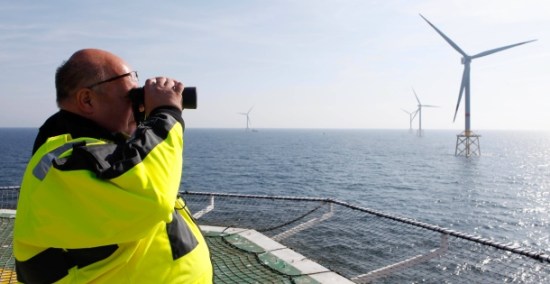
Worlee-Chemie GmbH, a family-owned company that has produced resins in the city of Hamburg for almost a century, is trying to escape the spiraling cost of Germany’s shift to renewable energy.

A 47 percent increase on Jan. 1 in the fees grid operators set to fund wind and solar investments is driving the maker of paint ingredients to Turkey, where next month it will start making a new type of hardening agent at a factory near Istanbul.

The levy will cost Worlee 465,000 euros ($620,000) this year, the equivalent of 10 full-time salaries, or one-third of the company’s tax bill. As German labor costs rise at the fastest pace in a decade, the price of weaning the country off nuclear energy by 2022 is crushing the so-called Mittelstand, the three million small and medium-sized businesses like Worlee that account for about half of gross domestic product.

Wow. Now that’s what I call government intervention in action. This German energy turnaround thing is working out practically as well as the European cap-and-trade system itself.

“It could be the proverbial straw that breaks the camel’s back. It comes on top of tax, general production costs, raw-material availability and bureaucracy, which have led to a deterioration of the investment climate in Germany.”

The Worst Is Over

Or something.

Growth

For much of the financial crisis that started in 2007, Germany remained strong and held the envy of modern economies around the world.

In 2010, the industrious country known for its fiscal discipline had GDP growth of 4.2%, followed by respectable 3% GDP growth in 2011.

Unfortunately, for Germans and the world, there are increasing signs the German economy is being marred by the global crisis. In 2012, GDP growth was a meager 0.7%. More significantly, GDP actually contracted by 0.5% in the fourth quarter.

Währung – Deutschland: Devisen: Euro gibt nach – IWF prognostiziert auch für 2013 Rezession im Euroraum

No Contradiction Here

Just move along, folks. Nothing to look at here.

Loans

While German dedication to saving the German environment by ridding the country of nuclear power is in full swing (sort of), the German government has absolutely no problem using public money to guarantee the construction of nuclear power plants in other countries at the same time.

It’s not a contradiction really, though. Honest. Environment Minister Peter Almaier’s current ministry slogan is “high time that something changed” and they are even trying to set up an international club of countries who have done/will do away with nuclear energy. And that’s the main thing. So something has changed, sort of. The countries Germany is helping to build atomic energy programs for just won’t be allowed to join their club, that’s all.

“It is a gross contradiction, that we are pushing forwards with the change in energy generation while supporting atomic energy abroad.”