Although nobody really wants to go, so just pick them up at the gate.
This non-apology tour is just like last year’s non-apology for the migrant madness tour, only different. “Denial is not just a river in Egypt anymore.” – Angie.
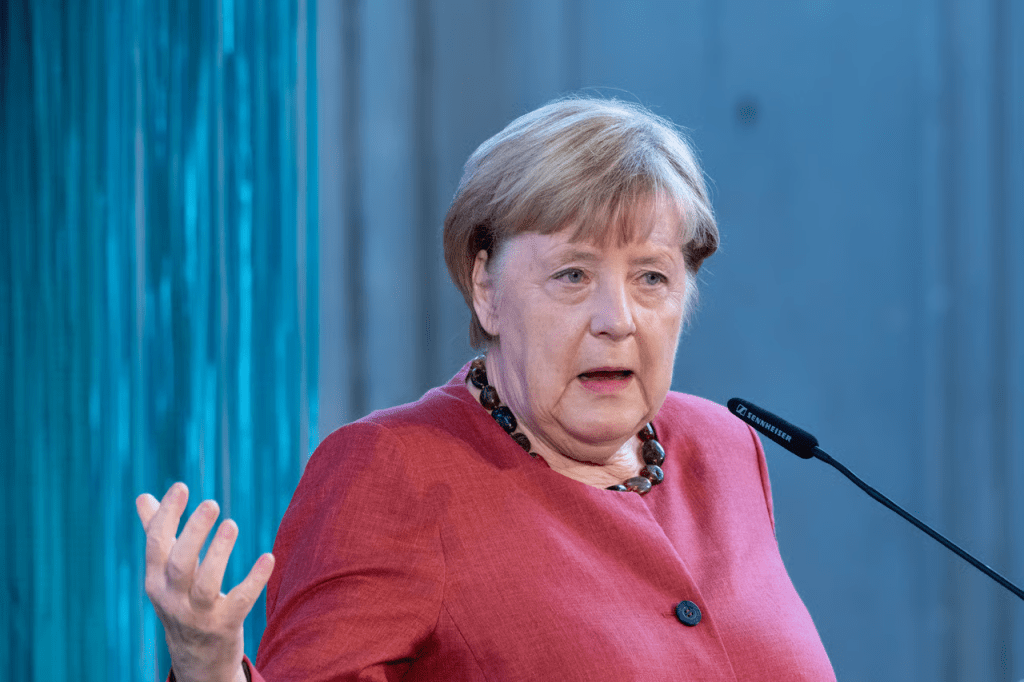
Angela Merkel’s non-apology tour – The former chancellor refuses to reckon with her fraught legacy on the war in Ukraine, instead invoking Covid and a missed chance for talks.
Chancellor Friedrich Merz says that if Israel is excluded from Eurovision 2026, Germany will not take part. German Chancellor Friedrich Merz is considering boycotting next year’s Eurovision Song Contest if Israel is excluded.
When asked in an interview with public broadcaster ARD on Sunday whether Germany should voluntarily withdraw from participation in the world’s largest live music event next year if Israel is excluded, Merz said: “I would support this. I think it’s a scandal that this is even being discussed. Israel has a place there.”
Anything in Berlin that is not expressly permitted must be forbidden.
Berlin to crack down on a beloved giveaway tradition – One resident’s trash is another’s treasure has long been part of Berlin’s culture, but the German capital has had enough and plans to raise fines. Will they work?
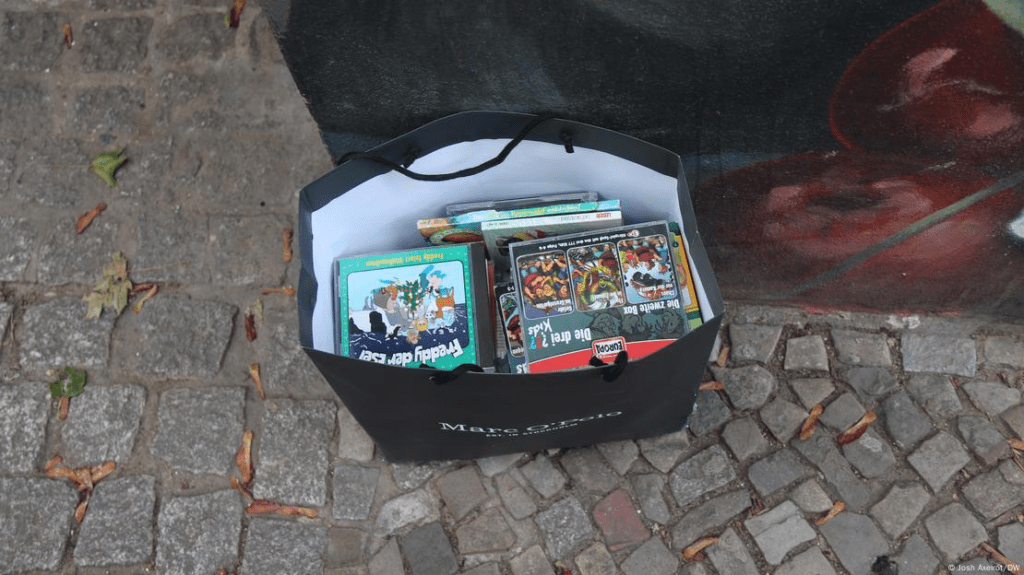
Between old sofas and broken fridges, boxes of baby clothes and crates of cassettes, hidden treasures dot Berlin’s streets. In one such collection of unwanted stuff, Berlin musician Eno Thiemann discovered a new favorite author.
The Haruki Murakami books were left outside with the label “zu verschenken.” Meaning “to gift”, it’s a tradition that has long seen Berliners leave their repurposable goods on window ledges and in front of houses for others to take. And take, they do. Often within a matter of minutes.
“I was very pleased when I came back in 2013 to see that there’s some kind of culture,” said Thiemann, who had left Berlin three decades earlier before the practice took off. “Most people don’t just throw the trash out — it’s a nice thing to do and it’s enriching the neighborhood.”
But as Berlin plans to fine people for putting items on the street, this informal circular economy could become a thing of the past. The city’s environment department argues that while the idea behind leaving things out for others to take is “good and desirable,” it has “led to excesses that are not in line with the original intention.”
If you want to properly deregulate, create a new deregulation bureaucracy first. We don’t want anybody to get fired or anything.
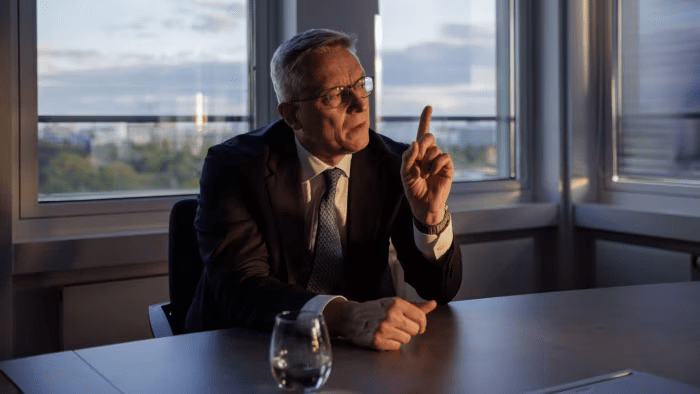
Germany’s new deregulation chief vows to be more subtle than Elon Musk – State modernisation minister Karsten Wildberger promises to bring about digital age in country clinging to fax machines.
Germany is as safe as it can be (all things considered). So move along! Nothing to see here!
Crime statistics: How safe is life in Germany?
Cases of drug trafficking, knife crime and violence on the streets are frequently reported in the German media. But is crime on the rise? And how does Germany compare internationally?
“The new Germany” is “a shame, a travesty,” says Kurt Caz.
In a video, the South African-German travel blogger presents Frankfurt’s notorious Bahnhofsviertel neighborhood near the city’s main train station as the new normal, which has been “completely taken over by crime, illegal migrants and drugs.”
Top AfD politician makes surprise visit to White House – Vice President JD Vance has spoken out against the far-right AfD’s political exclusion in Germany…
A White House official confirmed the meeting and said that representatives of the national security council, the vice president’s office and the State Department attended.
The talks focused on democratic participation and election procedures in Germany, according to the AfD and White House officials. AfD politician Joachim Paul, whose candidacy was disqualified by a German court earlier this year, was presented as a case study in what the AfD describes as the narrowing of political freedoms in Germany.
At the Munich Security Conference in February, Vance raised eyebrows by questioning Germany’s political “firewall” against the AfD, a political agreement by other forces not to include the far-right party in governance. Mainstream parties say the policy is intended to avoid a repeat of country’s Nazi era.
That means disturbing. Or in this case, beyond disturbing.
Germany’s reaction to Charlie Kirk’s killing was beyond disturbing – The country’s arrogant and blinkered media elite do not understand what democracy is.
The cold-blooded killing of campaigner Charlie Kirk on a university campus in Utah should have been a moment of shared grief for everyone. A young father who believed in and lived by a code of free speech and debate was gunned down in front of horrified students.
As we know, the reaction of certain sections of the Left in Britain and America was appalling. If they offered sympathy it was heavily caveated and, by applying labels like “far-Right”, they appeared to suggest he had brought it on himself.
Yet here in Germany, the response of the media class was even more disturbing. They seemed to revel in it.
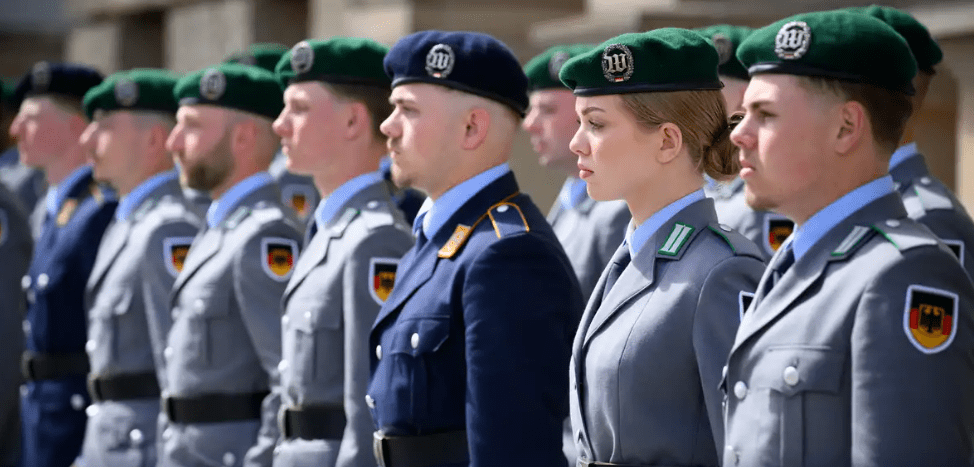
Germany debates return to compulsory military service – As Germany adapts to a volatile geopolitical landscape, attention has turned to filling the ranks of its armed forces. Among Germany’s youth, attitudes towards the Bundeswehr have been shifting…
A new draft law aims to boost Bundeswehr troop numbers by surveying 18-year-olds — mandatory for men, voluntary for women.




 Observing Hermann