Germany first to figure out what’s going on with Chinese 5G components

If you start counting at the end of the line.

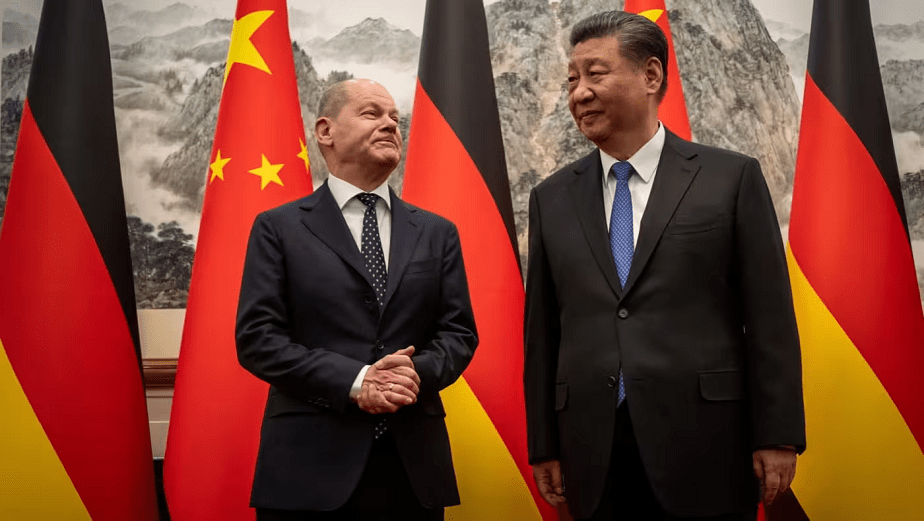
Why Chinese technology set off alarm bells in Germany – Even as the German government moves to bar components made by China’s Huawei and ZTE from core parts of the country’s 5G networks, some German companies are looking to work with Chinese firms in other critical areas…

The ban comes as Chinese technology firms are increasingly viewed with suspicions for their allegedly too close ties to the government in Beijing. Especially Beijing’s drive to make companies like Huawei and ZTE world leaders in high-tech sectors makes Western governments wary of giving them too much influence on their national infrastructures.

The money…

She is all gone, señor.

Let’s see what Ukraine’s biggest, not second biggest military donor does next year.

Germany plans to halve military aid for Ukraine – Germany is planning to nearly halve military aid for Ukraine next year, from around €8bn (£6.7bn; $8.7bn) to around €4bn, according to a draft budget approved by the government.

Finance Minister Christian Lindner said Ukraine’s financing was “secure for the foreseeable future” due to a G7 group of rich nations scheme to raise $50bn from interest on frozen Russian assets.

Germany is Ukraine’s second biggest military donor, after the US. In 2024, Berlin’s budget for Kyiv is set at nearly €7.5bn.

“Collective embarrassment”

Certainly not about the performance of the German team during the Euro 2024 championship.

But…

Germans don’t like what Euro 2024 has exposed about their country – Since Berlin became the capital again 25 years ago, German ingenuity, once applied to solving problems, has been applied to finding excuses. No wonder national team manager Julian Nagelsmann decided to give the whole country a pep talk.

“The championship has shown Europeans just how many things don’t work in this country.”

And tax breaks for skilled German workers?

Out of the question.

Wir sind doch nicht blöd (we aren’t stupid). Somebody has to pay for this.

Germany debates tax breaks for skilled foreign workers – The German government wants to grant skilled foreign workers a tax rebate if they take up employment in Germany. But the idea has been met with resistance.

But he’ll get over it

Real fast. It’s just how they roll here.

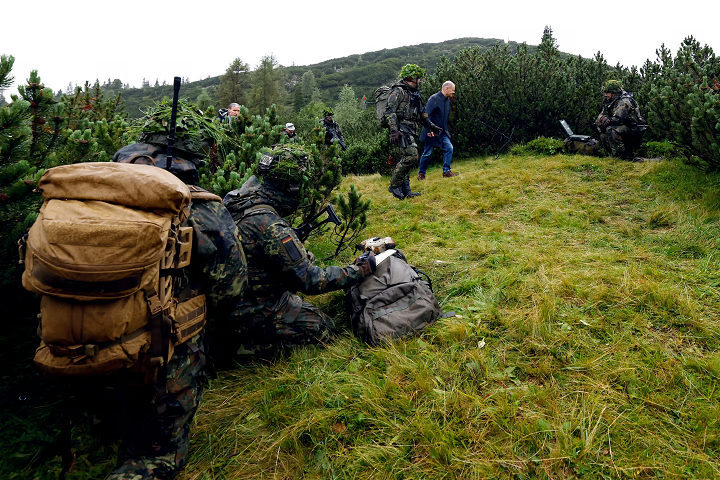
German defence minister deplores meagre military spending – Boris Pistorius’s criticism comes on eve of Nato summit in Washington.

German defence minister Boris Pistorius has criticised his government for approving less than a fifth of the budget increase he said was needed by Germany’s military, in stark remarks on the eve of a Nato summit in Washington.

“Kai will pay”

Red marks the spot.

Berlin bans red triangle symbol used by Hamas to mark targets – Berlin has banned the inverted red triangle symbol due to its use by Hamas and their supporters to mark enemy targets in videos and graffiti.

The motion passed in the state senate said the scarlet arrow icon represents an immediate threat to Jews and to people committed to the freedom and security of Israel and should be banned at protests and in the context of the Middle East conflict.

The symbol has been used to target pro-Israel academics and politicians, including Kai Wegner, the Berlin mayor who ordered the eviction of pro-Palestine protesters from the city’s Free University by police.

“Kai will pay” was graffitied on the wall of a university under a red triangle.

Peace bunkers are out

Now “war bunkers” are in. Again.

Germany plans new war bunkers – German cities are calling for new bunkers to be built, to protect the population in the event of war. But critics argue there’s no point.

There might be no better way to gauge a country’s anxieties than by checking in on the companies building panic rooms and private bunkers.

Business has been going worryingly well for BSSD Defence, the Berlin-based company that builds “protection room systems” for private, business and military applications. As well as a range of home security equipment, the company offers everything from “pop-up panic rooms” for around €20,000 ($21,400) to full-scale bunkers for close to €200,000.

It starts with “beef”

And ends up someplace later with “law.”

But the law is the law. And the German language is the German language.

Rindfleischetikettierungsüberwachungsaufgabenübertragungsgesetz. Let’s give it a try: Beef labelling supervision and duties assignment law.

‘Rindfleischetikettierungsüberwachungs-aufgabenübertragungsgesetz’: how viral tongue-twisters lightened up German language…

Now German, the primary vernacular of about 100 million Europeans, is turning its prickly peculiarities into an asset with an embrace of Zungenbrecher (literally, tongue-breakers) that have touched off a global comeback of the wordplay, even among people who do not speak the language.