This Is News?

Germans found to be Europe’s most aggressive drivers

Driving

Tailgating, shouting insults – nowhere in Europe do drivers react as intensely as they do in Germany, a recent study shows.

Two out of three (67%) admitted to using offensive gestures, and verbal abuse, to insult other drivers.

More than one-third (34%) said they purposefully follow close behind, or otherwise annoy drivers, in order to intimidate them.

PS: Oddity 125. Fun German Games you didn’t know you were participating in: Tailgate Tag. Germans love to drive up to within just a few inches behind the slower moving cars on the left lane of the autobahn and bully them over to the right.

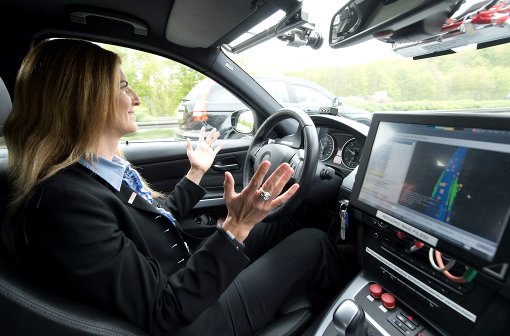
Opening The Self-Driving Vehicle Autobahn Test Stretch Will Be Easy

Designing the self-driving German vehicles to operate on them will be a completely different matter, however.

Autobahn

Just think of the programming issues involved:

1) They must all be programmed to travel at a safe speed (no less than 250 kph).

2) Each vehicle must always hog the left lane, continually flash its headlights and always have the right of way.

3) Programming the three-inches-away-from-the-bumper tailgaiting function for one vehicle will be a piece of cake but how are you going to get all the other self-driving vehicles out there to do this simultaneously?

4) Giving each other the finger (the German bird) will also be a real challenge as no one will be in the damned car.

5) And what about when these vehicles reach their final destination? How can you possibly program each one to insist on taking the same parking space?

The stretch on the A9 autobahn — which links Munich and Berlin — is supposed to give the industry the opportunity to “test and optimize new innovations in an adapted infrastructure that offers data connections and measuring tools,” a ministry spokesman said. No official launch date has been announced.

German Poverty?

Nice try. This is another one of my favorite German myths. You can claim that poverty exists here all you want but everybody knows that poverty only exists in the real world and has nothing at all to do with this country. Or could it be that I am the one with an “unrealistic” definition of what poverty is?

Poverty

Report: About 3.1 million wage and salary earners in Germany had an income below the poverty threshold, according to Saturday’s edition of the Saarbrücker Zeitung newspaper.

You have to understand how Germany works to know that this is ridiculous. For one thing, nobody has to work in Germany if he or she does not want to – ever. They get their rent paid and a low monthly allowance (and then work illegally on the side in a lot of cases) indefinitely = for life, if they want to (everybody know how or knows someone who does).  Many people choose to live this way (I know a few personally). Their welfare system is called Hartz IV, by the way. So like, are you a victim of “poverty” if you choose to be? In a country that has the money to pay your way, I mean?

And you must also understand how a German defines poverty in Germany: “Every second low wage worker, some 1.5 million Germans, would not be able to pay for a one-week holiday per year outside their own four walls. About 600,000 workers were forgoing having their own car because they could not afford it.”

OMG. It’s certainly a cold, cruel world out there when you can’t fly off to Mallorca twice a year like everybody else does and/or keep your expensive German sports car on the road as God intended you to (even though you don’t believe in God, but still).

“The number of workers who earn scarcely or marginally more than the government unemployment benefits (Hartz IV) is alarmingly high.”

PS: Speaking of poverty, get your free copy of Dumb Deutsch here. Offer ends Monday.

Our CO2 Doesn’t Stink

Or maybe it’s green or something. At any rate, Germany just managed to block the adoption of new emissions limits for cars produced in the European Union. This was necessary because, well, this legislation would have handicaped Germany’s automobile industry, focused as it is on the luxury car sector.

Cars

Germany has long seen itself as a leader when it comes to efforts to reduce CO2 emissions and combat climate change. Indeed, Chancellor Angela Merkel’s government remains committed to radically expanding its reliance on renewable energies in the coming decades.

But when it comes to reducing the amount of greenhouse gases German-made automobiles produce, Berlin is far less ambitious.

“It is a scandal.”

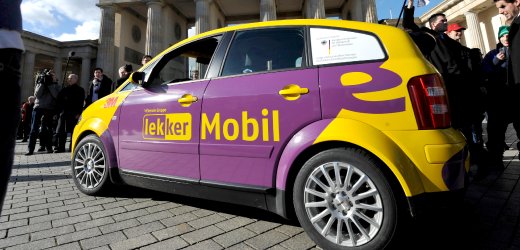
Electric Cars Have Already Reached A Whopping 0.01 Percent Of All Registered Cars In Germany

That’s some, uh, 4,600 vehicles. At this rate, the German government’s plan to have 1 million electric cars on the road by 2020 will be reached easily.

Or maybe not. Because those pesky German consumers still haven’t got the message and think that these babies are too expensive and don’t have a long enough range to make them attractive as, you know, as cars.

So that’s why the German government, flexible as it is, has now said that their goal of 1 million electric cars by 2020 (set last year) has now become a goal of 600,000 electric cars by 2020. I can’t wait to see what next year’s goal for 2020 will be like.

Damn. I’m impressed. This German Energiewende (energy turnaround) is getting easier and easier to reach all the time.

“If we don’t create incentives, then the whole thing is going to fail,” the Green party said in a statement.

Size Matters

There appears to be only one thing that Germans love more than being greener than green and concerned about saving the environment (and having to pay soaring fuel prices all the damned time in the process).

And that’s buying big honking high-horsepower cars with ever bigger engines all the freakin’ time. Vroom! Vroom!

In the first seven months of 2012, the average horsepower of the engines of new cars sold in Germany stood at 138 hp, up from a previous record of 135 hp seen in 2011 and 130 hp in 2010.

Die Deutschen lieben immer stärkere Autos – im Schnitt hat jeder Wagen um drei PS zugelegt.

Dumb Americans buying big cars again

But some of them aren’t all that dumb because they are the ones buying the big German ones. That’s the essence of the article anyway.

Inexplicable, really. German intellectuals everywhere are aghast at the United States failing to do what it is supposed to do yet again. Despite Der Spiegel‘s recent pronouncemnt of the end of US-Amerika as we know it (in black and white and color too), US-Amerikaner are suddenly buying big fat politically correct automobiles as if there were no tomorrow.

Or maybe that is the explanation. Perhaps this is our last collective gasp as a nation before the whole culture (excuse me, I meant lack of culture) implodes with a tremendous groan and rolls over to die, I dunno, in Nevada or someplace. Everybody must sense instinctively that this will be our last chance to drive off into the sunset of our American oblivion in our monstrous ‘merican automobiles in hyper-heroic, High Noon style.

Or maybe… Maybe the experts at Der Spiegel (and experts in general) are just too stupid to poor piss out of a boot.

Der Autoabsatz in den USA boomt.

Speaking of German cars…

Americans sure like buying them – again. Germans aren’t all that interested in them anymore, though (no more cash-for-clunkers).

Orders abroad are up 22 percent in May compared to a year earlier – with China and the United States providing the demand. We’ve been through this before, haven’t we (and again and again)?

“Die Bedeutung des US-Marktes nimmt wieder zu.”