Is This Any Way For A World President To Act?

I mean lead.

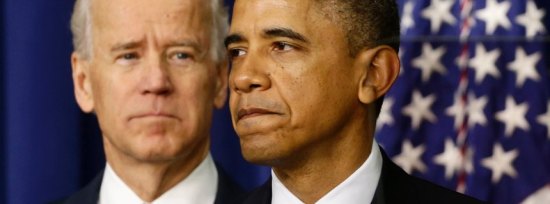
Obama, the Nobel Peace Prize laureate, didn’t focus on creating a better world in his speech. Instead, he talked about a better America, one with more opportunities for immigrants, more rights for homosexuals and less social inequality. Today’s America is deeply divided, but all sides agree on one point: America’s well-being is more important than the world’s.

Barack Obama

Hey, leading from behind ain’t what it used to be. Wait a second. Yes it is.

Europe isn’t in a position to provide decisive leadership. And the US doesn’t want to anymore.

More Godwin’s Law In Action

And it’s particularly popular with Germans, for some strange reason: “In other words, Godwin observed that, given enough time, in any online discussion—regardless of topic or scope—someone inevitably makes a comparison to Hitler or the Nazis.”

Hitler or what?

OK, technically this wasn’t online, but the latest unnecessary comparison to Hitler came from a certain Andreas Köhler, head of a German doctor lobby group here (die Kassenärztliche Bundesvereinigung).

“Julius Caesar, Charlemagne, Napoleon, Adolf Hitler, Angela Merkel – the list of leaders is very long when it comes to those who have tried to unite Europe. And these attempts have always failed because no one can imagine living together in one and the same European house.”

Uh, is the doctor in?

Ein KBV-Sprecher sagte der dpa, aus der rein internen Feier seien Sätze ohne weiteren Zusammenhang nach außen gelangt.

Brilliant “Master Solution” Falling Apart

When “good guys” like the Deutsche Bank get raided after being suspected of incorrectly claiming some €211 million in tax rebates from the trade in carbon tax certificates, then it’s time to also suspect that the days of this nonsensical European emissions trading have finally reached their end.

Cap-and-trade

In case your were wondering: Emissions trading or cap-and-trade is a market-based approach used to control pollution by providing economic incentives for achieving reductions in the emissions of pollutants.  A central authority (usually a governmental body) sets a limit or cap on the amount of a pollutant that may be emitted. The limit or cap is allocated or sold to firms in the form of emissions permits which represent the right to emit or discharge a specific volume of the specified pollutant. Firms are required to hold a number of permits (or allowances or carbon credits) equivalent to their emissions. The total number of permits cannot exceed the cap, limiting total emissions to that level. Firms that need to increase their volume of emissions must buy permits from those who require fewer permits.

Well, it turns out that the European “carbon market” is now flooded and recent EU efforts to fix the system have only served to highlight how lame it is, yada, yada, yada, thus further eroding the price of a ton of carbon dioxide emissions permitted. Government intervention at its best again, in other words.

You know how that old saying goes: “The nine most terrifying words in the English language are ‘I’m from the government and I’m here to help.’

EU-Klimakommissarin Connie Hedegaard will den Preisverfall der CO2-Zertifikate stoppen, der nach ihrer Meinung ein System unterminiert, das einst als Meisterlösung für die weltweite Klimaverschmutzung gepriesen wurde.

Europe Speaking With One Voice Again

Not.  Ho hum. Been there, done that.

Ahead of the United Nations vote that is set to recognize a Palestinian state, Germany has announced it will abstain.

Having strong European support strengthens the Palestinian bid for recognition in the face of US resistance, and they have likely found it in Austria, Denmark, Norway, Finland, France, Greece, Iceland, Ireland, Luxembourg, Malta, Portugal, Spain and Switzerland. Meanwhile the Czech Republic and the Netherlands appear to be leaning toward a “no” vote, while Britain could abstain along with Germany.

So in case you were wondering, European unity never was, is or will be a possibility.

“The German government has, through its own tactical maneuvering, failed to come to an understanding with its partners. This will further diminish the weight of Europe in the Middle East.”

You Can’t Even Count On German Hypochondria Anymore

One can only muster up just so much angst, I guess. Even if you’re a German. There’s just never going to be enough of it to go around to make everybody happy. I mean unhappy.


That’s right. Current German Angstzustände (states of anxiety) just ain’t what they used to be. German angst being the complex, ever-changing and unstable condition that it is, a new Forsa study has indicated that, for the moment at least, Germans are actually more frightened of the ongoing European debt crisis than they are of the worries they make about their own health, or lack of it.

How it could come to this unexpected result is very puzzling for many, myself included, but one researcher has come up with a startling new theory that might explain this sudden and eerie angst turnaround. He believes that the permanent media reports about sicknesses and health risks stir up people’s worries and fears (duh), but with all the media attention being focused on the debt crisis these days, common disease mongering has simply been coming up too short on the angst Skala (scale).

Boy I sure hope that they finally get this Eurpean debt crisis crap over with soon so we can get back to business.

“Es scheint, als ob permanente Medienberichte über Krankheiten und Gesundheitsrisiken auch die Ängste der Menschen schüren.”

Expats Pouting?

He may be the World President, but is he still ours?

“There’s a high interest (in voting) among expats in Germany, but I sense those on the Democrat side aren’t as fervent today as they were in 2008. There’s intense disappointment in President Obama’s leadership.”

Meanwhile… An opinion poll by the Emnid polling institute found 87 percent of German nationals would vote for Obama and only 5 percent for Romney if they had the chance to cast ballots.

Enthusiasm for Obama wanes among U.S. voters in Europe

The Symptoms Of The Times

Withdrawal, I am told, can refer to any sort of separation, but is most commonly used to describe the group of symptoms that occurs upon the abrupt discontinuation/separation or a decrease in dosage of the intake of medications and recreational drugs.

In order to experience the symptoms of withdrawal, one must have first developed a physical/mental dependence (often referred to as chemical dependency).

„Notenbankfinanzierung kann süchtig machen.“

The End With Horror

No horror here. Or terror, if you prefer. How does that German proverb go? Lieber ein Ende mit Schrecken als ein Schrecken ohne Ende?

That is, better an end with horror than a horror without end. And that’s where we’re at with Greece now, finally.

German Vice Chancellor Philipp Roesler said he’s “very skeptical” that European leaders will be able to rescue Greece and the prospect of the country’s exit from the euro had “lost its terror.”

Get it over with already, people, and move on.

Our Debt Still Doesn’t Stink

German government debt keeps climbing relentlessly higher and reached an all-time high during the first three months of this year. The federal, state and local governments then reached a debt to the tune of 2 trillion euros.

That was 2.1 percent or 42.3 billion euros higher (deeper?) than  in the previous year’s quarter, reported the Federal Office of Statistics in Wiesbaden on Monday.

Now if only Greece and Co. could learn to control their government spending like the Germans do. Oh, wait. They already have. Or do. Or whatever.

Deutschlands Staatsschulden auf Rekordhoch gestiegen