That means, well, I’m not really sure what that means.
I think it means Planet Earth has to go on a diet. Is that how they’re saving it now?
‘People mustn’t feel meat is being taken away’: German hospitals serve planetary health diet.
That’s right. People mustn’t think meat is being taken away just because we’ve taken away the meat. Our meals still meat the minimum daily requirements of… what? Of what we require our patients not to eat.
Having the snout full means to be fed up with it, to be sick to death of it.
And the German Greens are filling up everybody’s snouts these days.
Germans Fed Up With Greens as Founding Member Resigns – The aggressive policies of the German Greens have alienated not only many voters in Germany but also their own supporters, including one of the founders of the party who has accused them of pursuing a warmongering foreign policy…
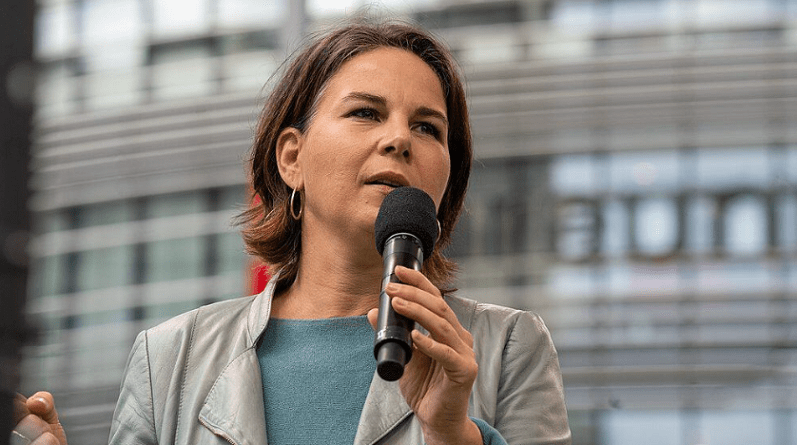
Annalena Baerbock, the young, inexperienced minister of foreign affairs, has promised to introduce a ‘feminist foreign policy,’ but she seems helpless in the face of the momentous challenges posed by the Russian-Ukraine war. The Greens have converted from a ‘pacifist’ party into the most belligerent party of all.
Europe’s largest emitter of CO2 wants to start burying it in the ocean.
Do you have any idea how much dirt that would take?
OK, they want to bury it in sub-seabed storage. But still.
Germany to allow carbon capture, underwater storage – German Economy Minister Robert Habeck says Berlin will need to allow sub-seabed storage of CO2 produced in certain industries in order to reach its goal to be carbon neutral by 2045.
“Expansion” is a scary word. It sounds too much like growth, increase, prosperity, success. We vote no! Because you can never know, unless it’s no.
Tesla in Germany: Locals vote against factory expansion plan – Residents of Grünheide near Berlin have voted against expansion plans for the large Tesla facility there. But the vote is not binding and local authorities can still decide. Turnout was high, though, indicating interest.
What do expect from a coalition government of three consisting of Green utopians, spendthrift social democratic regulation freaks and free-market capitalists (true liberals, in other words)?
This is how Germans vote. Remember: “Every country has the government it deserves.” Just look at the Banana Republic itself, if you don’t believe me.
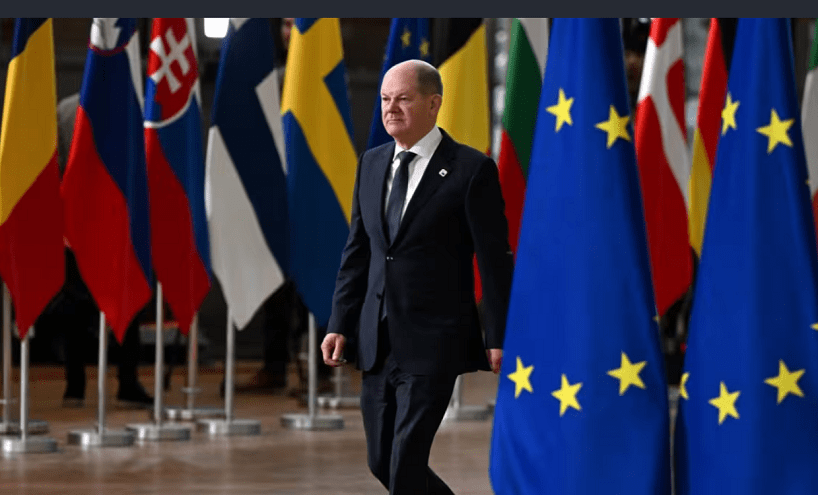
EU partners lose trust in Berlin after policy U-turns – Lawmakers and diplomats in Brussels express frustration at Chancellor Olaf Scholz’s unpredictable coalition.
For years Germany was seen as a rock of stability and predictability in the EU. These days, its partners wonder what curveball Berlin will throw at them next.
Last week the German government sent shockwaves through Brussels by withdrawing its support for a piece of legislation that it had long appeared to back: the EU’s new supply chain law.
Germany’s economy is on shaky ground and glimmers of hope are few and far between – Good news has been sparse for the German economy. And the latest economic data has not done much to change this.
A few key 2023 data points, namely factory orders, exports and industrial production, were out last week and indicated a weak end to the year that saw questions about Germany being the “sick man of Europe” resurface.
Into the brave new renewable energy future. The German government has announced it will spend €16 billion to build four major natural gas plants to meet the electricity demand their beloved renewable energy technology simply can’t meet.
A brilliant move, and long expected. Overdue, actually. You see, wind and solar power are so unreliable that you must always build a second “dirty” system (CO2 is a BAD “pollutant,” remember?) to back them up. This way you get to spend twice as much as you would have if you had only used the dirty system to begin with. Or, heavens forbid, if you had used nuclear energy to begin with (it doesn’t produce any CO2). This way, in other words, you can save the planet with one hand while you continue to pollute it with the other.
After scrapping nuclear reactors, Germany to spend billions on new gas power plants – The fossil fuel expansion is needed to ensure long-term energy security, according to industry and the government.
In a statement Monday, officials said the new strategy came “in addition to the consistent expansion of renewable energies,” and was key to ensuring steady power supplies “even in times where there is little sun and wind.”
German industrial output drops unexpectedly in November – German industrial production fell unexpectedly in November by 0.7% compared to the previous month, the federal statistics office said on Tuesday.
As reported earlier, this only confirms that the Green plan to shut down Germany in order to save the planet is running like clockwork.
Worried about how heated up the atmosphere is getting?
Then why did you heat it up in the first place? Subsidies are like heroin. You don’t take heroin away from a heroin addict without expecting a reaction, do you?
Protest against German vice-chancellor shocks political class – Angry farmers attempt to stop Robert Habeck disembarking from ferry…
Deputy chancellor and economy minister Robert Habeck was on his way back from the island of Hooge on Thursday night when he faced a group of about 250-300 farmers at Schlüttsiel harbour, near the border with Denmark. They had gathered to protest against a recent government decision to slash agricultural subsidies.
“What I’m really worried about is how heated up the atmosphere in the country is becoming,” he added. “The right to protest in Germany is a precious asset. Coercion and violence destroy this asset.”
When your industries start to tank because of the high costs caused by Green renewable energy fantasies, you produce less.
The less you do, the less CO2.
Germany’s 2023 CO2 emissions fall to lowest in 70 years but drop not yet sustainable – study.
Germany’s carbon dioxide emissions in 2023 fell to their lowest since the 1950s due to less coal-fired power and reduced output by energy-intensive industries, but the decline is unsustainable without climate policy changes, a study said on Thursday…
Industry emissions met government targets, falling 12% year-on-year, at 144 million tonnes, following an 11% drop in energy-intensive output, it added, warning that that fall could be lost this year with the sector’s recovery.