German of the day: Na also, es geht doch

That means, more or less: “Well, what do you know? It’s possible after all.”

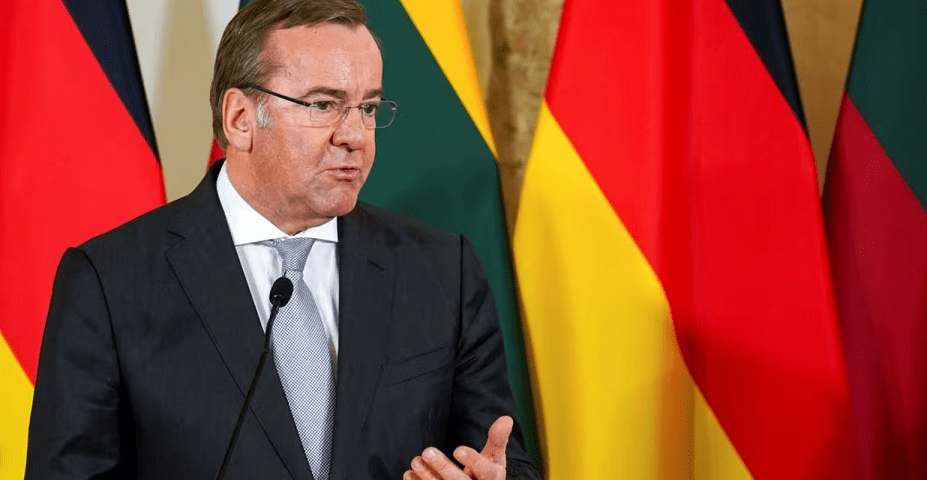
Germany hits 2% NATO spending target for first time since end of Cold War – Germany has met a NATO alliance target to spend 2% of its gross domestic product on defence for the first time since the early 1990s, a defence ministry spokesperson said on Wednesday, as spending ramped up after Russia’s invasion of Ukraine in 2022.

The German government is allocating the equivalent of 71.8 billion euros ($76.8 billion) for defence spending in the current year through regular and special budget outlays. However, the sum of its total defence spending is classified.

German of the day: Ausladung and Ausgrenzung

Ausladung means to cancel an invitation.

Ausgrenzung means exclusion, marginalisation.

Co-head of the Berlinale justifies the cancellation with high pressure – The managing director of the Berlinale, Mariette Rissenbeek, has defended the decision to exclude AfD politicians from the opening gala. In the face of widespread criticism, it was “a very difficult gesture to say: ‘You are welcome!

AfD parliamentary group leader Brinker criticizes Berlinale decision as “exclusion.”

Will the escalation never end?

First, German climate activists of the “last generation” kind decided to glue themselves to the roads (and boy have those roads ever been cold these days).

Now they’ve decided to up the ante and begin organizing “disobedient assemblies.”

The next thing you know they’ll be holding hands and breath together until they turn blue in the face! This senseless escalation of violence must finally come to an end, people. I mean it.

German climate activists to stop gluing themselves to roads – Climate group the Last Generation said they will no longer glue themselves to roads as a protest method. They will now use the tactic of organizing “disobedient assemblies.”

PS: German of the day: Wütend (the guy with the sign). That means angry.

Everybody’s doing it!

Just look at all the “ban Trump” moves in The Banana Republic.

“Germans seeking to ban democracy to save democracy.” They’re planning the banning of the AfD. Why? Because their ranks keep growing with disguntled voters from the established parties that refuse to give these voters what they want. An end to the migrant madness, for example. The Germans have this saying: “Wer nicht hören will, muss fühlen.” That means “he who will not hear must feel.” It’s clear that the established parties’ necessary pain threshold has not yet been reached but try to avoid this pain they must.

The best argument against democracy is a five-minute conversation with the average voter.”

German of the day: Fehlbetrag

That means shortfall, deficit, missing amount.

You know, like when a government can’t burn the money it wants to burn because it already turned it to ashes?

Shortfalls could challenge Germany’s generosity – Germany has been one of the biggest spenders in the world on everything from social welfare to foreign aid. But national income has fallen and Germany’s government is dealing with a budget shortfall.

German of the day: “Wie kommt es zu dem extremen Winterwetter?”

That means: “What causes the extreme winter weather?”

In January. In Germany.

This was a real question asked and addressed by Germany’s ARD state TV channel. And they were serious. It wasn’t meant to be a joke. But it certainly is.

“Climate crisis” hysteria has brought us to the point where perfectly natural seasonal weather is now seen as a threat in need of an explanation and a solution.

German of the day: Hupkonzert

That means horn concert.

Horn concert wakes up the capital: Thousands of farmers demonstrate in Berlin.

Before the planned protest demonstration by farmers at the Brandenburg Gate, participants with their tractors headed toward Berlin city center on Monday morning. Loud honking could be heard in several parts of the city in the early morning hours and also during the night.

German of the day: Bahnstreik

That means railway strike.

Pro tip: When you’re the guy giving the order to strike, make sure you catch the last train back to your headquarters in Berlin before the strike begins.

More German of the day: Dumm gelaufen. That means shit happens.

Train drivers’ strike – GDL boss Weselsky misses last train to Berlin.

Claus Weselsky has a problem: due to the train drivers’ strike, the head of the train drivers’ union (GDL) said he missed the last train to Berlin on Tuesday evening.

Courts in Frankfurt rejected the injunction issued by Deutsche Bahn against the strike action on Tuesday evening but after that, things went less well for the union leader, as the hearing lasted longer than initially expected.

German of the day: Lahmlegen

That means to paralyze.

For example: Bauernproteste legen Städte und Autobahnen lahm means farmers’ protests paralyze cities and freeways.

The week of rage – What’s in store for us tomorrow?

Starting tomorrow, farmers all over Germany will be taking to the barricades to demonstrate against the government’s (subvention-cutting) policy. Expected are highway blockades, rallies, protest camps and rallies all over the country. The farmers’ association expects “tens of thousands of tractors” to take part.

German of the day: Wehrpflicht

That means conscription.

Germany mulls reintroduction of compulsory military service – The Bundeswehr is facing a dramatic shortage in personnel. Now Defense Minister Boris Pistorius has rekindled the debate over reintroducing conscription.

At the end of October, the Bundeswehr said it counted 181,383 soldiers in its ranks — that’s still some distance from the target of 203,000 that the German military hopes to reach by 2025. This has given rise to concern in times of Russia’s war against Ukraine, which has once again reminded Germans how quickly conflicts can erupt in Europe.

Since taking office at the beginning of 2023, Defense Minister Boris Pistorius has been thinking about ways to make the Bundeswehr more attractive as a career. He said he has received 65 concrete proposals from his ministry on recruitment and reforming training methods.

Even conscription, something Germany ended in 2011, is also up for debate. “There were reasons at the time to suspend compulsory military service. In retrospect, however, it was a mistake,” Pistorius told newspaper Die Welt earlier in December.