One For All And All For One

Or twenty-six to one, if you prefer.

Deutschland

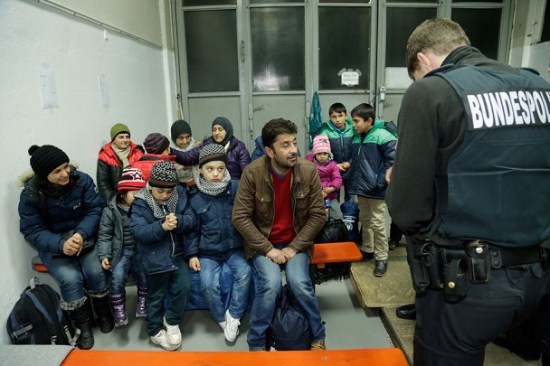
Figures released Tuesday by the EU statistics office, Eurostat, show that around 420,000 asylum requests were processed in Germany in the first nine months of 2016 – more than in all other 27 EU countries combined.

Those are just the ones that have been processed, by the way. They’re kind of behind at the moment for some reason.

And always remember the essence of German policy-making: The last thing that Germany ever wants to do at any time ever like as in absolutely never is to go a Sonderweg (separate path).

In Deutschland sind in den ersten drei Quartalen 2016 einem Bericht zufolge mehr Asylanträge gestellt und bearbeitet worden als in den übrigen 27 EU-Staaten zusammen.

German Of The Day: Nafris

That’s short for North African men.

Nafris

And the police in Cologne “did good” on New Year’s Eve by aggressively questioning, detaining and expelling the roughly thousand (1000) North African men who came to Cologne’s central station to try to raise hell with German women again, just like they had done the previous year (Why are these multiple offenders still in Germany, you ask? Practically everybody else in Germany is asking themselves that same question these days, too.).

But the police in Cologne “did bad” by using the word Nafris, German Green women tell us. Because, well, that’s short for North African men.

Get it? Me, neither.

Am HBF werden derzeit mehrere Hundert Nafris überprüft. Infos folgen.

German Of The Day: Böller, Pfannkuchen, Pfefferspray

Silvester (New Year’s Eve) preparations are in full swing here in Germany, folks. So for any of you who might be enjoying the New Year’s Eve celebrations here tomorrow please keep these German words in mind.

Mace

Böller are firecrackers, usually big honking firecrackers, that Germans love blowing up for hours and hours and hours and hours on end, preferably blowing off a finger or two in the process. This is an ancient Germanic tradition that goes back to the Roman era. In Germania, Tacitus tells us, the Germanen often flipped off Roman soldiers during New Year’s Eve celebrations but, being drunk, were easily captured and then got their Stinkefinger cut off as punishment. After the Romans left new ways of removing fingers had to be developed.

Pfannkuchen or Berliner Pfannkuchen or just Berliner are pancakes, eaten in massive amounts around midnight. This tradition goes back to the 1950s when a Berlin housewife messed up an American doughnut recipe by forgetting to add the hole and putting way too much jam filling inside instead.

Pfefferspray is pepper spray or mace and is a new tradition that began shortly after last year’s Silvester celebrations, introduced in Cologne by another Kulturkreis (cultural circle), origins unknown.

In Sicherheit feiern – Mit Pfefferspray durch die Silvesternacht?

Germans Worried About TTIP

Oops, I meant TATP, of course.

Terror

TATP stands for triacetone triperoxide and is an extremely powerful explosive substance that was found in the Chemnitz apartment of a Syrian refugee, an apartment German police raided just minutes after the suspect escaped.

This is the same stuff that was used by the suicide bombers in Paris last November. German state media is therefore going to go way out on the limb here for once and speculate that this particular refugee “might” have been involved in a so-called “terrorist” plot. Details at eleven or something.

Stunned residents reacted to the incident last night, with one neighbour slamming Albakr as an ‘a*******’ for his alleged plot – what a racist, xenophobic a******* that neighbour must be.

Die Polizei überwachte die Chemnitzer Wohnung, in der Sprengstoff gefunden wurde. Doch die Beamten konnten Jaber A. nicht stoppen, als der das Haus verließ.

German Of The Day: Spießrutenlauf

That means running the gauntlet. You know, like the kind Angela Merkel and other politicians had to run through today during the German Reunification Day celebrations in Dresden?

Merkel

Several hundred angry protesters confronted German Chancellor Angela Merkel outside Dresden‘s majestic Frauenkirche church on Monday morning, bringing Europe’s most powerful leader face-to-face with criticism of her migration policies on the 26th anniversary of German reunification.

Merkel arrived in Dresden to celebrate German Unity Day, the national holiday that marks the official reunification in 1990 of West Germany and former communist East Germany following the fall of the Berlin Wall.

But the chancellor was met with blaring whistles and hundreds of angry protesters chanting “Traitor of the people!” and “Merkel must go!” as she entered the church, which was surrounded by hundreds of protesters behind metal barricades that were lined with police officers.

Auch wenn viele Menschen friedlich feiern konnten, die rund 2600 Sicherheitskräfte die Situation bislang unter Kontrolle behielten: Stellenweise ging es gar nicht gut.

Plain Talk II?

As Chancellor Merkel stated in yesterday’s post: Migrants without the right to stay (in Germany) should be sent back with determination.

Migrants

Then it’s time for Merkel’s determination nation to get that determination up and running, I guess: Some 550,000 migrants in Germany who have had their asylum requests rejected have still not been deported, according to parliamentary figures cited by a local media outlet.

In Deutschland leben nach Angaben der Bundesregierung fast 550.000 abgelehnte Asylbewerber.

Plain Talk?

In Germany? When it comes to the refugee crisis here? I’m sure you mean well but you’re clearly on another wavelength than the Germans.

Merkel

In Germany, in particular, there is a sense that the authorities have lost control and that established political parties cannot think or talk plainly about the problem…

Only now does Angela Merkel concede that she made mistakes when admitting a million refugees last year. It was obvious to most people in Europe at the time that her warm-hearted gesture would lead to catastrophic results. In declaring that all Syrian refugees would be welcome if they made it to Germany, she doubled the fortunes of the human trafficking industry. The asylum seekers came from Syria and North Africa through Austria and Hungary, having landed on the shores of Italy and Greece. Thousands died on the way.

Angela Merkel: Migranten ohne Bleiberecht sollen entschlossen zurückgeschickt werden.

Losing Isn’t Everything

It’s the only thing. If you belong to Angela Merkel’s CDU party these days, that is.

Merkel

But don’t worry. The brainiest ones over at the CDU are putting their heads together at this very moment to figure out were these electoral loses at these recent regional elections are coming from. They’ll figure it out before all too long, I’m sure.

Chancellor Angela Merkel’s party was dealt another blow in a regional election, posting its worst result in Berlin since the end of World War II as the anti-immigration Alternative for Germany extended its challenge to the political establishment by siphoning off voters.

The Social Democrats, Merkel’s junior coalition partner in the national government, won the election for the capital’s state assembly and the chancellor’s Christian Democratic Union finished second. Yet their combined voter share declined by about a quarter, leaving the “grand coalition” of the two biggest parties without a majority to run Germany’s biggest city.

“Sehr bitter.”

Latest Imperial Decree In The Pipeline

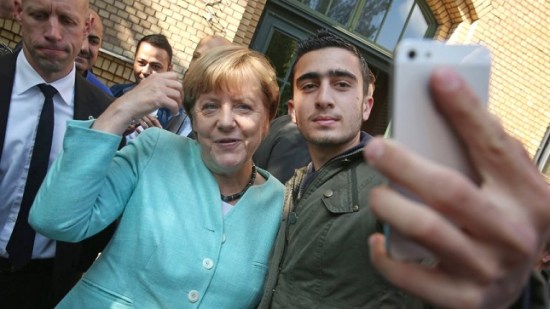
Much like the repeated (and ignored) calls for “contingents” of refugees to be fairly distributed across the rest of EU Europe, the Empress of Europe (or at the very least of Germany) has now called on German industry to do more about hiring more refugees right here in Germany itself.

Merkel

“Sheesh. We’ve already hired over a hundred (that’s one one and two zeros),” one irritable spokesman for German blue-chip companies lamented. “From the million or two that came into the country last year that’s, well, a pretty good start. Rome wasn’t built in a day, you know. Nor destroyed in a day, for that matter. An empress ought to know this kind of stuff.”

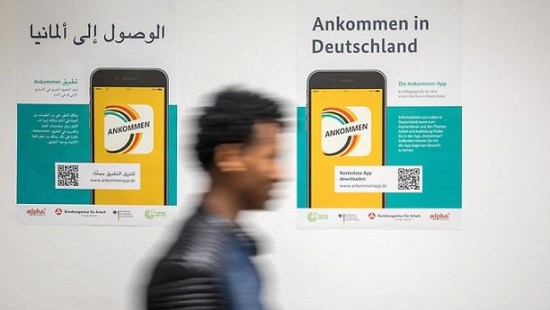
“Given that around 80 percent of asylum seekers are not highly qualified and may not yet have a high level of German proficiency, we have primarily offered jobs that do not require technical skills or a considerable amount of interaction in German.”