Poor But Sexy But Inter-State Fiscally Adjusted

Berlin is.

Waste

Here’s a new German word for you: Länderfinanzausgleich. In a nutshell, this means that wealthy German states like Bavaria and Hesse (so-called donor states) are obligated to subsidize poor but sometimes sexy German states like Berlin and Bremen (so-called recipient states) because, well, hell if I know why.

This is also known as “inter-state fiscal adjustment” here. You know, good old fashioned Umverteilung (redistribution of somebody else’s money) or subsidies, if you prefer.

Anyways, Bavaria and Hesse, for one (or two), are mad as hell and aren’t going to take it (or give it) anymore and are bringing an action before the German Verfassungsgericht (Supreme Court) claiming that this type of thing is constitutionally imbalanced and needs to be done away with – at least when it comes to Berlin because the Berlin city/state government consists of a worthless bunch of lazy and wasteful bums who are completely out of control when it comes to spending and would never think of stopping their spending if they aren’t forced to, which is, well, a pretty accurate analysis of the situation here.

This will probably go nowhere, however, because Germans are big fans of something they like to call Solidarität (no English equivalent that I can find other than maybe “supporting lazy and wasteful and sometimes sexy bums”).

“Das Gesamtsystem leidet unter einer zu weitgehenden Nivellierung der Länderfinanzkraft, die den politisch Verantwortlichen eines Landes das Eigeninteresse nimmt, Maßnahmen zur Stärkung der originären Steuerkraft zu ergreifen.”

Brilliant “Master Solution” Falling Apart

When “good guys” like the Deutsche Bank get raided after being suspected of incorrectly claiming some €211 million in tax rebates from the trade in carbon tax certificates, then it’s time to also suspect that the days of this nonsensical European emissions trading have finally reached their end.

Cap-and-trade

In case your were wondering: Emissions trading or cap-and-trade is a market-based approach used to control pollution by providing economic incentives for achieving reductions in the emissions of pollutants.  A central authority (usually a governmental body) sets a limit or cap on the amount of a pollutant that may be emitted. The limit or cap is allocated or sold to firms in the form of emissions permits which represent the right to emit or discharge a specific volume of the specified pollutant. Firms are required to hold a number of permits (or allowances or carbon credits) equivalent to their emissions. The total number of permits cannot exceed the cap, limiting total emissions to that level. Firms that need to increase their volume of emissions must buy permits from those who require fewer permits.

Well, it turns out that the European “carbon market” is now flooded and recent EU efforts to fix the system have only served to highlight how lame it is, yada, yada, yada, thus further eroding the price of a ton of carbon dioxide emissions permitted. Government intervention at its best again, in other words.

You know how that old saying goes: “The nine most terrifying words in the English language are ‘I’m from the government and I’m here to help.’

EU-Klimakommissarin Connie Hedegaard will den Preisverfall der CO2-Zertifikate stoppen, der nach ihrer Meinung ein System unterminiert, das einst als Meisterlösung für die weltweite Klimaverschmutzung gepriesen wurde.

The Latest Radical New Concept

After years of deliberation, the German Justice Department has finally decided to take a bold leap into uncharted legal waters and official declare that theft should be punishible. OK, in this case it’s “data theft.”

Wow. Talk about a great leap forward for German Gerechtigkeit (justice) or something. The background: Like junkies in need of their next fix, German tax officials (usually from SPD led state governments) have been regularly purchasing stolen goods in recent months; data CDs containing lists of German tax evaders with Swiss bank accounts. Needless to say, the SPD & Co. are unhappy about this rather belated juristic revelation.

Is this the beginning of the end of the means justifying the end? Or was it vice versa?

“Datendiebstahl soll strafbar sein.”

Clean Power Cleaning Us Out

The German textile industry, among others, is mad as hell and isn’t going to take it anymore. Not when it comes to having to pay billions into the governments way cool Ökoenergie-Förderung (clean energy surcharge = tax).

That is why three companies now plan to challenge this surcharge subsidizing renewable energy in court.

More good government in action again, I guess. Energy companies have to pay the price for electricity generated through renewable technologies, and transfer the extra cost on to their customers. While energy-intensive industries like aluminum or steel are free from the surcharge, most of the textile industry has to pay.

“You cannot get an energy turnaround for free.”

Angela Tea Party Merkel

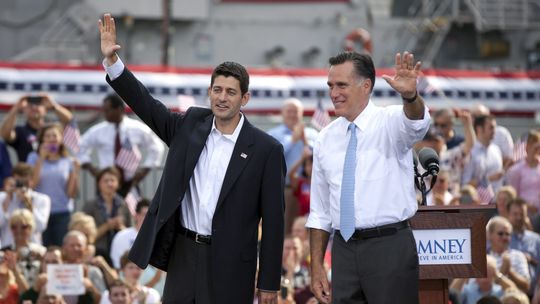
“Wait a minute… This seems familiar to me. Romney and Ryan stole all this from Angela Merkel! That which the Tea Party wants to do is already being done by Merkel here, and for quite some time now: She wants to force other European states to save instead of just continuing to throw money at them.”

“With Ryan as vice-presidential candidate, the presidential election now has two clear and easily understandable alternatives: Obama wants to save the economy by going further into debt (financed through taxes) and pumping this into the economy. Romney and Ryan want to save the economy by lowering taxes (which should lead to more private investment) and forcing the state to save.”

Ich habe jedenfalls nie verstanden, warum die Deutschen die Tea Party nicht mögen. Logisch ist das nicht: Einerseits sind die meisten Deutschen erschrocken und verängstigt ob des schwindelerregenden amerikanischen Haushaltsdefizits und fest überzeugt, dass Amerika die Staatsschulden abbauen muss. Sonst würde es doch irgendwann zusammenbrechen oder von China aufgekauft. Gleichzeitig aber hassen sie die einzige politische Bewegung, die genau dafür kämpft – die Tea Party.

And now here’s some economist rap.

Now I’ll Call Swiss Bankers Organized Criminals

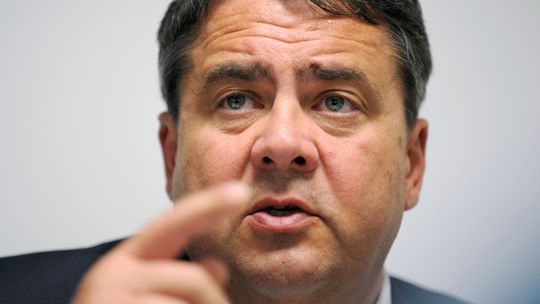
Unable or unwilling to address the real reason why Germans (who can) move their money out of this country to countries where their money is treated better, SPD boss Sigmar Gabriel has now accused Swiss banking of “legalizing tax evasion.”

Maybe if the German state wouldn’t burn as much money as it does, those being milked might consider leaving it here. And maybe before accusing others of criminal intent, he might want to ask himself if the now regular practice of dealing in stolen goods (buying CDs with lists of German Swiss account holders from informers) is really the way Vater Staat (Father State) ought to behave. And maybe, just maybe, this guy ought to think about trying something different than this tired old primative populism of his. Maybe.

“Was mich ärgert ist, dass wir hier offensichtlich nicht in der Lage sind, mal eine Schwerpunktstaatsanwaltschaft zu gründen.”

Bust Them, Switzerland

And throw away the key. Those no good criminals. Those German tax collectors who have been trading in stolen Swiss goods.

Switzerland has issued arrest warrants for industrial espionage for three German tax collectors who bought (with German government approval) the bank details of German tax evaders in Switzerland.

“For Germany, the issue is one of tax fraud, leading the country to authorize three tax inspectors to buy leaked stolen data on tax evaders in 2010. This legally dubious approach wasn’t an issue domestically because of the common belief that the state was collecting its alleged due and it effects only ‘the rich.’ But in reality, because Switzerland has different laws, the officials acquired stolen property to use as evidence, and paid the thieves €2.5 million for it. Anyone who dismisses this as a trifle needs legal tutoring.”

“Just imagine how Germany would react were the Chinese government to buy automobile designs from German car company employees to speed up industrial development — with the argument that patent laws are too strong in the West.”

We’re Only Taxing You For Your Own Good

To protect the climate. And while we’re at it we’ll tax you Americans even more.

A “departure tax?” Then I’ll just stay here. Germany’s Air Transport Tax – somehow meant to save the climate but no one can explain to me just how this works – is penalizing American carriers by taxing them the maximum amount of 45 euros per passenger.

These carriers are now suing the country on the grounds that “Germany cannot arbitrarily close its budget gap on the backs of US airlines and their passengers, who already pay taxes at excessive rates. This is a short-sighted cash grab.”

Of course it is. But they’re going to keep on taxing us anyway. Americans don’t vote here.

Die kurzsichtige Maßnahme werde der deutschen Volkswirtschaft größeren Schaden zufügen als möglicherweise an Steuereinnahmen wieder hereinkomme.

Thanks But No Thanks

Undank ist der Welten Lohn (nothing is so hard as man’s ingratitude).

What were you expecting, Germany? The Greeks have politely but firmly said no to a recent offer made by 160 German tax collectors who were ready, willing and able to fly down to Greece and help their Greek tax collector buddies gather Greek taxes in a more efficient and Teutonic-like manner.

The Greeks may be broke, but they’re not crazy. Not even Germans can stand German tax collectors

Als Begründung müssen die “hart arbeitenden griechischen Beamten” herhalten.

“Tax Advice Mission” Impossible

How about a little more sensitivity here, Greece? Germans are only trying to help.

And it doesn’t look like they’re going to stop trying to help you anytime soon, either. That’s why if they can’t get that “budget commissioner” they proposed to help monitor the Greek government’s (lack of) management of its finances, some 160 German tax collectors have now selflessly volunteered for assignments in Greece to help gather Greek taxes more efficiently. And as you can imagine, when it comes to taxation and tax collection, German efficiency can really hurt.

A recent flurry of acrimonious exchanges between Athens and Berlin reflect deepening doubts among mainly northern members of the 17-nation euro zone about Greece’s ability and willingness to overhaul its economy to satisfy lenders’ demands.