Time To Say Goodbye

To “clean power rebates” for German industry, that is.

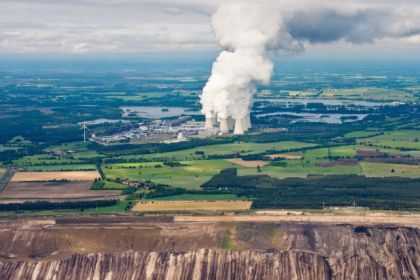
Germany collects surcharges from power users to help fund operators of solar and wind power installations. Heavy electricity users such as cement, steel and some chemical plants are exempt to keep them from being priced out of the global market.

Industry

The EU now wants to change this. And that should make almost everybody happy. Now many of these German industries will get priced out of the market or maybe moving their production facilities to other countries altogether.

MEHR ALS DIE HÄLFTE DES INDUSTRIESTROMS VON UMLAGE BEFREIT

PS: Grid nationalisation in Berlin? Close but no cigar. Nice try but now you’ll just have to grid and bear it.

Franz-Peter Tebartz-van Bling

I mean Tebartz-van Elst, of course.

Bling

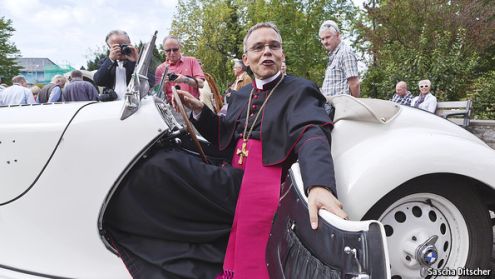
“I got your church and state for ya right here, pal.”

What’s all the excitement about? Religious Germans contribute freely to their churches. It’s not as if the money this guy burned had been levied by taxation or anything. Uh, wait a second. OK. So I guess it had been.

Germany separates church and state much less clearly than does America but more explicitly than Anglican Britain or Orthodox Greece. Its post-war constitution, in a clause carried over verbatim from the Weimar constitution of 1919, favours no particular faith but lets all churches levy taxes on their members through the income-tax system (8% or 9% of a taxpayer’s bill, depending on the state).

Whoopee! The Electricity Prices Are Going Up Again!

Seven percent in the coming year! For starters.

Strom

Hot dog. And all because of the The German Renewable Energy Act.

And this act kind of goes like this: Every kilowatt-hour that is generated from renewable energy facilities receives a fixed feed-in tariff. Renewable energy plant operators receive a 20 year, technology specific, guaranteed payment for their produced electricity. Anyone who produces renewable energy can now sell his ‘product’ for a 20-year fixed price.

And who pays this tariff? You guessed it.

Die EEG-Umlage steigt im kommenden Jahr voraussichtlich um einen Cent je Kilowattstunde.

The Big Green Machine She Is Broken

Wah? The “energy turnaround” is going to be expensive as hell? Raising taxes? Veggie Day? And the hits keep on coming. I’d ignore the polls these days too if I were a greenie.

Green

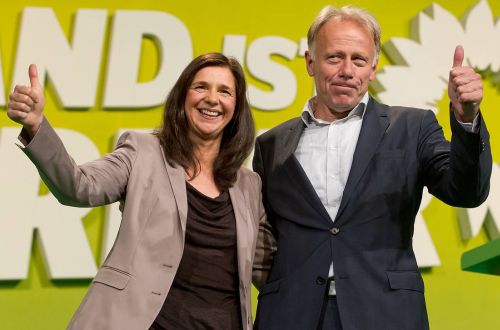
The Greens have been consistently bleeding support ever since the spring of 2011. Along the way, they have achieved a few notable successes in state elections, but the trend has been a downward one for over two years. It is as if the German electorate has suddenly decided that the party is no longer needed.

“Der Wahlkampf mit den Rezepten, wie man Kohlrouladen herstellt, ist zu Ende.”

Green Logic

This is how you save the world (from Climate Change).

Energy

German consumers already pay the highest electricity prices in Europe. So it follows, then, that the prices Germans pay for electricity need to be increased.

That is why a turnaround must be introduced – the infamous Energiewende or “energy turnaround” – with which, for instance, a renewable energy surcharge is levied that increases every consumer’s electricity bill from 5.3 cents today to between 6.2 and 6.5 cents per kilowatt hour — a 20-percent price hike. For starters, of course.

You see, this way everybody is happy because every single one of us then feels painfully, on a day-to-day basis, just how much he or she is pulling his or her own CO2 weight, all for the good of mankind, not to mention Planet Earth. And Mother Nature too, of course. Whoever she is.

In the near future, an average three-person household will spend about €90 a month for electricity. That’s about twice as much as in 2000.

Greens Loudly Denounce Disastrous Legislative Blunder Made By Awful German Government Coalition Currently In Power

Only this blunder was made by the Greens themselves during the Red-Green coalition government reign back in 2005.

Green

Hard to believe really, but their 328-page election program “Time for Green Change” actually denounces as “a fatal policy change” the legislation they themselves introduced that increased the percentage of what employees have to pay for their share of the statutory health insurance here (employers pay the rest).

Well, I suppose it is better to realize one’s mistakes late than never and all that, but I’m not sure if that is really what was intended here.

If it wasn’t for Schadenfreude, I wouldn’t have no Freude at all.

“Bei all den erhobenen Zeigefingern gegenüber den anderen scheint kein Finger mehr für saubere Recherche im eigenen Laden frei gewesen zu sein.”

Black Workers Are Everywhere These Days

No, not Afro-American workers. You know, Schwarzarbeiter (illegal workers).

Black

And they’re everywhere all over Europe these days, although Germany is the champion here again too, as usual.

Eight million Germans are working on the black market as we speak, so-to-speak, generating about 13 percent of the country’s economic output. And loving it, I hope for them, because many of them just don’t seem to have any choice in the matter. Nobody will hire them otherwise:

Punitive tax regimes, increased labor market regulation and a growing lack of trust in governments are causing many Europeans to abandon formal employment and enter into the murky, illicit world of shadow economies worth billions of dollars.

Unternehmen und Arbeitnehmer setzen auf Schwarzarbeit, dadurch entstehen zwei Drittel des Schadens. Für das weitere Drittel ist verantwortlich, dass viele zu geringe Einkommen und Erträge ausweisen.

Tugendterror

Or “virtue/politically correct terror,” if you prefer. Even some Germans now (in this case Thea Dorn for Die Zeit – “Deutsche Sitten” – no link yet) have come to realize that those who might still prefer to have the right to choose for themselves are losing Lebensraum (their habitat) fast.
Tutelage

A German Opera house decides to cancel a production from their repertoire because several spectators needed medical attention (they were traumatized) after the premiere. A leading SPD politician openly discusses the possibility of limiting the speed limit to 120 kmh on German autobahns. The Greens specify in their party program to do away with the reduced value added tax rate currently granted for fast-food and to forbid the use of wild animals in circuses.

The German (or European) citizen who still expects to be able to decide for him- or herself on matters of this nature  (whether to attend the opera performance or not, drive the speed he/she wishes on certain stretches of the autobahn, eat fast-food, etc.)  is frowned upon ever more these days because, well, there are others out/up there more enlightened than him/her to make these decisions for them. This is the essence of socialist and/or Green thinking. This makes everything safe. And predictable. And correct sowieso (at the very least).

Autonomy means being able to assess what I can expect of myself and of my environment to put up with. Living means not letting myself be knocked down by injuries or setbacks. But how can I learn either of these things if our society becomes an omnipresent governess keenly taking care that her wards never get carried away?

How indeed. They don’t want you to get carried away. Or get away at all, for that matter, ever. That’s the point. Just curb your enthusiasm already and keep on voting for more tutelage.

Man kann sein Leben zu Tode verschwenden, andere zu Tode schinden. Wir sind dabei, uns zu Tode zu schonen.

Alternative Reality Expensive As Hell

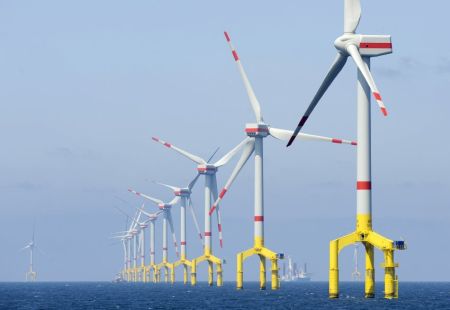
As part of Germany’s switch to renewables, industry has been exempt from paying higher prices associated with solar and wind energy. The European Commission, however, believes the practice distorts competition on the Continent. Huge penalties could be in store.

Bill

The costs of start-up financing for green energy and the compensation for expansion of the power grid are added to customers’ electricity bills in the form of a special tax. The entire subsidy system is supposed to come to an end when green energy becomes competitive. That, at least, is the theory.

But the reality is different. No longer can one simply describe the tax as a way to get renewable energies off the ground. Indeed, following Berlin’s decision two years ago to shelve nuclear energy and accelerate the expansion of renewables, the EEG (Renewable Energies Act) has become a giant redistribution machine.

“The fact that German electricity prices are among the highest in Europe despite relatively low wholesale prices must serve as a warning signal.”

Someone Needs To Finally Have The Decency To Tell The German Greens Which Country They Live In

When it comes to money matters, I mean.

Greens

Like I mentioned earlier, only in Germany can a political party go for (and actually get) votes by promising to raise taxes.

But I now stand corrected: (actually hope to get) is what I should have written. It turns out that not even do-gooder mainstream green-like German green people like the idea of increased taxes all that terrible much. At least not when the cameras have finally been turned off and they can answer a survey in peace and quite when the Green Shirt party watchdogs aren’t breathing down their necks.

Ever since the announcement of that wacky plan of theirs to raise the top rate of income tax to 49 percent for those earning 80,000 euros ($104,000) a year or more (and to 45 percent from 42 percent above 60,000 euros), voter support for them has dropped steadily.

I guess there’s GREEN in theory and GREEN in practice after all. And practice makes perfect, you know.

Die Grünen erreichen im Politbarometer nur noch 13 Prozent. Dass die Steuerpläne der Partei schaden, glauben 53 Prozent.