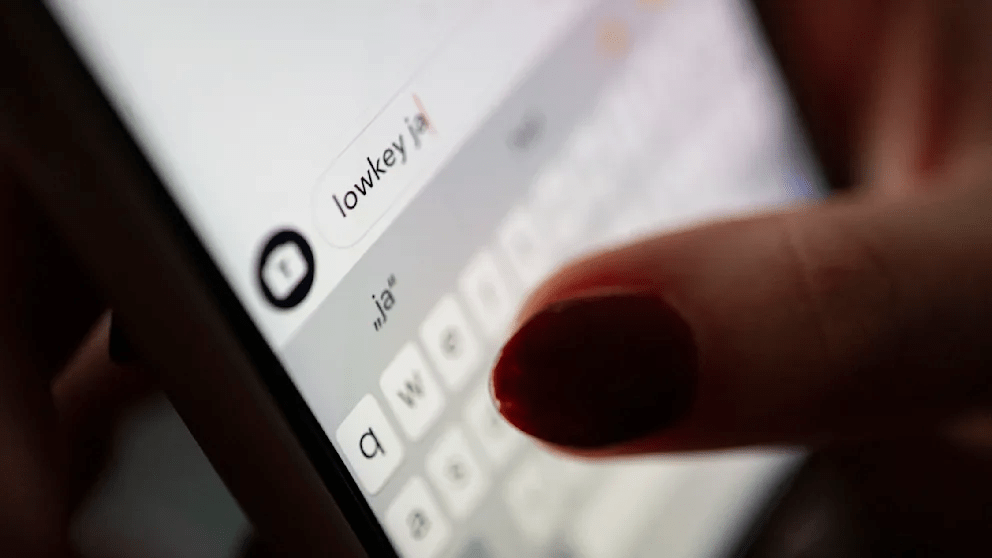
Youth word of the year – These were the top 3 youth words of 2025.
The youth have spoken… And, as every year, the rest of us are left wondering. The decision on the youth word of the year will be made on October 18, 2025. But which terms were up for selection in advance?
The race was extremely close: “Aura” is the German youth word of the year 2024, with a wafer-thin lead over “Talahon” and a new interpretation of “scissors.”
Talahon: An adherent of an urban subculture of males aged between about 13 and 25, typically but not necessarily of Middle Eastern origin, characterized, among other things, by a passion for German hip hop and wearing counterfeit designer labels.
But the law is the law. And the German language is the German language.
Rindfleischetikettierungsüberwachungsaufgabenübertragungsgesetz. Let’s give it a try: Beef labelling supervision and duties assignment law.
‘Rindfleischetikettierungsüberwachungs-aufgabenübertragungsgesetz’: how viral tongue-twisters lightened up German language…
Now German, the primary vernacular of about 100 million Europeans, is turning its prickly peculiarities into an asset with an embrace of Zungenbrecher (literally, tongue-breakers) that have touched off a global comeback of the wordplay, even among people who do not speak the language.
He didn’t “intentionally use a banned Nazi slogan.”
If you watched the clip, and were fair in your judgement, you would agree. If you want to say the words “everything for Germany” is a Nazi slogan you can, of course (they used it), but something tells me uttering these words didn’t originate with them, nor are they the exclusive property of Adolf Hitler & Co.
You don’t have to like this guy or his politics or his political party to see that “the system” is out to get him (and them). The court system has been weaponized here, in other words. Boy oh boy it sure is good to know that that type of thing could never happen in US-Amerika, right?
German far-right leader intentionally used banned Nazi slogan, court rules – Alternative for Germany politician Björn Höcke was fined for uttering a phrase employed by Hitler’s storm troopers.
A leading politician for the far-right Alternative for Germany party (AfD) has been convicted by a German court of using a banned Nazi slogan — a decision that is unlikely to dissuade the party’s core supporters in its eastern strongholds.
Björn Höcke, who heads the AfD in the eastern German state of Thuringia, was fined €13,000 for closing a 2021 campaign speech with the phrase: “Everything for Germany!”
So you sneaky Russkies better stop accusing us of doing so.
After all, just because our foreign minister said “we are fighting a war against Russia” doesn’t mean that we are fighting a war against Russia. Quit twisting her words around like that already. She’s a diplomat. And a Green one too (in more ways than one). And now you’ve offended us.
Germany accuses Russia of twisting minister’s war comments for ‘propaganda’ – Russia has twisted comments by Germany’s foreign minister about the war in Ukraine for propaganda purposes, a German foreign ministry spokesperson said on Friday, stressing Berlin’s position that NATO must not become party to the conflict.
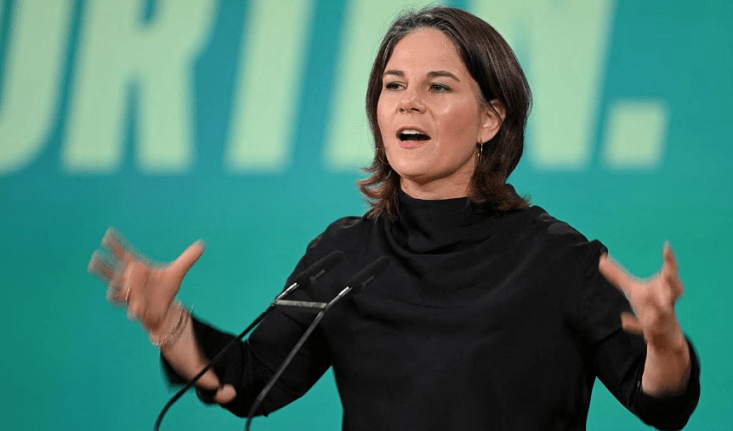
German Foreign Minister Annalena Baerbock riled Moscow with comments at an event in Strasbourg on Tuesday, when, speaking in English, she said that “we are fighting a war against Russia, and not against each other.”
OK, it’s the German Youth Word of the Year word of the day. But it still means cringe.
It’s a good word of the year, I find. For this year or any other year, these years.
Wenn Jugendliche etwas peinlich finden, nennen sie das häufig “cringe”. Besonders unter den bis 20-Jährigen ist dieser Begriff laut Langescheidt-Verlag weit verbreitet. Nun wurde er zum Jugendwort des Jahres gewählt.
You know, face mask? I don’t make this up that German allows you to make this stuff up. It’s a popular national pastime.
Pandemic Inspires More Than 1,200 New German Words.
Like English, German also offers the possibility of combining of words, especially nouns. The resulting noun chains in English typically feature spaces or hyphens between the different elements, while German ones normally appear as one word. The German penchant for creating complex compound nouns has long been the stuff of comedy. Mark Twain devotes part of his essay on The Awful German Language to these “curiosities,” and many people are familiar with ones like “der Donaudampfschifffahrtsgesellschaftskapitän” (the Danube Steamship Navigation Company Captain).
Generally, for as long as there is nothing left to debate about.
When “Germany” debates something, especially “terminology,” they will do so until the cows come home. And then leave home again. And then come back home again. And so forth.
For 15 years now, the term used by German statisticians and politicians alike to denote foreigners and their descendants has been “people with a migration background.”
That was the label given to people who weren’t born into German citizenship. And to people whose mothers or fathers were not born German citizens. Today, that applies to a quarter of the population.
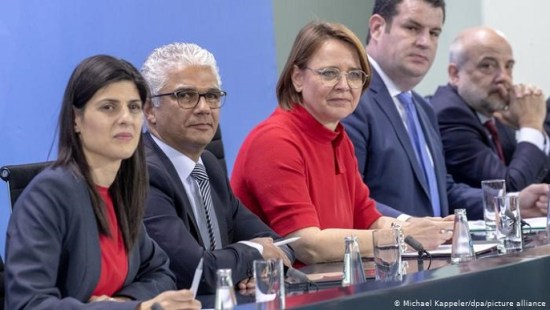
After two years of discussing how Germany could better acknowledge its status as a society of immigration, a SPECIALIST commission of 24 politicians and academics appointed by the government has submitted its report to Chancellor Angela Merkel. One of its recommendations is to stop using the terms “migration background” or “immigrant background.”
People should use the term “immigrants and their descendants,” commission chair Derya Caglar said. “In my case, this would mean that I am no longer the migrant, but rather the daughter or descendant of migrants.”
You may think that the rest of the world hates us, my fellow Americans – and indeed they do – but they also blindly copy anything and everything braindead we do.
Take Zigeunersauce, for instance. That means “Gypsy sauce.” And because the word Gypsy, like the names Uncle Ben and Aunt Jemima and yada, yada you get where I’m going with this, is one of those names we do not speak unless we are racists, it can no longer be used as a product name here in good-old Germany. The firm Knorr will now be calling their racist Gypsy sauce Hungarian-Style Bell Pepper Sauce instead.
“Same great taste, half the racism!”
In ein paar Wochen finden Sie diese als „Paprikasauce Ungarische Art“ im Regal.
That means un-word or taboo word. Which brings us to the German un-word of the year 2019: Klimahysterie.
That means “climate hysteria” (ín German it’s one word).
A “language critical” jury has selected climate hysteria as the taboo word of the year 2019. The rationale behind the decision is that it “slanders the climate protection movement and its efforts.”
Yes, as a matter of fact it does. But this wasn’t a “political critical” decision, it was a “language critical” one, right? The Brain Police are everywhere, people. Everywhere, I tell you…
Eine sprachkritische Jury hat “Klimahysterie” zum Unwort des Jahres 2019 gekürt, Ausdruck würden “Klimaschutzbemühungen und die Klimaschutzbewegung diffamiert und Debatten diskreditiert”, hieß es zur Begründung.






 Observing Hermann