Speaking Of Heroes

Or the lack of them…
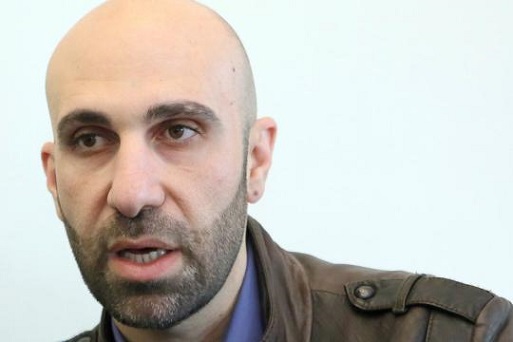
Ahmad Mansour

This guy seems to think there’s a lack of them, too. Ahmad Manour is a group manager at the Heroes Project in Berlin and a family counselor at Hayat, an advisory body for de-radicalization.

The degree of Islamist radicalization among the youth in Germany is underestimated. He chose the title “Generation Allah” for his recently published book because “I find that there is an incredible number of young people here who believe in things like conspiracy theories, harbor anti-Semitic thoughts and don’t think along democratic lines. The Islamic religion is the only thing they have that conveys identity for these young people.”

“It’s also important that in view of Islamic terror Muslims ask themselves how such a monster could come to life among us.”

Im politischen Raum sei eine “gewisse Planlosigkeit” im Umgang mit dem Problem erkennbar.

Die Mörder Sind Unter Uns

That’s an old post-World War II German movie called “The Murderers Are Among Us,” starring Hildegard Knef. It’s about Nazis in Germany after the war. You know, people with dark pasts and stuff like that?

Hildegard Knef

Meanwhile, in a completely unrelated story…

Germany’s top prosecutor is investigating whether an Algerian man detained at a refugee center last week knew in advance about the Paris attacks but failed to tell the authorities, officials said on Friday.

The guy apparently even has notes describing the attacks, but he’s not talking for some reason. Nor is this news story getting much air time on the German news waves for some reason. I guess things like this simply aren’t permitted to, well, actually happen, so why report them? I mean, it’s not like this guy has a dark past or anything. And dark futures don’t count.

Im Fall des Algeriers aus Arnsberg, der die Terror-Anschläge von Paris angekündigt haben soll, gibt es neue Entwicklungen: Der 39-Jährige soll Notizen über die Attentate versteckt haben, die nun gefunden worden sind.

Who Woke Up Insulation Nation?

Like how rude is that? Even if they’re only awake for a few minutes it’s still uncalled for.

War

* Germans long felt insulated after opposing 2003 Iraq war

* Germany-France soccer game was one of Paris targets

* Cancelled match this week brought threat closer to home

* Vice chancellor shuns war rhetoric favoured by Hollande

After years of feeling insulated from militant Islamist threats, Germans are worrying that they too could be subject to attacks like those suffered last week in Paris.

Ain’t no big deal, though. They’ll be back to sleep in no time, folks. War? What, me worry? The answer is always…

“Die ganz klare Antwort ist nein.”

Germany To Double Its Presence In Mali to 18 Men

Eager to help its neighbor France redistribute its military forces in the wake of the terrorist attacks on Paris, and keen to stay out of harm’s way while pretending to have a real military of its own, Germany has generously volunteered to increase the number of its already sizable forces presently stationed in Mali. Some sources close to the chicly coiffed head of the German war machine herself have even suggested that she may even actually double the number to a full 18 men (that’s a 1 and an 8). Personen (persons), I mean.

War

Meanwhile… Earlier on Tuesday, French President Francois Hollande said the French aircraft carrier Charles de Gaulle would head to the eastern Mediterranean offshore areas of Syria and Lebanon, instead of the Persian Gulf as previously announced, to support military operations against the Islamic State (IS) extremist group.

Die Bundeswehr beteiligt sich an der UN-Mission Minusma in Mali derzeit unterstützend mit neun Soldaten.

PS: When Germans say nein they mean nine, damn it.

German Of The Day: Bündnisfall

That means casus foederis in Latin. OK, OK, and that means a “case for the alliance.” The NATO alliance, that is. Article 5. And that’s the case we have in Paris right now.

NATO

The Islamic State just attacked us. This isn’t rocket science, folks.

The coordinated terror attacks across Paris that left more than 120 dead and hundreds wounded have prompted calls for global intervention from France’s allies against the Islamic State group, which took responsibility for the attacks. As world leaders decried the attacks as an “act of war” and international media trumpeted the arrival of World War III, security experts said Saturday a perfect storm could be brewing for an invocation of the NATO’s Article 5, the clause declaring an attack against one ally to be an attack against all.

“Das war ein Kriegsakt einer feindlichen Armee, des ‘Islamischen Staates,'” Wir befinden uns im Krieg mit dem ‘Islamischen Staat'”

Sweden… Austria… Germany?

I don’t want to be offenceve here Angie, but I think it’s time to pull the ripcord.

Fence

How Sweden, the most open country in the world, was overwhelmed by migrants…

Austria plans border fence to manage migrant flow…

Considering Germany Without Merkel.

The ongoing refugee crisis has overwhelmed Merkel. The German chancellor is famous for her ability to sense the direction of public opinion and adjust her policies accordingly. This time, though, many think she may have miscalculated. When asylum seekers began arriving en masse to Germany early this summer, Merkel promised that her country would receive them with open arms — and open borders. And Germans initially supported her decision, which they saw as an opportunity to show solidarity to those in need.

But as the influx of people grew, many Germans started to worry that their government had failed to assess the true magnitude of the crisis. Suddenly, Merkel was no longer the infallible leader who could do no wrong but an impulsive head of government who had put her country in danger. Some began to see the chancellor’s famous statement about refugees — “we can manage” — as proof that Berlin had lost control of the immigration problem.

Are we having a putsch yet?

German Of The Day: Putzig

That means cute. As in funny cute. You know, comical? Like when little kids say something unexpectedly and unintentionally funny? Or, I dunno, like when Germans are completely shocked to find out that their spy agency actually spies on other folks, too?

Spies

After angrily upbraiding the U.S. for its electronic spying networks that targeted Germans, the government of Chancellor Angela Merkel has been rocked by two reports in less than a week charging that German intelligence targeted U.S. arms companies, the FBI, a top French diplomat, several international organizations and allied government departments, and even a German diplomat working for the European Union.

“Es kann solche Praktiken zwischen Verbündeten nicht geben.”

Making Unpopular Decisions?

That was never a problem with this guy. And you don’t see that very much anymore, do you? Here or anywhere else. Sorry to see him go.

Helmut Schmidt

During his two terms as chancellor of West Germany, from 1974 through 1982, Schmidt even had trouble convincing his own Social Democratic party to back him. His insistence on maintaining a balanced budget during an economic slowdown irritated his colleagues who were pushing for a stimulus; his push to station U.S. nuclear missiles on German territory angered the many members of the party’s grassroots who preferred to pursue rapprochement with the Soviet Union. Schmidt, for his part, scorned the inspiration-peddling politicians who stoked the idealism of late 1960s and 1970s Germany — and did so, according to Schmidt, in order to feed their own egos.

“If you have visions, you should go see a doctor.”

PS: One of my favorite sayings of his (regarding the treatment of Germany after World War II) is „Wir sind mit einem blauen Auge davongekommen.“ Meaning, we got out of it with a black eye, as in unscathed.

German Of The Day: Geht Nicht Gibt’s Nicht

That means, “it’s not possible is not an option.” And that’s where we are right now with this German refugee crisis, I believe.

Merkel

What would you think, my fellow Americans, if your fearless leader (let’s call him “The Pres”) were to tell you in a nationally televised address that it simply is not possible for the United States to stop the influx of refugees coming in from, say, Canada? Or, I dunno, Mexico maybe? You would rightly think, well then what’s the point of having the freakin’ border in the first place?

Well, that’s what the world’s most powerful woman has told her countrymen in Germany now on several occasions.

I have not yet figured out why she is saying this – because it obviously is possible – but talk about your self-fullfilling prophecy. If what she really means is that it is not possible for HER to secure her country’s borders (European Union borders clearly do not exit so these are the only borders left), then somebody else after her will. And I think this could happen pretty quickly now, too.

In other words, German of the day coming soon: Putsch.

Schäuble ist am Ende seiner Karriere angelangt. Er hat nichts zu verlieren. Er ist die Schlüsselfigur, der ideale Mann, einen Putsch anzuführen. Der einzige, der es erfolgreich tun könnte. Er wäre ein denkbarer Übergangskanzler im Fall der Fälle.

PS: I think what we’ve got here with Angie is the next Günther Schabowski.

N-S-A, B-N-D, Spy-On-You-And-Me

Our espionage doesn’t stink, right? “Spying among friends? That’s just not done.” But spying on their countries, NGOs and the Vatican? That’s a different matter.

Spy

Since October’s revelations, it has emerged that the BND spied on the United States Department of the Interior and the interior ministries of EU member states including Poland, Austria, Denmark and Croatia. The search terms used by the BND in its espionage also included communications lines belonging to US diplomatic outposts in Brussels and the United Nations in New York. The list even included the US State Department’s hotline for travel warnings.

The German intelligence service’s interest wasn’t restricted to state institutions either: It also spied on non-governmental organizations like Care International, Oxfam and the International Committee of the Red Cross in Geneva. In Germany, the BND’s own selector lists included numerous foreign embassies and consulates. The e-mail addresses, telephone numbers and fax numbers of the diplomatic representations of the United States, France, Great Britain, Sweden, Portugal, Greece, Spain, Italy, Austria, Switzerland and even the Vatican were all monitored in this way. Diplomatic facilities are not covered under Article 10 of Germany’s constitution, the Basic Law, which protects German telecommunications participants from such surveillance.

“Ausspähen unter Freunden – das geht gar nicht.”