Your Tax Euros At Work

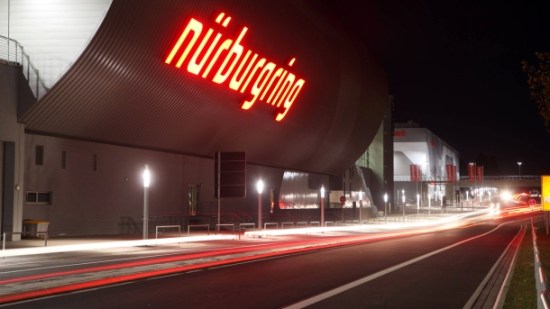
SPD Governor (Rhineland-Palatinate) Kurt Beck just can’t resign, Nürnburgring bankruptcy or not. This is because, well, “he’s been in office longer than any other German governor” out there. Or is that maybe part of the problem?

Nuerburgring GmbH, 90 percent owned by the state, ran into financial trouble amid a dispute with the track’s operator over leasing fees, and Rhineland-Palatinate has sought to restructure the company with the help of a bridge financing package.

„Jetzt wird es Zeit, dass MP Beck selbst politische Insolvenz anmeldet.“

We Must Save The World But It Must Be Affordable

Cheap, in other words.

Germans everywhere are slowly waking up to the fact that their revolutionary switch to renewable energy sources is going to cost way too way much more than they ever thought they would ever have to pay – and the German government has now woken up to this.

That is why they have now begun a quiet backpedaling policy designed to prepare the German population for a slow turnaround from the energy turnaround that hasn’t even begun to turn around yet.

“For me it’s a priority that electricity remains affordable,” Germany’s new Environment Minister Peter Altmaier says, for instance.

He also says he doubts that Germany will be able to reach its goal of introducing one million electric cars by 2020.

Nor does he think that Germany will be able to cut its energy consumption by 10 percent that year, a precondition for reaching the illusory goal of 35 percent renewables the government is still aiming for, sort of.

This is the German Environment Minister talking here, folks. So you get the message, don’t you? And if you don’t get it now, you’ll get it later.

Regierung fürchtet die Strompreis-Wut der Wähler
Bundeswehr On The Front Line Again

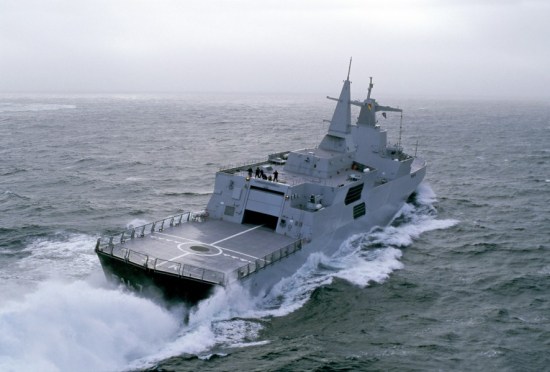
When it comes to fighting for German weapon system exports, I mean. Talk about your military industrial complex. The Germans sure have one – and are clearly in denial about it – which is the real news item here if you ask me. Take the latest sale of frigates to Algeria, for instance (I mean please).

These pacifistic (German made) and very expensive peaceships not only make big profits for traditional Waffenschmiede (weapons makers) like Thyssen-Krupp Marine-Systeme, they finally give Germany’s alibi army something vernünftig (reasonable) to do: Train the folks who might actually be using these weapons one day – and in a thoroughly German thorough way, too, I am sure.

Who says the Bundeswehr isn’t an effective force? No, not a fighting one, as a sales force.

“Die Ausbildung wird in Deutschland und auf Hoher See stattfinden.”

The German Sommerloch

It’s here (the German “summer hole“). So get used to it. And remember: If it wasn’t for slow news (see yesterday’s post), we wouldn’t have no news at all.

Or as one paper here put it: “Exotic Animals in a Summer Loch Ness.”

Hey, news is a product, folks. And production is down.

In the United States the period is referred to prosaically as the slow news season.

172 Economists Can’t Be Wrong

Right? Right.

We have to approach this differently, folks. Pick an economist. Pick five. Find one that has ever been right. When it comes to dire warnings about the future, I mean.

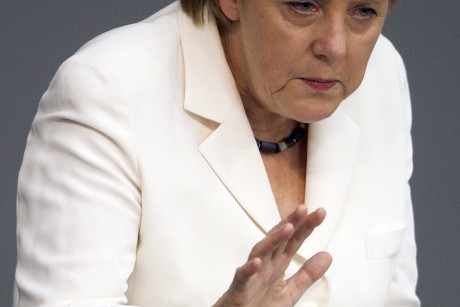
Sure, I don’t like the idea of Angela Merkel deciding “to agree to allow eurozone bail-out funds to support sinner states” either, but if 172 economists are all hot and bothered about it, then maybe it wasn’t such a bad decision after all.

“First of all, this is about better banking supervision, and one can only say that that is urgently necessary.”

Underground Fashion Goes Underground

Now if only it would stay there.

Damn. This is becoming quite a ritual (yawn). But this is just what folks at Berlin Fashion Week do, so deal with it. Thirty-four models, four hundred passengers and seventeen labels on one subway train, what’s that get you? An underground catwalk – for the seventh time now already. Sheesh.

“This year is all about kitschy kitsch.”

Inferiority Superiority Complex

North, south. Inferiority, superiority. It’s all the same to me.

Germans export more to their European partners than they consume, benefiting from this asymmetrical situation even as they expect everyone else to be exporters and savers like them.

Babies Down 15,000

Germans have been dying off faster than they can replace themselves for over forty years now. It’s just what they do.

And here are last year’s numbers: 2.2 percent fewer German babies were born in 2011 then in the year before. Strangely, though, the number of inhabitants actually grew last year (them damned durn foreign immigrants again).

It’s the demographics, stupid.

Schon seit 40 Jahren sterben in Deutschland mehr Menschen als Kinder geboren werden.

Are We Having A European Lifestyle Yet?

Is this the end of “the European way of life” as we know it?

European leaders have been muddling through instead of properly tackling the debt crisis. Now it threatens the very foundations of the European Union and could destroy a lifestyle that millions of Europeans take for granted.

Funny. I thought taking things for granted was what the European lifestyle was all about.

“We need fiscal discipline because we have a debt problem… No euro bonds as long as I live.”

Our Debt Still Doesn’t Stink

German government debt keeps climbing relentlessly higher and reached an all-time high during the first three months of this year. The federal, state and local governments then reached a debt to the tune of 2 trillion euros.

That was 2.1 percent or 42.3 billion euros higher (deeper?) than  in the previous year’s quarter, reported the Federal Office of Statistics in Wiesbaden on Monday.

Now if only Greece and Co. could learn to control their government spending like the Germans do. Oh, wait. They already have. Or do. Or whatever.

Deutschlands Staatsschulden auf Rekordhoch gestiegen