Reality Can Be A Bitch Like That

After Missing Emissions Targets, Germany Creates Climate Watchdog.

Climate

Brilliant, really. First you shut down all your nuclear power plants, build more coal-firing power plants to compensate for them (renewable energy isn’t enough here for some odd reason) and then fail to meet the ridiculously ambitious emissions reduction goals you have set.

Then, once you’ve finally come clean about not being able to come clean, you “set up a ‘climate cabinet’ to coordinate emissions reduction efforts and ensure politicians (you, that is) keep their promises.”

I thought Kafka was dead. Come on, now. Did he write this?

Environment minister Svenja Schulze (SPD) detailed the plan to create a ministerial group to German newspaper Tageszeitung on Saturday, saying it would ensure that ideas to lower the country’s emissions don’t slip through the cracks.

On Course, Of Course

Don’t anyone ever tell you that Germans aren’t reliable.

Bundeswehr

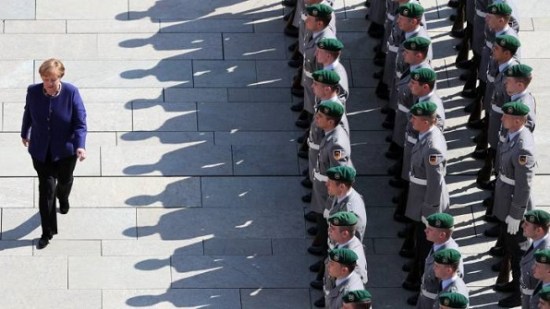
As noted yesterday, the equipment used by the German army is still as inadequate as ever, despite repeated promises by the German defense minister to make improvements.

And now, despite claims by the German government to one day reach the official NATO target of 2 per cent GDP on defense spending it agreed to years ago, it won’t even be able to make the 1.5 percent it set for itself by 2024. This is “round,” as the Germans say. It all fits like a glove.

Germany is on course to miss its self-declared target for defence spending in a development that threatens to trigger a new row with the US and raises further questions over Berlin’s military contribution to Nato.

The government of Angela Merkel agreed last year to raise the German military budget to 1.5 per cent of gross domestic product by 2024 — a marked increase but still short of the official Nato target of 2 per cent. 

But the 1.5 per cent target is now under threat after Olaf Scholz, the Social Democrat (SPD) finance minister, rebuffed plans for an ambitious increase in military spending in the years ahead, citing a worsening economic outlook.

Gimme An E! Gimme A U!

What’s that spell? Germany!

Paul Lever

‘The EU is Germany writ large’

If you look at the actual structures of the EU, there’s the Commission, the European Parliament, the Council of Ministers and the European Court. That is exactly the same way that Germany is governed. The Bundesregierung, or federal government, is like the Commission, the Bundestag, or German parliament, is like the European Parliament, and the Bundesrat, the council of the German Länder (the federal states), is like the Council of Ministers, and both the EU and Germany have very powerful constitutional courts, too. So for a German politician moving into the EU, it’s a very familiar world, which is precisely why the Germans find it so easy to operate in Europe…

In the past, the Brits used to complain that the EU or EEC was all run by the French – and certainly French was the working language – but actually it’s run on a German paradigm. The EU is Germany writ large. And this is how it has been from the beginning. It is not some recent German plot to subvert the EU – it is how it was set up…

Germany has been a huge beneficiary from the euro. A study was published recently by the Centre for European Policy Studies in Germany, which estimated that Germany had earned €1.9 trillion from adopting the euro in its first 20 years. But it had cost France €3.6 trillion and Italy €4.3 trillion. German politicians don’t like to admit this.

Political Paralysis?

That’s my thing now. That’s what I do.

Merkel

On the one hand, I could screw it up with this side. On the other hand, I could screw this up over here first. Decisions, decisions…

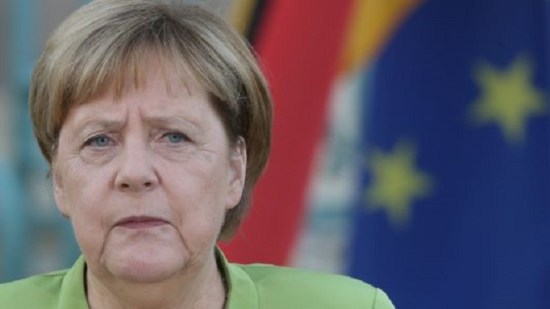
The global order that underpins German prosperity is unraveling, and Angela Merkel doesn’t know what to do. President Donald Trump’s America First policy is forcing Germany to make an impossible choice between the U.S. and China — pitting the force behind the country’s modern economic success against the key to its future growth…

For decades, the country profited from an international trading system run by the West and backed up by the military might of the U.S. The government just got out of the way and watched exports roll. Those days are over…

“Germany is caught up in a dilemma of changing trade patterns and doesn’t know how to react.”

Trump hin oder her – die USA bleiben Deutschlands wichtigster Absatzmarkt.

Colombia

Beautiful German weapons sale of the week.

Guns

OK, in this case beautiful German judicial deal of the week.

Because somebody has to admire them.

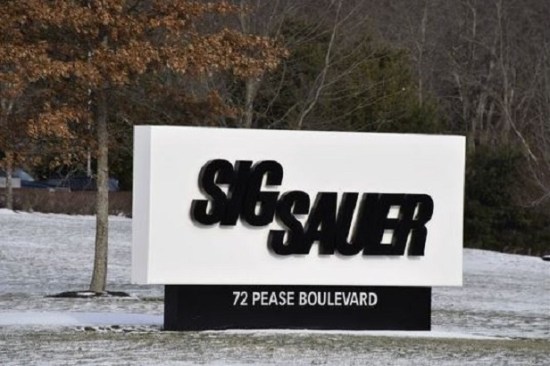
Three former executives at German gun-maker Sig Sauer, including one who became CEO of a sister company in the United States, reached a deal with prosecutors over allegations they illegally exported arms to Colombia and likely won’t go to prison, a court official in Germany said Wednesday.

We’re All Going To Die!

When the Brexit hits the fan, remember?

Brexit

It’s quite odd. Germans, notoriously nervous by nature, don’t seem terribly worried about Brexit these days at all. I guess there’s only so much you can worry about at any given time. Even if you’re a German.

Dead calm: Brexit not in top 10 of German businesses’ priorities – With five weeks to March 29th, Germans are worried – about everything but Brexit.

Commuters fear inner-city bans on diesel cars. Politicians are fighting over renovating – and digitising – German schools. Police are battling criminal Arab clans.

“I don’t know why Germany, all in all, is so relaxed about this.”

Are You Feeling The Security Risk Yet?

European automobile tariff regulators?

Import

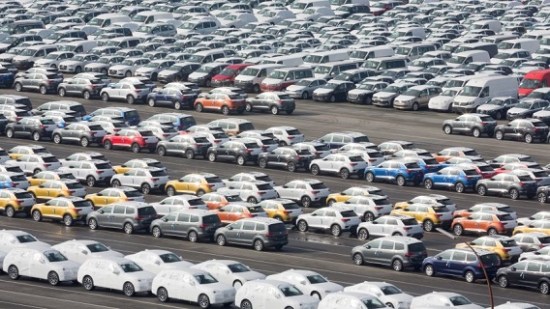
The U.S. Commerce Department is set to meet a Sunday deadline to deliver its recommendations to President Donald Trump on whether imported vehicles and parts pose a national security risk, and to outline options on how to address the issue, officials said on Thursday.

Trump would then have 90 days after Commerce’s recommendation to decide whether to impose tariffs…

Trump has urged the EU to drop its 10 percent tariff on imported vehicles. The U.S. passenger car tariff is 2.5 percent, while it imposes 25 percent tariffs on pickup trucks.

The Alliance of Automobile Manufacturers, whose members include General Motors, Volkswagen AG, Toyota Motor Corp, has warned tariffs would boost imported car prices nearly $6,000 on average.

Deutsche Autobauer verstehen die Welt nicht mehr.

No Job Losses Here

In Germany. Then everybody’s happy, right?

A380

The German government is not expecting widespread job cuts in Europe’s largest economy following Airbus’s decision to scrap production of the A380 superjumbo, the aerospace policy coordinator told Reuters on Thursday.

“We expect these jobs will largely continue to exist, working on different models such as the A350, the newest plane on the market, or the A330 neo.”


Let’s Celebrate Together In Berlin!

The German foreign affairs ministry sent representatives to Iran’s embassy in Berlin yesterday to celebrate the 40th anniversary of the Islamic Republic of Iran.

Iran

Iran is just a regular old country after all and Germany is everybody’s darling so, what’s the big deal? OK, the mullahs have been known to dabble in international terror now and again. And maybe that part about Tehran urging the destruction of Israel (the Jewish state) is a little over the top but Germans would never urge that kind of thing on their own, directly, so take a chill pill already. Keeping up good business, I mean, diplomatic relations is never a bad idea.

Doch warum schickte die Bundesregierung einen Vertreter zur Revolutionsfeier eines Terrorregimes in dessen Botschaft?

Whatever Is Not Expressly Allowed

Is verboten. In Germany. If you’re Facebook, Google, Amazon, WhatsApp, Instagram, Twitter and Co., that is.

Facebook

Recognize a pattern here? They’re all American companies and they’re all “free” to use. The Germans, of all people, surely must have figured out by now that nothing is ever for free. But they haven’t.

GERMAN REGULATORS JUST OUTLAWED FACEBOOK’S WHOLE AD BUSINESS – FACEBOOK’S MASSIVELY LUCRATIVE advertising model relies on tracking its one billion users—as well as the billions on WhatsApp and Instagram—across the web and smartphone apps, collecting data on which sites and apps they visit, where they shop, what they like, and combining all that information into comprehensive user profiles. Facebook has maintained that collecting all this data allows the company to serve ads that are more relevant to users’ interests. Privacy advocates have argued that the company isn’t transparent enough about what data it has and what it does with it. As a result, most people don’t understand the massive trade-off they are making with their information when they sign up for the “free” site.

“We disagree with their conclusions and intend to appeal so that people in Germany continue to benefit fully from all our services.”